The Jordan Blueprint: Why a Controversial Path of Conflict May Be Caitlin Clark’s Only Road to a Championship
In the world of professional sports, greatness is not merely born from talent; it is forged in pressure, conflict, and an unwavering will to win that can often border on obsession. For Caitlin Clark, the WNBA’s newest and brightest star, the weight of expectation is immense. Every dribble, every shot, and every sideline interaction is scrutinized. Amidst the Indiana Fever’s challenging season, a provocative piece of advice has emerged from the outspoken sports commentator Jason Whitlock, who has suggested that for Clark to truly reach the pinnacle of her sport, she must embrace a controversial and dangerous role: that of a “coach killer,” a path famously, and perhaps necessarily, walked by Michael Jordan.
This assertion is not merely for shock value. It taps into a long-debated theory about the nature of transcendent athletes. The argument posits that players of Clark’s and Jordan’s caliber operate on a different plane, possessing a vision and drive that often surpasses that of the coaches tasked with leading them. For them, winning isn’t just the goal; it’s the only acceptable outcome, and any obstacle—be it an opponent, a teammate, or even a head coach—must be overcome. Whitlock’s comparison forces a difficult question: Is challenging authority a sign of immaturity, or is it an essential, albeit painful, step in the evolution of a champion? To understand the weight of this advice, one must look back at the career of the man who provides the blueprint: Michael Jordan.
Long before he was a six-time NBA champion and a global icon, Michael Jordan was a phenomenal talent on a struggling Chicago Bulls team. His early years were not filled with championships but with frustration. He was a singular force of nature, yet the team around him was mediocre, and the coaching staff often seemed incapable of harnessing his otherworldly abilities to achieve collective success. This is where the “coach killer” narrative begins.
Jordan’s first two coaches, Kevin Loughery and Stan Albeck, presided over teams where Jordan’s individual brilliance was evident but team success was elusive. The relationship with Albeck, in particular, was strained by the front office’s cautious approach, especially concerning a minutes restriction placed on Jordan after a foot injury. The palpable tension between a young superstar desperate to win and a management and coaching structure perceived as holding him back laid the groundwork for future conflict.

The dynamic intensified dramatically under Doug Collins. Collins, a fiery and emotional coach, certainly matched Jordan’s competitive intensity. Under his leadership, the Bulls saw improvement, and Jordan’s individual accolades grew, including an MVP and Defensive Player of the Year award in the same season. Yet, something was fundamentally wrong. Collins’s coaching style was Jordan-centric to an extreme, often boiling down to a simple strategy: “give the ball to Michael and get out of the way.” While this produced spectacular individual performances, it failed to elevate the team to true championship contention. The Bulls repeatedly hit a wall in the playoffs, consistently falling to the Detroit Pistons’ “Bad Boys.”
The friction wasn’t just strategic. Reports from that era, chronicled in books like “The Jordan Rules,” depict a locker room where Collins’s emotional outbursts and tendency to blame players alienated many on the team, including its superstar. Jordan, who had been molded by the calm and dignified leadership of Dean Smith at North Carolina, grew weary of Collins’s approach. While Jordan publicly denied having a direct hand in Collins’s eventual firing in 1989, his influence was undeniable. The organization knew that to keep their generational talent happy and unlock the team’s full potential, a change was necessary. That change came in the form of Phil Jackson.

Jackson’s arrival marked the turning point. He brought a new philosophy—the triangle offense—which was designed to de-emphasize Jordan’s individual dominance in favor of a more team-oriented approach. Initially, Jordan was resistant. He had thrived under a system that gave him total control. But Jackson’s genius was not just in his Xs and Os; it was in his ability to manage Jordan’s colossal ego and channel his competitive fire for the good of the team. He challenged Jordan not to score less, but to trust more. By convincing the league’s greatest individualist to become its most effective leader, Jackson unlocked the dynasty. This history is the core of Whitlock’s argument. Jordan didn’t become a champion until he was paired with a coach who could manage his greatness, and the path to finding that coach was paved with the departure of those who could not.
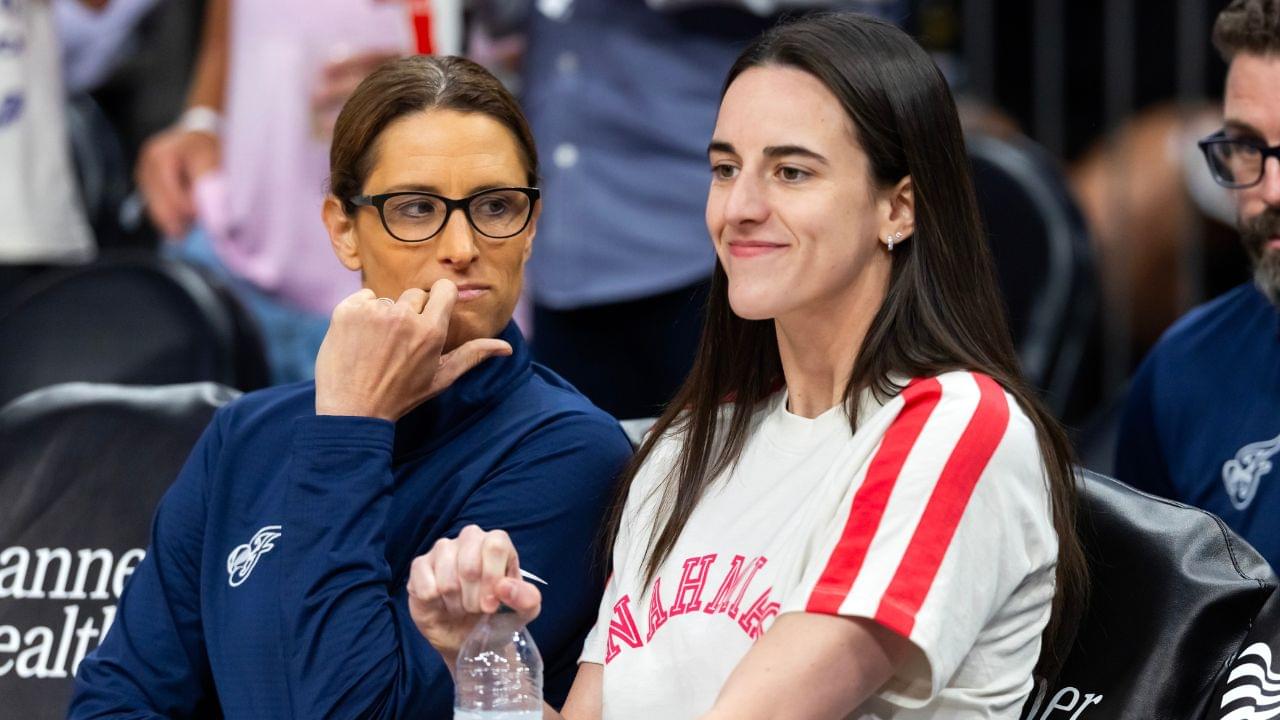
Now, four decades later, Caitlin Clark finds herself in a situation with striking parallels. She entered the WNBA as the most heralded rookie in its history, a player with a unique combination of skill, court vision, and range that has the potential to redefine the game. Yet, her Indiana Fever team has struggled, and Clark’s on-court demeanor has often reflected a deep-seated frustration. Tense exchanges with her coach, Christie Sides, visible sighs after broken plays, and an intensity that sometimes seems to boil over have been common sights.
To the casual observer, this might look like a rookie buckling under pressure. But through the lens of Whitlock’s “Jordan Blueprint,” it looks like the necessary growing pains of a superstar recognizing that the current environment may not be conducive to her ultimate goals. Clark, like Jordan, sees the game in a way that few others can. When a play breaks down or a teammate misses an assignment, her frustration stems from a vision of what should have been. The question then becomes whether her current coach can build a system and a culture that can realize that vision.
This is not an indictment of Christie Sides as a coach, just as the critique of Doug Collins was not a denial of his coaching ability. Rather, it is an acknowledgment of a fundamental reality in sports: coaching a transcendent talent is a unique challenge. It requires more than just strategic acumen; it demands an almost psychological mastery to manage a player who is, in many ways, an outlier. The coach must be secure enough to cede some control, wise enough to earn the superstar’s respect, and innovative enough to build a championship structure around a sun so bright it can scorch everything around it.
The “superstar dilemma” extends far beyond Jordan and Clark. LeBron James’s career has been marked by significant influence over coaching and personnel decisions. Magic Johnson was famously linked to the firing of Lakers coach Paul Westhead early in his career. Tom Brady’s partnership with Bill Belichick was legendary, but even that dynamic evolved and eventually dissolved under the weight of their respective ambitions. Great players don’t just fit into systems; they become the systems themselves. Their gravity bends the organization around them.
Of course, embracing the “coach killer” mantle is fraught with risk. For a young player like Clark, it could lead to being labeled as selfish, arrogant, or uncoachable—tags that can be difficult to shed. It could create irreparable divisions within the locker room and the front office. There is a fine line between a leader demanding excellence and a dissident creating chaos. Navigating that line is perhaps the greatest test a young superstar faces.
Ultimately, Jason Whitlock’s advice, while jarring, forces a critical conversation about the anatomy of a champion. It suggests that for players who operate at the very edge of human potential, the path to greatness is not always paved with harmony and deference. Sometimes, it requires friction, confrontation, and the courage to force change. Caitlin Clark’s journey is just beginning, but as she navigates the immense pressures of her rookie season, she and the Indiana Fever may find themselves at a crossroads, forced to consider the lessons of the past. They may have to decide if playing it safe is a viable strategy, or if the only way to build a dynasty is to first be willing to tear the old structure down, just as Michael Jordan did on his long, arduous, and ultimately triumphant road to greatness.