The Elon Musk Netflix Controversy: How a Canceled Kids’ Show Sparked an Online Firestorm and a Torrent of Hate
In the volatile landscape of social media, a forgotten piece of content can be resurrected and weaponized in an instant, sparking a global firestorm. This is precisely what happened to “Dead End: Paranormal Park,” a Netflix animated series that concluded its 20-episode run in 2022 and was officially canceled in early 2023. What was once a celebrated show, praised for its heartfelt storytelling and inclusive representation, has now become the epicenter of the latest Elon Musk Netflix controversy. A single, decontextualized clip has been thrust into the center of a heated online debate, fueled by influential conservative accounts and amplified by one of the world’s most powerful tech moguls. The fallout has been swift and severe, not for the streaming giant, but for the show’s creator, who has been subjected to a terrifying wave of personal attacks. This incident serves as a stark reminder of the immense power wielded by social media influencers and the very real, human cost of online outrage campaigns that erupt with little warning and even less regard for the truth. It’s a story about a canceled show, a billionaire’s tweet, and the harrowing experience of a creator caught in the crossfire of a culture war he never asked to join.

The Clip That Started It All: A Look at “Dead End: Paranormal Park”
“Dead End: Paranormal Park” first premiered on Netflix in 2022, running for two seasons. Created by Hamish Steele and based on his graphic novels, the show follows the adventures of two teens, Barney and Norma, who get summer jobs at a haunted theme park that secretly serves as a portal to hell. The series was met with critical acclaim for its witty humor, imaginative world-building, and, most notably, its groundbreaking LGBTQ+ representation. The protagonist, Barney Guttman, is an openly transgender teen, a portrayal that was widely praised for its authenticity and sensitivity. Netflix assigned the show a TV-Y7 rating, deeming it suitable for children aged seven and older.
Despite its dedicated fanbase and positive reviews, Netflix canceled the series in January 2023. For over a year, the show existed quietly in the platform’s vast library. That all changed when a short clip from the show’s second episode resurfaced on X, the platform owned by Elon Musk. In the scene, Barney matter-of-factly explains his identity, a simple moment of character development. However, conservative accounts like Gays Against Groomers and Libs of TikTok seized upon the clip, framing it as evidence of a sinister agenda. They presented the scene without context, suggesting it was part of a new and aggressive promotional push by Netflix to “indoctrinate” children, a claim that was patently false given the show’s canceled status.
A Billionaire’s Megaphone: Elon Musk Amplifies the Outrage
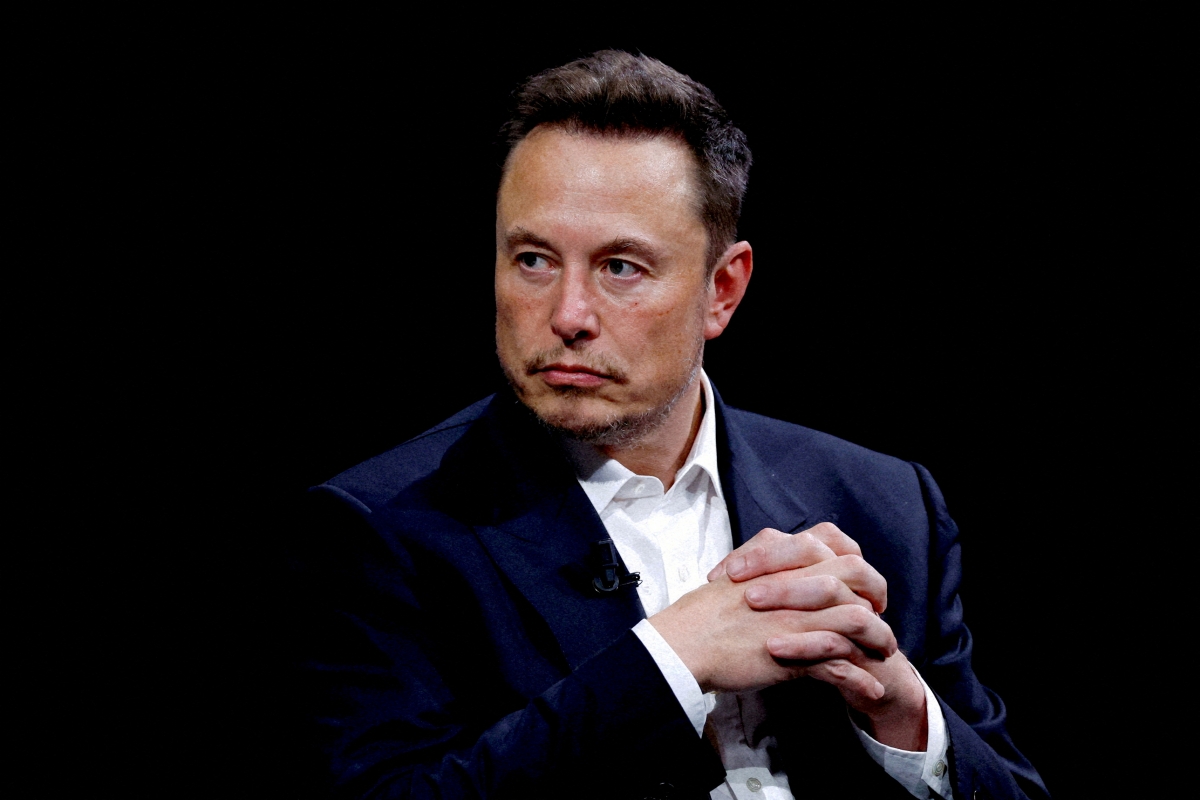
What might have remained a niche complaint within certain online circles was catapulted into a global conversation when Elon Musk lent his enormous platform to the cause. Responding to a post from Libs of TikTok that featured the clip, Musk posted a simple but powerful message: “This is not ok.” He didn’t stop there. He followed up by re-sharing posts calling for a boycott and issuing a direct command to his millions of followers: “Cancel Netflix for the health of your kids.” The cancel Netflix hashtag began to trend as accounts like the Maga Voice echoed the sentiment, posting, “IT’S TIME TO CANCEL AND BOYCOTT NETFLIX.”
Musk’s intervention transformed the narrative. His posts acted as a massive signal boost, lending a veneer of mainstream credibility to the campaign. The allegation that Netflix was “pushing pro-transgender on children” and actively promoting the show “on Netflix Kids now” spread like wildfire, despite being demonstrably untrue. The show was not being promoted; it was simply available to stream, like thousands of other titles in Netflix’s back catalog. But in the fast-paced, emotionally charged world of social media, nuance is often the first casualty. The outrage was real, and it was about to find a very personal target.
From Laughter to Fear: The Creator’s Harrowing Experience
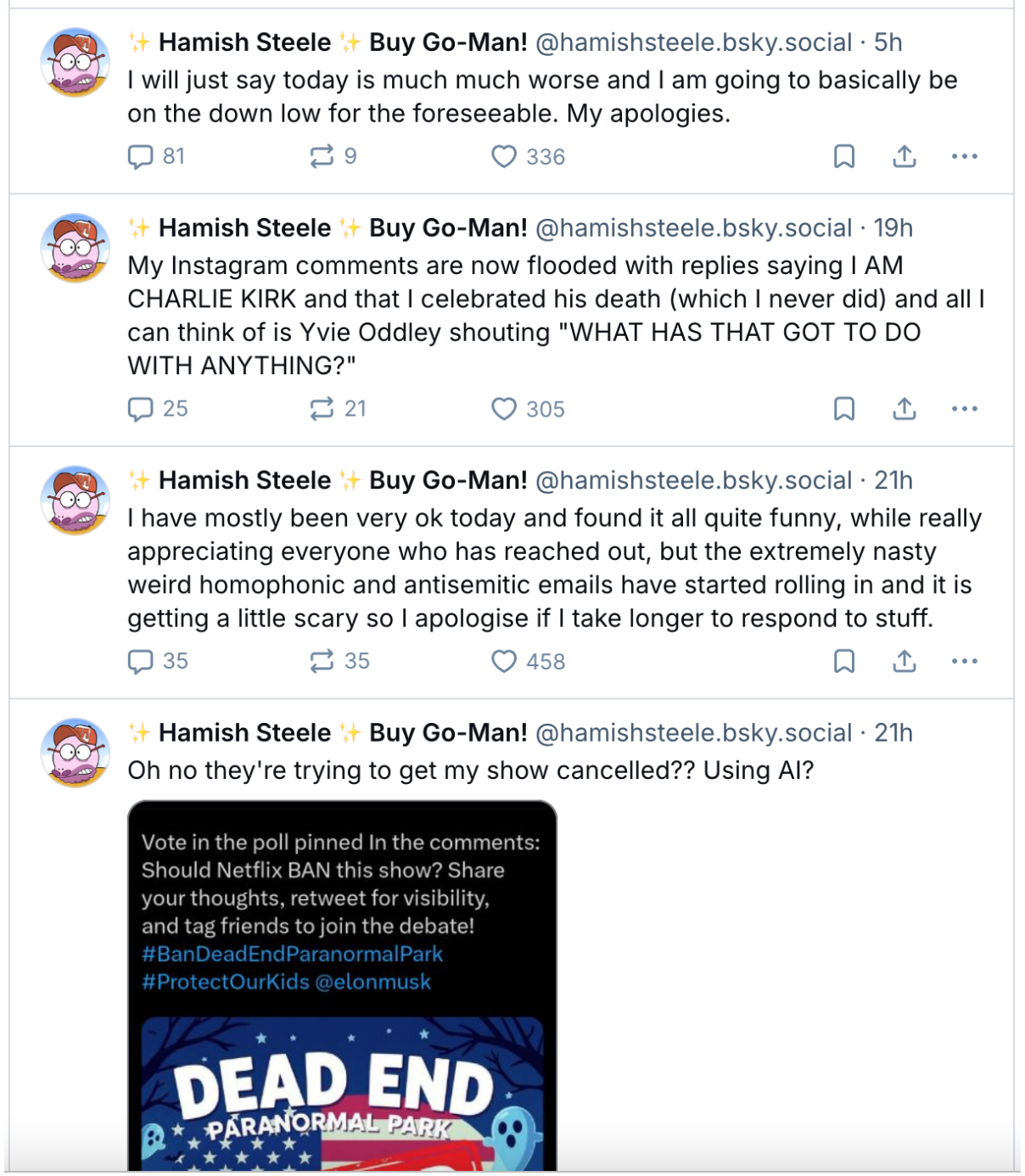
As the controversy exploded, the show’s creator, Hamish Steele, took to the alternative social media platform BlueSky to share his perspective. Initially, he seemed to take the sudden, bizarre turn of events in stride. “It’s probably going to be a very odd day,” he posted, firing back at the misinformation by clarifying, “It’s all lies and slander! Netflix is NOT promoting at the moment!” He later added that he had “mostly been very ok today and found it all quite funny, while really appreciating everyone who has reached out.”
But the tone of his posts soon shifted dramatically. The online vitriol, amplified by Musk, began to bleed into his personal life. What started as online noise morphed into direct, targeted harassment. “The extremely nasty weird homophobic and antisemitic emails have started rolling in and it is getting a little scary so I apologize if I take longer to respond to stuff,” Steele revealed to his followers. The experience had quickly devolved from a strange, surreal annoyance into a genuinely frightening ordeal. The torrent of hate became overwhelming, forcing Steele to make a difficult decision. A few hours after his post about the emails, he announced he was retreating from the public eye. “I will just say today is much much worse and I am going to basically be on the down low for the foreseeable. My apologies,” he wrote, ending his public commentary on the matter.
Navigating the Culture Wars: Why the Elon Musk Netflix Controversy Matters
This incident is far from an isolated event; it is a textbook example of a modern-day culture war skirmish. The targeting of a transgender character in kids shows is a recurring tactic in a broader political and social conflict over representation and identity. Media aimed at children that includes LGBTQ+ themes has become a consistent flashpoint, with companies like Disney facing similar organized backlash. The strategy is often the same: isolate a brief clip, strip it of all narrative and emotional context, and present it to an audience primed for outrage as proof of a nefarious agenda.
The Corporate Response (or Lack Thereof)
Throughout the entire affair, Netflix remained conspicuously silent. When contacted by Variety for a statement, the company had “no comment on the matter.” This silence is indicative of the tightrope that major corporations must walk in today’s polarized environment. Engaging with the controversy could further amplify it and alienate a segment of their subscriber base. However, remaining silent can be interpreted as abandoning a creator and their work in the face of targeted harassment. For Netflix, the calculation was likely simple: the show is canceled, and the controversy will eventually blow over. But for creators like Hamish Steele, the consequences are immediate, personal, and terrifying.
The Elon Musk Netflix controversy highlights a profound power imbalance. A single individual with a massive social media following can incite a global boycott movement against a multi-billion dollar corporation over a show that ended more than a year ago. More alarmingly, they can unleash a torrent of abuse on an independent artist, forcing them into silence and fear for their safety. It raises critical questions about the responsibility of platform owners, the ethics of online discourse, and the real-world harm that can be inflicted from behind a keyboard. The digital firestorm may eventually die down, but the chilling effect on creators and the scars left on those targeted by the mob will undoubtedly remain long after the world has moved on to the next fleeting outrage.
News

The gavel fell, sealing the one-armed veteran’s fate. But from the back of the courtroom, a single, mournful howl became the first shot in a new war—one fought by a dog who remembered everything they buried.
Courtroom 3 of the Hamilton District Court was a vessel of held breath. The morning light, strained through tall, dusty windows, seemed to congeal in the air, thick and heavy as the silence itself. On the polished wooden benches, people…

He went to an Alaskan cabin to silence the echoes of war. But in the heart of a blizzard, his dog sensed a secret the storm was sent to bury—a secret that would force him into one last fight.
The wilderness beyond Anchorage doesn’t ask for permission; it simply takes. It swallows roads, erases landmarks, and devours the faint, tinny signal of a cell phone until the only voice left is the wind. It was in this vast, unforgiving…

He told the quiet woman she didn’t belong on his elite sniper range. But when her backpack split open, a single photo fell out that made every decorated Marine in the room snap to a salute in shame.
The crack of a rifle shot was the only sound that made sense anymore. It split the dry California air over Marine Corps Base Camp Pendleton, a clean, percussive thunder that echoed off the brown hills and settled in your…

As the young officer moved to detain the 89-year-old man, she was blind to the truth. The very name of the warship she guarded was a whisper of the 70-year-old secret hidden on his faded patch.
The voice sliced through the humid air of the naval pier, a sharp tool meant to carve out immediate compliance. “Sir, I’m going to have to ask you to step away from the gangway. This area is for authorized personnel…

They chose a desolate mountain to be her grave, thinking a thousand-foot drop was the perfect, silent crime. But as she fell into the void, they made a fatal miscalculation about the kind of woman they just betrayed.
The mountain didn’t make a sound when it happened. There was no grand echo to mark the moment, no sympathetic rumble from the ancient stone. There was only the sharp, scattering kick of gravel, a sudden, violent silence where a…

In a circle of 282 elite soldiers, two men decided to humiliate the quiet medic during a demonstration. They intended to break her spirit. Instead, in seven brutal seconds, they discovered a truth that broke them completely.
The wind that came off the Atlantic that morning had teeth. It wasn’t a breeze; it was a hard, scouring force that snapped across the open-air corridors of Naval Special Warfare Command Unit 7, carrying the briny scent of the…
End of content
No more pages to load