The classroom door didn’t just open; it exploded inward, slamming against the wall with a crack that made everyone jump. A German Shepherd, lean and tense, lunged into the room, followed by two police officers with their hands resting on their holstered weapons.
“We have probable cause that someone in this room is responsible for the twenty overdoses at the local high school,” the bigger cop announced, his voice a low growl that filled the sudden silence. His badge read “Sergeant Scrim.” He scanned our terrified faces. “The dealer is in here. Our dogs are never wrong.”
He was talking about the incident from last week, the one that had dominated the news. Fentanyl-laced pills disguised as Adderall had circulated at our rival school. Three kids were dead. But that was their school, not ours. Why were the cops here?
“You can’t just—” Ms. Griffin began, rising from her desk in protest.
“Ma’am, sit down or I’ll arrest you for obstruction,” Scrim barked. She sank back into her chair, her face a pale mask of shock.
The dog, whose name tag read K9 Thor, began to work the room with systematic precision. Each step was deliberate, its powerful nose hovering just inches from our backpacks. Students shrank back as it passed, some lifting their feet as if the floor had turned to lava. In the corner, Amy Johnson started to cry, her sobs silent and shaky. Across the aisle, Darren Whitmore—who everyone knew sold a little grass behind the gym—was visibly trembling, beads of sweat dripping onto his math test. The dog paused at his desk, sniffed twice, and then, to everyone’s surprise, moved on.

Thor worked his way methodically down my row. Judy, nothing. Harland, nothing. Then, he was at my desk.
He stopped.
He circled my chair once, twice, his nose twitching. Then he sat down, firm and resolute, and stared directly at me with intense, unblinking brown eyes.
“That’s the signal,” the handler said, his hand already moving to his radio. “That’s our guy. Positive alert.”
“What?” I shot to my feet, sending my calculator clattering to the linoleum floor. The entire class was staring, a sea of wide, accusing eyes. “There has to be a mistake.”
In two long strides, Sergeant Scrim was on me. “Hands behind your back.”
“I don’t even drink,” I protested, my voice high and unfamiliar as the cold, unforgiving metal of the handcuffs clicked shut around my wrists. “I’ve never touched a drug in my life. Test me right now. I’ll pee in a cup.”
“Save it for booking,” the younger cop grunted.
Scrim grabbed my backpack and unceremoniously dumped its contents onto Ms. Griffin’s desk. Books, protein bars, and my SAT prep guides crashed down in a messy heap. My laptop, my pride and joy, hit the sharp corner of the desk. The screen spiderwebbed with a sickening crunch before flashing and going black. Four years of birthday money and summer job savings, gone in an instant.
“Nothing here,” Scrim muttered, his voice laced with disappointment as he pawed through my belongings. He checked every pocket, every fold.
“Check his locker,” the younger cop suggested. “Dealers always have a stash spot.”
They marched me down the hallway like a convicted felon. At every classroom we passed, faces pressed against the small windows in the doors. I saw my ex-girlfriend, Lauren, her expression horrified. My basketball teammates looked on, their faces a mixture of confusion and disbelief.
My hands shook so badly I fumbled with my locker combination. 17-35-9. I’d had the same sequence since freshman year, but suddenly my fingers refused to cooperate. Impatient, Scrim shoved me aside and made me call out the numbers. They tore through my locker like a pair of rabid animals. Old tests and papers fluttered to the floor. My lucky basketball shorts from our state run, a forgotten, moldy sandwich that made the younger cop gag. Nothing.
“Where is it?” Scrim grabbed the front of my shirt, pulling me so close I could smell the stale coffee and cigarettes on his breath. “Where’s your stash?”
“I don’t know what you’re talking about,” I managed, my voice trembling. “I study. I play basketball. I go home.”
“Nobody’s that clean,” the younger cop sneered.
Thor was sniffing me again, this time going absolutely ballistic. He barked and jumped, straining against his handler, who now needed both hands to hold him back.
“Whatever he had, he had recent contact with it,” the handler declared. “This is the strongest alert I’ve seen from Thor in two years.”
“You’re going to tell us where it is,” Scrim snarled, shoving me hard against the bank of lockers. “Those three kids who died? Their parents are planning funerals instead of graduations. You did that.”
“I don’t even know anyone at the other high school,” my voice cracked.
“Car,” Scrim said suddenly, his eyes lighting up. “Where do you park?”
“Blue section.”
They didn’t use a side exit. They dragged me right through the main entrance, ensuring the spectacle. The whole school was watching from the windows now. I could see the glint of phone screens pressed against the glass, everyone recording my perp walk. This would be on every Instagram story within minutes.
In the parking lot, they made me point out my car: a used navy-blue Mitsubishi, a gift from my parents, still sporting a dent in the bumper from a parallel parking mishap. But Thor walked right past it as if it didn’t exist. Instead, the dog lost its mind at a pristine white BMW parked three spaces over. He practically tried to climb the driver’s side door, barking and scratching, fighting his training not to damage property.
“Open it,” Scrim demanded, pulling me toward the BMW.
“I can’t.”
“Don’t play games. Open the car.”
“I literally can’t,” I repeated, my voice barely a whisper.
“Kid, you’re looking at twenty counts of involuntary manslaughter. Life in prison. The death penalty is on the table in this state for fentanyl deaths. Open this car.”
My hands were shaking so badly I could barely fish my keychain from my pocket. I pressed the unlock button on my fob. My Mitsubishi beeped and flashed its lights. The BMW remained dark and silent.
“Wrong button!” Scrim snatched the keys from my hand and began mashing every button. Lock, unlock, panic, trunk. My Mitsubishi went into a frenzy of honks, chirps, and flashing lights. The BMW sat there, impassive and still.
“Why won’t your key work?” he screamed, his frustration boiling over. His face turned a deep shade of red, and veins pulsed on his forehead. Thor was now frantically trying to chew through the BMW’s door. It was clear that whatever was in that car was more than a casual stash.
The thing was, this BMW was my girlfriend Viviana’s car. I could be free in this exact moment if I just told them. The words were on the tip of my tongue. I didn’t want to be a snitch.
But then Scrim turned to me, his patience completely gone. “I’m done with you.” He took out his handcuffs. The metal clicked around my wrists again, tighter this time, and he grabbed my arm hard enough to leave bruises. He shoved me toward the patrol car at the end of the row, not caring when I stumbled over the curb.
Thor’s frenzied barks echoed across the parking lot as his handler finally dragged him away, all four of the dog’s paws scraping against the asphalt as he fought to get back to the white car.
Scrim opened the back door of the squad car and pushed my head down, forcing me into the cage. The air inside was thick with the smell of old fast food and a sour odor I didn’t want to identify. An image of my shattered laptop screen flashed through my mind—all that saved money, now just a pile of broken glass and dead circuits on a teacher’s desk.
The younger cop settled into the passenger seat and grabbed the radio, his voice swelling with official pride as he called it in. He announced they were bringing in the dealer from the high school, boasting that the dog gave the strongest alert in two years. He said they were transporting for processing and formal questioning.
I tried to tell them the BMW wasn’t mine, but Scrim just cranked up the radio, drowning my voice in the noise of a political talk show. The cuffs dug painfully into my wrists with every bump and hard turn Scrim took. We sped past the pizza place where I worked weekends, the gym where I played pickup games, the library where I studied for my SATs. The world outside looked normal, but it felt impossibly wrong, like it was moving on while my own life had just imploded.
The younger cop kept glancing back at me, his eyes full of a strange mix of fear and excitement, as if he’d just captured a notorious criminal instead of a kid who’d never even had detention. I realized then that they had already convicted me. Nothing I said mattered. Thor sat down at my desk, and that was all the proof they would ever need.
The police station was a sterile, unforgiving world fatoresof white walls and glaring fluorescent lights. They marched me through a side entrance, past closed doors and bulletin boards plastered with wanted posters. A woman at the front desk glanced up, her expression one of utter boredom, as if she saw teenagers in handcuffs every day.
They took me to a room with a camera in the corner and ordered me to stand against a wall marked with height measurements. Flash. Turn left. Flash. Turn right. Flash. The lights seared my eyes, and I knew I must have looked guilty in every single photo.
Next came the fingerprints. A female officer, weary and robotic, pressed my fingers into the black ink and rolled them onto cards, one by one. She never even looked at my face. I was an object, a procedure to be completed. They took my phone, wallet, keys, and watch, sealing them in a clear plastic bag with a number scrawled on it in black marker. The bag sat on a counter, a transparent tomb for the life I’d had just two hours ago, when my biggest worry was a math test.
There were no shadows in this place, just a harsh, clinical brightness that exposed every scratch on the walls and stain on the floor. My entire world had been flipped upside down because a dog had sat down.
They led me to a small room with a metal table bolted to the floor and two chairs that looked like they’d been stolen from a school cafeteria. An officer removed my cuffs and told me to sit, then left, the door locking behind him with a heavy, definitive click that made my stomach plummet. The table was covered in scratches, a chaotic map of the anxieties of everyone who had sat here before me. I wondered how many of them were innocent.
A clock on the wall ticked, each second stretching into an eternity. I tried to rehearse what to say about the BMW, how to explain it wasn’t mine without throwing Viviana under the bus. If I told them, they’d go after her. And as terrified as I was, I didn’t want to be the person who sold out his girlfriend to save his own skin. But if I said nothing, they’d think I was hiding something—which, I guess, I was.
The hard metal chair was brutal on my back. I watched the clock tick past 2:47, then 3:15, then 4:00. My mom would be getting off her shift soon. She’d call, and when I didn’t answer, she would start to worry. The room was cold enough to see my breath, or maybe I was just shaking.
The door finally opened, and a different cop entered. He was older than Scrim, dressed in a suit, his badge identifying him as Detective Malone. He carried a thick folder, which he placed on the table between us. He sat down and opened it, taking his time, making me wait. He pulled out a small card and began to read me my rights, his voice slow and deliberate, as if talking to a child.
Do you understand you have the right to remain silent? I nodded.
Do you understand anything you say can and will be used against you? I nodded again.
Do you understand you have the right to an attorney? I nodded a third time, my brain racing too fast to truly process the words. They felt monumental and distant all at once, like a scene from a movie I was only watching.
Malone pocketed the card and looked at me, his expression not angry like Scrim’s, but something worse: disappointed. He pulled three photos from the folder and slid them across the table. They were school pictures, the kind with the awkward smiles and the generic blue background. Three kids, frozen in time, before their futures were stolen.
He pointed to the first. “Sarah Millard, seventeen. Wanted to study engineering.”
He pointed to the second. “Ethan Williams, eighteen. Had a football scholarship.”
The third. “Lauren Rodriguez, sixteen. Planned on becoming a doctor, like her mom.”
Malone’s voice was quiet but heavy. “Their parents are planning funerals this week. Sarah’s mom found her in her bedroom. Ethan’s dad did CPR for twenty minutes, but it was too late. Lauren died in the hospital with tubes down her throat while her family watched.”
The photos sat on the table, their smiling faces an unbearable accusation.
“I’m sorry they died,” I said, my voice shaky and foreign. “But I had nothing to do with it. I’ve never even met them.”
Malone leaned back. “Then why did Thor alert on you? Twice? A dog with his record doesn’t make mistakes.”
“I don’t know,” I said, knowing how feeble it sounded. “Maybe he smelled something else, got confused.”
He kept staring with those disappointed eyes, as if he desperately wanted to believe me but couldn’t. He asked if I’d been around anyone who used drugs. “No. I study, I play basketball, I go home. That’s my life.”
He scribbled in a notebook, the scratching of his pen loud in the silence. Then he pulled out more photos. This time, it was the white BMW, captured from different angles. He slid them toward me. “Whose car is this?”
I opened my mouth, but the words wouldn’t come. I saw Viviana’s scared face in my mind, heard her voice begging me. My hesitation was a confession. Malone’s eyes sharpened.
He leaned forward, his voice dropping. “Protecting someone who kills kids makes you just as guilty. Three families are burying their children because of poison somebody sold them. If you know who it is and you say nothing, you’re helping a murderer.”
The photos, the dead kids, the BMW—it all swam before my eyes. I could feel my face flush with a guilt I didn’t earn. He waited, his gaze boring into me, waiting for me to break.
“I want a lawyer,” I whispered, the words tasting like failure.
Malone’s entire demeanor shifted. The disappointment vanished, replaced by a cold, hard edge. He stood so quickly his chair scraped loudly against the floor. “That’s your right. But it makes you look guilty. Innocent people help solve crimes; they don’t hide behind lawyers.” He picked up his folder. At the door, he turned back. “You should think real hard about what kind of person you want to be. Someone who helps catch killers, or someone who protects them.”
He left, and the lock clicked shut again.
Two different officers came for me, leading me down more hallways to a holding cell. The air was a putrid mix of bleach, old sweat, and despair. A metal bench was bolted to one wall, a lidless toilet in the corner. The walls were a tapestry of desperation—scratched-in names, dates, and curses.
An officer uncuffed me and slammed the door, the clang echoing down the long, empty hall. I sat on the bench, the cold metal seeping through my jeans. I buried my head in my hands. How did protecting Viviana lead to me facing murder charges? How did a normal Tuesday morning in math class end here?
Thor’s confident alert. The three dead kids’ faces. Scrim’s angry snarl. My shattered laptop. My mom, who didn’t even know her son was in jail. The clock outside the cell read 5:30. I wondered how long they could keep me, if anyone was coming, if this was just the beginning of my life falling apart.
Around 7:30, a guard appeared. “One phone call.”
My legs felt like jelly as I walked to a phone hanging on a hallway wall. It took me three tries to dial my mom’s number, my fingers clumsy and stupid. She answered on the second ring, her voice tired from her shift at the hospital.
“Mom?” I started, but my voice caught.
“Hello?” she said again, a note of worry creeping in.
“Mom, I’m at the county police station,” I finally managed. “I’ve been arrested.”
Her voice rose in pitch, sharp with panic. “What happened? Are you okay?”
“I’m fine, but… they think I was dealing drugs. Can you please come get me?”
“I’m leaving right now,” she said, her voice strained. “Don’t say anything to anyone until I get there.”
The guard led me back to the cell. I sat and counted the scratches on the paint, trying not to think about the terror in my mom’s voice, a sound I had never heard before. The next forty minutes felt like four hours. Finally, the guard returned and took me to a visiting area with glass partitions and phones. Mom was already there, still in her nurse scrubs, her purse clutched in her lap.
I picked up the receiver. “Did they hurt you?” she asked immediately, her voice urgent.
“No, they just put me in a cell.” She closed her eyes, a flicker of relief crossing her face. Then, her expression hardened with resolve. “Don’t say another word to anyone. Not one. Not until we get a lawyer.” I nodded. “Do you understand how serious this is?” she asked. I said yes, though I’m not sure I truly did.
A sergeant beckoned her to the front desk. I watched through the glass as they spoke, her face shifting from worried to confused, and finally, to a sickly pale. She returned to the phone, her hand trembling. “They’re holding you pending charges. They haven’t formally charged you yet.”
“What does that mean?”
“It means you have to stay here.” She asked the sergeant another question I couldn’t hear, then turned back to me, her eyes hollow. “If they do charge you, bail will probably be fifty thousand dollars.”
My stomach dropped. Fifty thousand might as well have been a million.
They took me back to my cell, but let Mom stay in the lobby. I could hear the muffled rise and fall of her voice as she made call after call. At one point, it grew louder, more desperate. “My son is a good kid! Straight-A student! Basketball scholarship offers! He’s never been in trouble in his life!” Hearing her defend me like that made my throat tighten until I could barely breathe.
Around 9:00 PM, the guard came back. “You’re being released to your mother’s custody.” He explained it was pending further investigation, which meant I couldn’t leave the county. At the front desk, my mom signed a mountain of paperwork, her hand shaking as she promised I would appear if summoned. They returned my things in the plastic bag, and we walked out into the cool night air, her arm wrapped tightly around my shoulders.
The drive home was mostly silent. She asked for the basics, and I recounted the raid, the dog, the cuffs, the broken laptop, the perp walk, and Thor’s frenzy over the white BMW.
“Whose car was it?” she asked, her gaze steady.
“I don’t know,” I lied, and the words felt like ash in my mouth. She glanced at me, a flicker of doubt in her eyes, but she didn’t press.
At home, she heated up leftovers, but I just stared at the plate, my appetite gone. “We’re getting a lawyer first thing in the morning,” she said, her voice firm. “Until then, you talk to no one. Not your friends, not Viviana, not anyone. You keep your mouth shut. Understood?”
I nodded, pushing rice around my plate. She squeezed my hand, then told me to get some sleep.
In my room, my phone was a beacon of chaos, buzzing incessantly with texts and notifications. I opened Instagram and my stomach churned. At least ten different videos of my arrest. Me in handcuffs, being marched through the school. The comments were a brutal mix of concern and condemnation. Someone had even posted a poll: “Is he really a drug dealer?” Sixty percent had voted yes. I saw a comment from someone I’d never even spoken to: “I always knew he was sketchy.” I turned my phone face down, but the phantom vibrations continued, each one a fresh wave of humiliation. Sleep was impossible.
The next morning, Mom called in sick to work, something she never did. I listened from my room as she navigated the bureaucracy of the legal system, her voice tight with stress. We couldn’t afford a private attorney. Did we qualify for a public defender? Finally, she came to my door. We had an appointment that afternoon with a public defender named Meredith Bowden.
Her office was in a rundown building downtown. The woman who emerged to greet us was younger than I expected, with sharp, tired eyes that seemed to have seen it all. Her office was a cramped space overflowing with files, the chairs patched with tape.
She listened intently as I recounted everything, her pen flying across a yellow legal pad. I told her about the raid, the alert, the shattered laptop, the BMW. I left out one detail: whose car it was.
When I finished, she set down her pen. “The most important rule from now on is you say absolutely nothing to the police without me present. The K-9 alert gave them probable cause, so their actions were technically legal. But probable cause isn’t proof. Without drugs on you, their case is weak.” She paused. “The problem is that white BMW. If they search it, find something, and connect it to you, you’ll be in serious trouble.” Her eyes, sharp and intelligent, met mine. “Is there anything you’re not telling me about that car?”
My stomach twisted. I could feel my mom’s gaze on me. I shook my head. “No. I don’t know anything about it.” Bowden held my gaze a moment too long, then nodded and made a note.
That evening, a text from Viviana lit up my phone. “Meet me. Usual spot.” I knew I shouldn’t. Mom’s warning, Bowden’s warning—they echoed in my head. But I had to know. I snuck out after my mom fell asleep on the couch.
Viviana was already there, leaning against her white BMW under a flickering parking lot light. She looked terrified, her eyes red and puffy. “Did you tell them?” she asked, her voice a frantic whisper.
“No,” I said. “I didn’t say anything.”
Relief washed over her face, and she hugged me tightly. “I’m so sorry,” she murmured. “Someone must have borrowed my car without me knowing.”
“Who?”
She pulled back, avoiding my eyes. “Maybe my brother… or one of his friends. I’ll figure it out. I’ll make it right.”
I walked over to the car. Near the driver’s seat, the door panel looked… off. The plastic edge wasn’t flush. I pointed it out. She feigned surprise. “Oh. I hadn’t noticed. It must have happened in a parking lot.” Her explanation was flimsy, her nervousness palpable. She grabbed my hands, her voice pleading. “Please, don’t tell them it’s my car. My whole family will get in trouble. It won’t help you anyway.” I wanted to believe her, but a cold knot of doubt was forming in my gut.
I tried to go back to school the next day, to reclaim some piece of my old life. The office secretary intercepted me in the hall. Principal Butler was waiting.
“Due to the ongoing police investigation,” she said, her voice devoid of warmth, “the school is placing you on emergency suspension.”
“But I haven’t been charged with anything!” I argued.
She slid a pre-typed letter across her desk. “The school must prioritize student safety.” I was to leave campus immediately and would be considered trespassing if I returned. As I walked out, my face burning, I saw students staring, pointing, their phones already out. By the time I reached my car, the suspension letter was a crumpled ball in my shaking fist.
That afternoon, Coach Beck called. Her voice was heavy with regret. “I have to take you off the team while this is ongoing.”
The playoff game was next week. Scouts were coming. My one shot. “Is this permanent?” I asked.
“It depends on how things turn out.”
The question I was too afraid to ask slipped out. “What about my scholarship opportunities?”
A long, heavy silence. “The scouts… they probably won’t look favorably on this situation right now,” she said, her words carefully chosen. “Focus on clearing your name.” But I heard what she wasn’t saying. My season was over. My future was gone. Four years of work, erased.
That night, my ex, Lauren, sent me a message. My heart leaped. She’d seen something the night before the raid. Viviana, arguing with some older guy by the white BMW. They were moving boxes from his truck into her car. The guy was tall, bearded, and drove a black pickup. Lauren sent a photo. It was blurry, but it was undeniable: Viviana, standing beside her BMW, while a man I didn’t recognize carried a box toward it.
This was proof. Proof that someone else had access to her car. But it was also proof that Viviana knew. She was there. I stared at the screenshot for hours, my thumb hovering over the delete button. Save Viviana, or save myself?
At 2:00 a.m., I texted Bowden. “Can we meet in the morning?”
In her cramped office, I showed her the screenshot. She leaned in, her eyes sharp. “This is significant.” Then she looked at me. “Whose car is it?”
The lie had become a lead weight in my stomach. I finally let it go. “It’s my girlfriend’s. Viviana’s.”
Her jaw tightened. “This changes everything. Now they can argue you had access. By staying silent, you’ve made yourself look complicit.” I felt sick. My attempt to protect her had become a noose around my own neck.
The next day, Malone called me directly, a violation of protocol. “We traced the BMW to Viviana’s family. Why didn’t you tell us?” I managed to say I wanted my lawyer present and hung up, my hands shaking. He called back immediately. “Three kids are dead. You’re protecting the person who killed them. That makes you just as guilty.”
I hung up and turned off my phone, my heart hammering.
Bowden was furious. She filed a formal complaint against Malone. But she also had news: the police now had a search warrant for the BMW. “Prepare yourself for what they might find,” she warned.
That night, I drove to Viviana’s. She answered the door, her face a mess of tears. “They came,” she sobbed. “They searched the car. They found it.” A hidden compartment in the door. Pills and cash. They’d impounded the car.
She collapsed, swearing she didn’t know about the compartment. It had to be her brother’s friend, Ethan. He’d borrowed the car. “Why didn’t you tell me?” I asked, the question tearing out of me. “Why did you let me get arrested? Let me sit in a cell?”
“I was scared!” she cried. “I thought it would all blow over! Please, don’t tell them I knew anything. It will make us both look guilty.”
I stood there, looking down at her, and it was like a switch flipped. She wasn’t worried about me. She was worried about herself. I walked out without another word.
At 7:30 the next morning, Bowden called an emergency meeting. The police had found fentanyl-laced pills and nearly $3,000 in cash in the BMW’s hidden compartment.
“Tell me everything,” she said. And this time, I did.
We spent the next two hours building my formal statement, creating a timeline, and documenting every piece of evidence we had: Lauren’s photo, my own alibi, the K-9 reliability research. Bowden submitted it all to the DA’s office.
The school’s security footage came through. It was undeniable. I had never gone near the BMW. But the footage from two weeks prior was the bombshell. It showed Ethan, a known dealer, loading boxes into the trunk while Viviana stood by, watching.
The next day, the police brought Viviana in. She cracked, giving them Ethan’s name.
Two days later, Ethan was arrested during a drug deal. He confessed, admitting he’d used Viviana’s car to store his product. He claimed she knew he was dealing but didn’t know about the secret compartment he’d had installed.
The call came the next morning. It was Bowden, her voice lighter than I’d ever heard it. “The DA’s office is not filing charges. They’re dropping the case against you.”
I could breathe. For the first time in three weeks, I could actually breathe. My mom hugged me, sobbing with relief.
But it wasn’t over. Malone called, his voice cold. “Not being charged doesn’t mean we think you’re innocent. It just means we don’t have enough to win in court. Stay out of trouble.”
My suspension was lifted, but with conditions: a behavior contract, mandatory counseling, and a permanent mark on my school record. I was back on the team, but no longer captain. My teammates were distant, their trust fractured.
Viviana was charged with a lesser crime and entered a diversion program. She texted, wanting to explain, saying she was sorry. I read the message, thought of the lies and the fear and the choice she made to protect herself at my expense, and I didn’t reply.
In our last meeting, Bowden told me she’d filed complaints against Scrim and was challenging the K9 unit’s procedures. She looked at me across her desk. “You handled an impossible situation with real integrity,” she said. “Sometimes doing the right thing means losing people you care about. That’s part of growing up.”
It hurt because it was true. I had lost my captaincy, my clean record, the trust of my friends, and my girlfriend. But walking out of her office, I knew I hadn’t lost myself. I hadn’t lied to protect someone willing to let me take the fall. I had held on to my principles, even when it felt like they were the only things I had left.
News

The gavel fell, sealing the one-armed veteran’s fate. But from the back of the courtroom, a single, mournful howl became the first shot in a new war—one fought by a dog who remembered everything they buried.
Courtroom 3 of the Hamilton District Court was a vessel of held breath. The morning light, strained through tall, dusty windows, seemed to congeal in the air, thick and heavy as the silence itself. On the polished wooden benches, people…
He went to an Alaskan cabin to silence the echoes of war. But in the heart of a blizzard, his dog sensed a secret the storm was sent to bury—a secret that would force him into one last fight.
The wilderness beyond Anchorage doesn’t ask for permission; it simply takes. It swallows roads, erases landmarks, and devours the faint, tinny signal of a cell phone until the only voice left is the wind. It was in this vast, unforgiving…
He told the quiet woman she didn’t belong on his elite sniper range. But when her backpack split open, a single photo fell out that made every decorated Marine in the room snap to a salute in shame.
The crack of a rifle shot was the only sound that made sense anymore. It split the dry California air over Marine Corps Base Camp Pendleton, a clean, percussive thunder that echoed off the brown hills and settled in your…
As the young officer moved to detain the 89-year-old man, she was blind to the truth. The very name of the warship she guarded was a whisper of the 70-year-old secret hidden on his faded patch.
The voice sliced through the humid air of the naval pier, a sharp tool meant to carve out immediate compliance. “Sir, I’m going to have to ask you to step away from the gangway. This area is for authorized personnel…
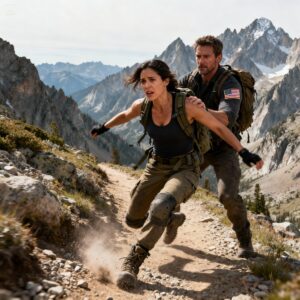
They chose a desolate mountain to be her grave, thinking a thousand-foot drop was the perfect, silent crime. But as she fell into the void, they made a fatal miscalculation about the kind of woman they just betrayed.
The mountain didn’t make a sound when it happened. There was no grand echo to mark the moment, no sympathetic rumble from the ancient stone. There was only the sharp, scattering kick of gravel, a sudden, violent silence where a…
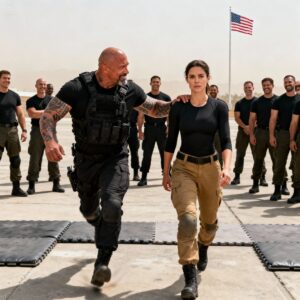
In a circle of 282 elite soldiers, two men decided to humiliate the quiet medic during a demonstration. They intended to break her spirit. Instead, in seven brutal seconds, they discovered a truth that broke them completely.
The wind that came off the Atlantic that morning had teeth. It wasn’t a breeze; it was a hard, scouring force that snapped across the open-air corridors of Naval Special Warfare Command Unit 7, carrying the briny scent of the…
End of content
No more pages to load