Candace Owens Questions Official Story in Charlie Kirk Assassination Case
The tragic assassination of Turning Point USA founder Charlie Kirk at a Utah Valley University event sent shockwaves across the nation, leaving a community in mourning and a country searching for answers. In the days following the devastating event, law enforcement launched a massive investigation that culminated in the arrest of a suspect. However, just as the public began processing the official account of the events, a new and explosive controversy erupted. Political commentator Candace Owens has publicly challenged the entire investigation, making a series of startling claims that have ignited a firestorm of debate and speculation. In a move that pits her narrative directly against that of federal authorities, Owens alleges a widespread cover-up, suggesting that the suspect is being framed and that the information released to the public is “complete fiction.” This dramatic intervention from a prominent media figure has added a complex layer of intrigue and distrust to an already heartbreaking case, raising critical questions about the nature of truth and the influence of social media in the face of a national tragedy. The controversy surrounding the Candace Owens Charlie Kirk case now centers on two wildly divergent narratives.
A Shocking Allegation: Candace Owens Challenges the Official Narrative
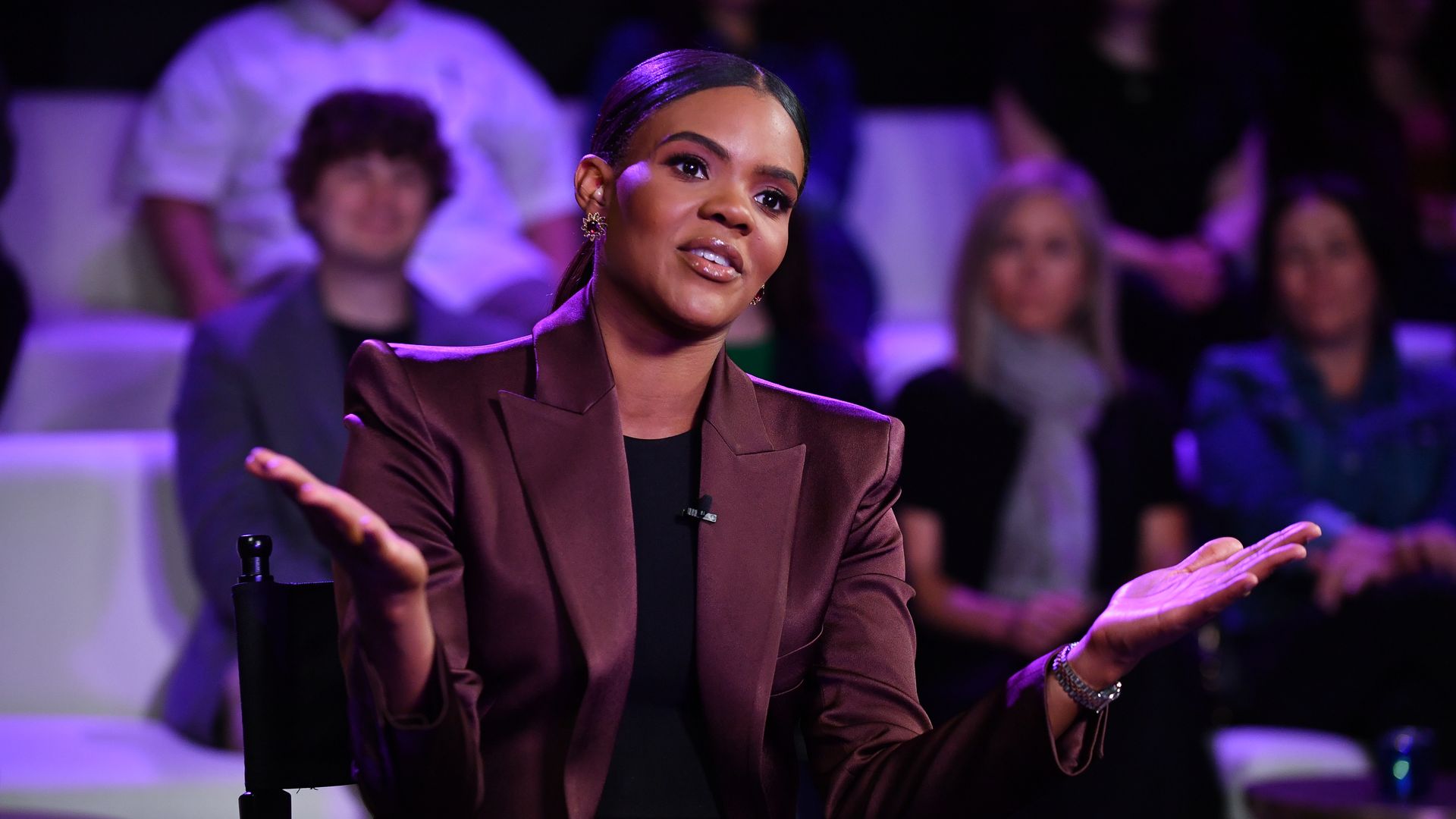
In a series of Instagram stories that immediately captured widespread attention, Candace Owens laid out her case, urging her followers to question the official story. “I want to break this news immediately because it feels important, and I think if I don’t break it immediately, something bad might happen,” she began, setting an urgent and conspiratorial tone. She then proceeded to dismantle the key pillars of the prosecution’s case against the 22-year-old suspect, Tyler Robinson. According to Owens, Robinson “maintains his innocence” and the widely reported detail that he was suicidal is false. “The entire narrative that was placed in the media about him having been suicidal is completely fictional, as are many other aspects of what we have been told,” she wrote.
Owens didn’t stop there. She also claimed that the report of Robinson’s father turning him in after a confession was “also complete fiction.” This particular claim strikes at the heart of the narrative that portrayed a family grappling with a terrible truth. Instead, Owens paints a picture of a young man who she insists was nowhere near the scene of the crime. “To the contrary, Tyler Robinson maintains his innocence and has never even been to the UVU campus,” she declared. To support this, she added that there are “absolutely zero photos or video” from the campus that could place him there, dismissing the evidence released by authorities as “a blurry image which Tyler’s family knows is not him.” Her conclusion was blunt and accusatory: “The federal government is lying about absolutely everything except for the fact that it is her gun.” At the time of her posts, Owens did not provide any concrete evidence to substantiate these serious allegations.

The Official Case Against the Tyler Robinson Suspect
The claims made by Candace Owens stand in stark contrast to the information released by law enforcement officials managing the Charlie Kirk assassination probe. Following the shooting at Utah Valley University, a tense and widespread 33-hour manhunt was initiated to find the person responsible. The search concluded with the arrest of Tyler Robinson, who was subsequently charged with aggravated murder. The gravity of the charge was underscored when prosecutors announced they would be seeking the death penalty, signaling their confidence in the evidence they had compiled against the young man.
Authorities have built their case on evidence gathered from the crime scene, witness statements, and digital forensics, though the specifics are often kept confidential during an active investigation to ensure a fair trial. The official narrative suggests a clear suspect and a motive that is being carefully pieced together. The arrest and subsequent charges represent the culmination of intensive police work aimed at bringing justice for Charlie Kirk and his family. For the investigators and prosecutors involved, the focus remains on the legal process—presenting their evidence in a court of law and proving their case beyond a reasonable doubt. The public interjections from figures like Owens can complicate this process, creating a parallel court of public opinion that operates without the rules of evidence and legal standards required in an actual courtroom.
The Turning Point USA Founder and His Legacy
To understand the magnitude of this event, it is crucial to recognize the role Charlie Kirk played in the American political landscape. As the founder of Turning Point USA, Kirk was a titan in the world of conservative activism, particularly among young people. He built an organization from the ground up that became a formidable force on college campuses across the country, advocating for free markets, limited government, and individual liberty. Kirk was known for his charismatic and often confrontational style, engaging in debates and speeches that drew massive crowds of both supporters and detractors. His influence extended far beyond campus events; he was a frequent commentator on major news networks, a prolific author, and a powerful voice in shaping conservative discourse. The assassination of the Turning Point USA founder was not just a personal tragedy for his family and friends but a profound shock to the political movement he helped build. His death left a void in the conservative world and created an environment ripe for the kind of speculation and conspiracy theories that have now emerged.
A Community in Mourning: A Wife’s Powerful Act of Forgiveness
Away from the heated political debates and conspiracy theories, a family was grappling with an unimaginable loss. At Charlie Kirk’s memorial service in Glendale, Arizona, the focus shifted from the political to the deeply personal. In a moment of profound grace and strength, Kirk’s wife, Erika, delivered a message that stood in stark contrast to the anger and division swirling around the case. She spoke of forgiveness, invoking her faith as she addressed the suspect accused of taking her husband’s life. “Our Savior said, ‘Father, forgive them, for they not know what they do.’ That young man … I forgive him,” Erika said to the gathered mourners.
Her words were a powerful testament to her character and her faith. “I forgive him because it was what Christ did, and it’s what Charlie would do,” she added. This act of forgiveness offered a moment of quiet humanity amidst the noise. It served as a reminder that at the center of this national story is a personal tragedy—a wife who lost her husband, a family shattered by violence, and a community grieving the loss of a leader. Erika’s statement was not about the legal case or the political implications; it was a deeply personal response to her suffering, choosing grace over bitterness in the face of an unthinkable tragedy. Her powerful message resonated with many, offering a different path forward than the one paved with accusations and division.
The controversy surrounding the Candace Owens Charlie Kirk case continues to unfold, representing a complex intersection of media, justice, and public perception. As the official investigation proceeds and the case against Tyler Robinson moves toward trial, the unsubstantiated claims made by Owens will likely continue to fuel debate and division. This situation highlights a growing trend in the modern information age, where official narratives from law enforcement and government bodies are increasingly challenged by prominent online personalities who command the trust of millions of followers. The line between credible journalism, commentary, and unfounded speculation becomes increasingly blurred, leaving the public to navigate a maze of conflicting information. In the end, the search for truth is complicated by the very platforms that promise to connect us, forcing a difficult public conversation about who we trust, what we believe, and how justice can prevail in an era of profound polarization and doubt.
News
The gavel fell, sealing the one-armed veteran’s fate. But from the back of the courtroom, a single, mournful howl became the first shot in a new war—one fought by a dog who remembered everything they buried.
Courtroom 3 of the Hamilton District Court was a vessel of held breath. The morning light, strained through tall, dusty windows, seemed to congeal in the air, thick and heavy as the silence itself. On the polished wooden benches, people…
He went to an Alaskan cabin to silence the echoes of war. But in the heart of a blizzard, his dog sensed a secret the storm was sent to bury—a secret that would force him into one last fight.
The wilderness beyond Anchorage doesn’t ask for permission; it simply takes. It swallows roads, erases landmarks, and devours the faint, tinny signal of a cell phone until the only voice left is the wind. It was in this vast, unforgiving…
He told the quiet woman she didn’t belong on his elite sniper range. But when her backpack split open, a single photo fell out that made every decorated Marine in the room snap to a salute in shame.
The crack of a rifle shot was the only sound that made sense anymore. It split the dry California air over Marine Corps Base Camp Pendleton, a clean, percussive thunder that echoed off the brown hills and settled in your…
As the young officer moved to detain the 89-year-old man, she was blind to the truth. The very name of the warship she guarded was a whisper of the 70-year-old secret hidden on his faded patch.
The voice sliced through the humid air of the naval pier, a sharp tool meant to carve out immediate compliance. “Sir, I’m going to have to ask you to step away from the gangway. This area is for authorized personnel…
They chose a desolate mountain to be her grave, thinking a thousand-foot drop was the perfect, silent crime. But as she fell into the void, they made a fatal miscalculation about the kind of woman they just betrayed.
The mountain didn’t make a sound when it happened. There was no grand echo to mark the moment, no sympathetic rumble from the ancient stone. There was only the sharp, scattering kick of gravel, a sudden, violent silence where a…
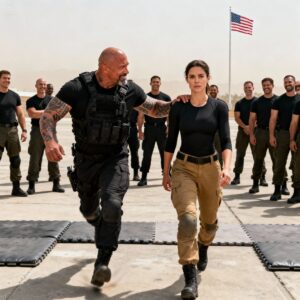
In a circle of 282 elite soldiers, two men decided to humiliate the quiet medic during a demonstration. They intended to break her spirit. Instead, in seven brutal seconds, they discovered a truth that broke them completely.
The wind that came off the Atlantic that morning had teeth. It wasn’t a breeze; it was a hard, scouring force that snapped across the open-air corridors of Naval Special Warfare Command Unit 7, carrying the briny scent of the…
End of content
No more pages to load