A League Divided: Collier’s Outcry and Smith’s Demand Plunge WNBA into Leadership Crisis
A storm that has been brewing beneath the surface of the Women’s National Basketball Association has finally erupted, shaking the league’s foundation at a time of unprecedented growth. What began as simmering frustrations over officiating and player treatment has now snowballed into a full-blown WNBA leadership crisis, with star players and influential media personalities openly calling for a change at the very top. The flashpoint came when Minnesota Lynx forward Napheesa Collier, a respected veteran and vice president of the WNBA Players Association (WNBPA), delivered a scathing and meticulously prepared indictment of the league’s front office. Her words, sharp and unequivocal, have since been amplified across the sports world, most notably by ESPN’s Stephen A. Smith, who issued a direct call for WNBA Commissioner Cathy Engelbert to step down. This public confrontation has peeled back the curtain on a deep-seated disconnect between the players who drive the league and the leadership tasked with steering its future, raising critical questions about accountability, respect, and the path forward for professional women’s basketball. The fallout from this clash is only just beginning, casting a long shadow over the league’s recent triumphs and threatening to derail its momentum.
The Shot Heard ‘Round the League: Napheesa Collier’s Bombshell Statement
The simmering tensions boiled over during what would typically be a routine end-of-season media availability. But Napheesa Collier had something more than just game analysis on her mind. In a prepared statement that left no room for ambiguity, the Lynx star and WNBPA vice president took direct aim at the league’s highest office. “We have the best players in the world. We have the best fans in the world, but right now we have the worst leadership in the world,” Collier declared, accusing Commissioner Cathy Engelbert of being “negligent” in her stewardship.
This was not a fleeting comment made in the heat of the moment; it was a calculated and powerful condemnation from a leader within the players’ union. By framing her critique in such stark terms, Collier articulated a sentiment that has reportedly been growing within locker rooms for some time. Her Napheesa Collier statement instantly became a rallying cry for those who feel the league’s administration has failed to keep pace with the players’ talent and the sport’s soaring popularity. The gravity of her position as WNBPA vice president lends institutional weight to her words, transforming a personal grievance into an official challenge to the commissioner’s authority and effectiveness. The statement signaled that the players are no longer willing to remain silent on issues they deem critical to their careers and the league’s integrity.

Stephen A. Smith Amplifies the Outcry, Demanding Resignation
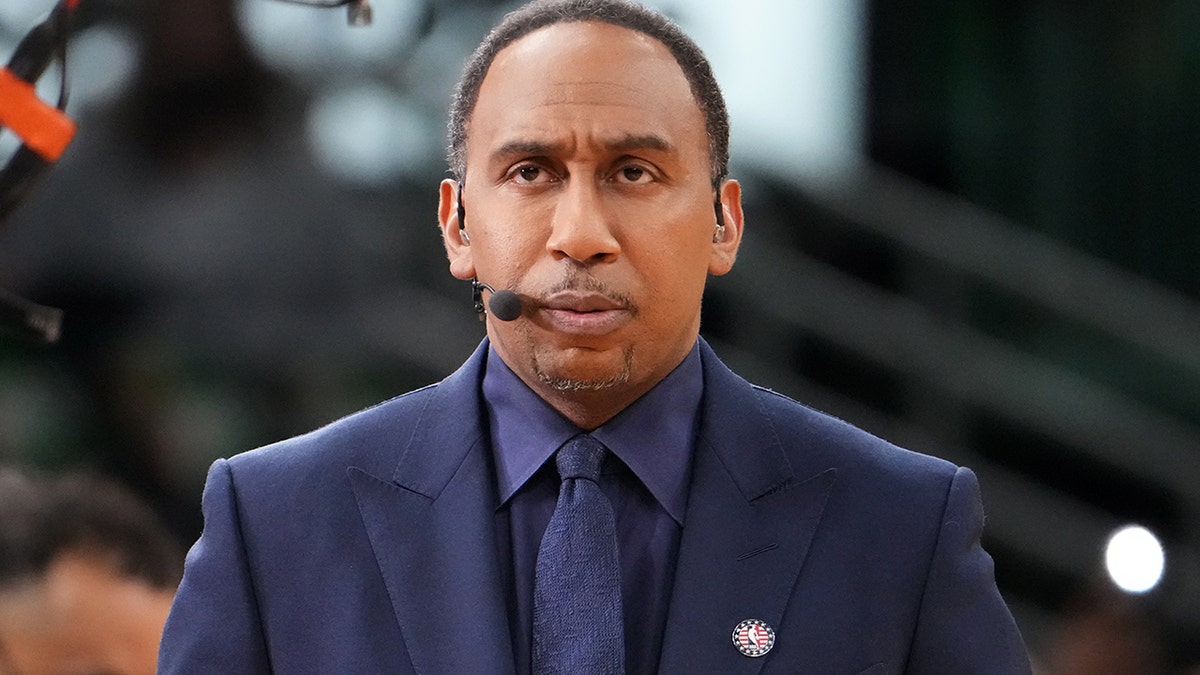
It didn’t take long for Collier’s words to reverberate through the national sports media landscape. On ESPN’s popular show “First Take,” commentator Stephen A. Smith seized on the controversy, not only backing Collier but escalating the situation by demanding Commissioner Engelbert’s resignation. Smith, known for his passionate and often blunt commentary, framed the issue as an untenable failure of leadership.
“I want to know how the hell somebody said something like that about you as the commissioner,” Smith exclaimed, comparing the situation to other major sports leagues. “Whether it was David Stern or Adam Silver or Roger Goodell or Paul Tagliabue, could you imagine? Imagine a commissioner being called out like that directly and that timid, tepid statement. She looks guilty as hell.”
The Stephen A. Smith WNBA commentary didn’t stop there. He dug into past controversies, questioning Engelbert’s judgment and her relationship with the league’s stars. “Did you really say that Caitlin Clark should thank the heavenly stars that she wouldn’t be worth anything if she wasn’t playing in the WNBA? Did you really say that?” Smith questioned, highlighting comments that have previously drawn criticism. He argued that Engelbert’s position has become compromised beyond repair, especially with crucial collective bargaining agreement negotiations on the horizon. “You can’t have her at the negotiating table talking to players,” Smith insisted. “Basically, Collier said she’s in the way of our growth and our development as a league… I believe she should hand in her resignation.” His powerful endorsement of Collier’s stance transformed a league-specific issue into a major national sports headline, intensifying the WNBA leadership crisis.
Roots of the Rebellion: WNBA Officiating and “Malpractice”
Collier’s public denouncement was not born in a vacuum. It was the culmination of mounting frustration, particularly surrounding the quality and consistency of WNBA officiating. The breaking point for the Minnesota Lynx came during a heated semifinal series against the Phoenix Mercury. Collier herself was at the center of a controversial play when she suffered an injury after contact from Mercury forward Alyssa Thomas, for which no foul was called. The non-call was the latest in a series of officiating decisions that players and coaches felt were directly impacting player safety and game outcomes.
The incident prompted an explosive reaction from Lynx head coach Cheryl Reeve. After an on-court confrontation with officials over the non-call, Reeve was ejected from the pivotal playoff game. In her post-game press conference, she did not hold back, launching a fiery critique of the league’s officiating oversight. “If this is what the league wants, OK, but I want to call for a change of leadership at the league level when it comes to officiating,” Reeve stated. She then delivered a line that underscored the depth of her anger: “The officiating crew that we had tonight, for the leadership to deem those three people semifinal-playoff worthy, it’s f—ing malpractice.” The WNBA subsequently fined Reeve for her comments, but her accusation of “malpractice” resonated deeply, framing the problem not as individual referee error but as a systemic failure of league leadership.
A Commissioner Under Siege: Unpacking the Cathy Engelbert Criticism
Cathy Engelbert, who has served as the WNBA’s commissioner since 2019, now finds herself in the most precarious position of her tenure. The Cathy Engelbert criticism is multi-faceted, touching on everything from her perceived dismissiveness toward star players to a broader sense that she is not adequately addressing the core concerns of the athletes. While Engelbert’s business acumen is often praised—she has overseen significant growth in viewership and secured landmark media rights deals—critics argue her leadership style has created a chasm between the front office and the players.
This internal turmoil presents a jarring contrast to the league’s external successes. On the same day Collier delivered her scathing remarks, the WNBA announced a major 11-year media rights deal with USA Network, which will broadcast at least 50 games per season starting in 2026. This followed a larger agreement involving NBCUniversal, The Walt Disney Co., and Amazon. In a statement celebrating the deal, Engelbert said it “marks another significant milestone for the WNBA’s continued growth.” Yet, this milestone was immediately overshadowed by the public outcry from one of the league’s most respected players. The central critique is that while the business of the WNBA is booming, the core product—the on-court experience for the players—is being neglected, creating a dangerous disconnect that threatens to undermine the league’s progress.
In the face of a mounting WNBA leadership crisis, the commissioner’s office has been thrust into the spotlight, with players, coaches, and now major media figures demanding more than just business growth. They are calling for leadership that listens, respects, and protects the athletes who are the heart and soul of the league. The coming weeks will be a critical test of Engelbert’s ability to navigate this crisis, bridge the divide with the players, and restore confidence in her administration. The future of the league may very well depend on her next moves, as the players have made it clear that the status quo is no longer acceptable. The pressure is on, and the entire sports world is watching to see how this conflict between player power and executive authority will be resolved.
News

The gavel fell, sealing the one-armed veteran’s fate. But from the back of the courtroom, a single, mournful howl became the first shot in a new war—one fought by a dog who remembered everything they buried.
Courtroom 3 of the Hamilton District Court was a vessel of held breath. The morning light, strained through tall, dusty windows, seemed to congeal in the air, thick and heavy as the silence itself. On the polished wooden benches, people…

He went to an Alaskan cabin to silence the echoes of war. But in the heart of a blizzard, his dog sensed a secret the storm was sent to bury—a secret that would force him into one last fight.
The wilderness beyond Anchorage doesn’t ask for permission; it simply takes. It swallows roads, erases landmarks, and devours the faint, tinny signal of a cell phone until the only voice left is the wind. It was in this vast, unforgiving…

He told the quiet woman she didn’t belong on his elite sniper range. But when her backpack split open, a single photo fell out that made every decorated Marine in the room snap to a salute in shame.
The crack of a rifle shot was the only sound that made sense anymore. It split the dry California air over Marine Corps Base Camp Pendleton, a clean, percussive thunder that echoed off the brown hills and settled in your…

As the young officer moved to detain the 89-year-old man, she was blind to the truth. The very name of the warship she guarded was a whisper of the 70-year-old secret hidden on his faded patch.
The voice sliced through the humid air of the naval pier, a sharp tool meant to carve out immediate compliance. “Sir, I’m going to have to ask you to step away from the gangway. This area is for authorized personnel…

They chose a desolate mountain to be her grave, thinking a thousand-foot drop was the perfect, silent crime. But as she fell into the void, they made a fatal miscalculation about the kind of woman they just betrayed.
The mountain didn’t make a sound when it happened. There was no grand echo to mark the moment, no sympathetic rumble from the ancient stone. There was only the sharp, scattering kick of gravel, a sudden, violent silence where a…

In a circle of 282 elite soldiers, two men decided to humiliate the quiet medic during a demonstration. They intended to break her spirit. Instead, in seven brutal seconds, they discovered a truth that broke them completely.
The wind that came off the Atlantic that morning had teeth. It wasn’t a breeze; it was a hard, scouring force that snapped across the open-air corridors of Naval Special Warfare Command Unit 7, carrying the briny scent of the…
End of content
No more pages to load