The High Stakes Showdown: Inside the Fraught Angel Reese Chicago Sky Relationship
In the high-octane world of professional basketball, the line between passionate ambition and organizational friction can be incredibly thin. For a rising star on a struggling team, that line can become a battleground. This is the reality currently unfolding for Angel Reese, the dynamic powerhouse whose sophomore season has been marked by both individual brilliance and a growing public rift with her team’s management. The tension between Angel Reese and the Chicago Sky has reached a fever pitch, culminating in a suspension, a chorus of external criticism, and widespread speculation about her future. What started as a candid expression of a desire to win has spiraled into a complex saga that puts a spotlight on player empowerment, franchise accountability, and the precarious nature of a star player’s loyalty when wins are hard to come by.
The situation is more than just a momentary disagreement; it’s a clash of expectations. On one side stands Reese, a player who has not only met but exceeded the hype, dominating on the court and becoming one of the WNBA’s most recognizable faces. On the other is the Chicago Sky front office, presiding over a team with a dismal record and facing pressure to build a competitive roster around their franchise cornerstone. When Reese spoke her mind, she wasn’t just venting frustration—she was challenging the status quo and demanding a commitment to excellence that matched her own. The organization’s response has set the stage for a critical offseason that could redefine both her career path and the future of the Sky.
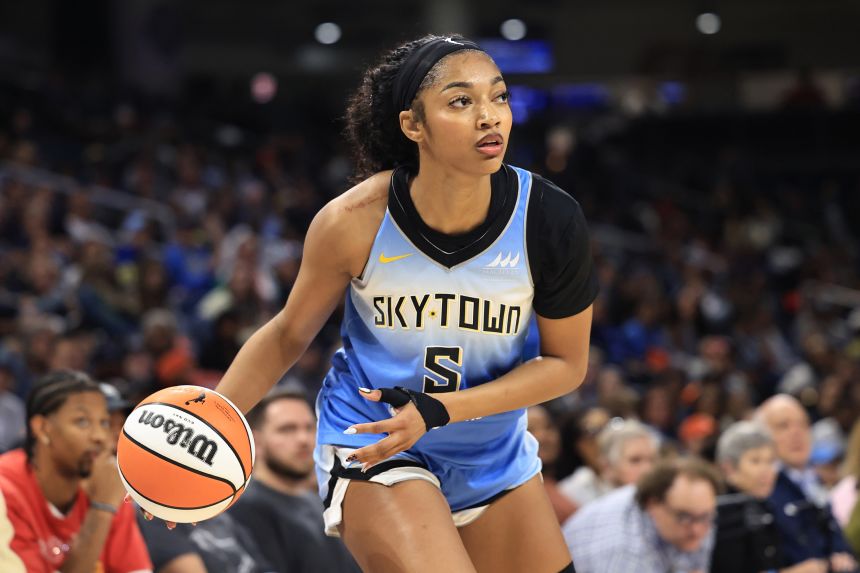
The Comments That Ignited a Firestorm
Every tipping point has a catalyst, and for the Angel Reese Chicago Sky conflict, it was a series of remarkably candid remarks to the media. Frustrated by a season mired in losses, Reese did not hold back when asked about the team’s future and her role in it. “I am very vocal about what we need and what I want,” she stated, setting the stage for a direct challenge to the front office. She expressed a conditional desire to remain in Chicago long-term, but her loyalty was not unconditional. “I’d like to be here for my career, but if things don’t pan out, obviously I might have to move in a different direction and do what’s best for me,” she explained.
The comment that truly sent shockwaves, however, was her unvarnished assessment of the team’s performance and her requirements for the upcoming season. Refusing to mince words, Reese declared she would not be “settling for the same sh-t we did this year.” Her demand was simple and direct: “We have to get good players. We have to get great players. That’s a non-negotiable for me.” In that moment, Reese transitioned from a star player to a vocal leader, putting the onus squarely on the management to elevate the roster. She wasn’t just asking for help; she was demanding a winning environment, a stance many athletes take behind closed doors but few declare so publicly.

A Suspension and a Statement: The Front Office Responds
The Chicago Sky’s reaction to their star player’s public demands was swift and severe. Instead of addressing the substance of her concerns in a public forum, the organization chose to discipline her. Reese was suspended for the first half of the team’s subsequent game against the Las Vegas Aces. The move was a clear message that the front office, not its players, controlled the team’s narrative and decisions.
In a formal statement released on social media, the Sky framed the issue around respect and conduct, stating the organization “values the safety, respect, and well-being of every player.” The statement went on to label Reese’s comments as “detrimental to the team,” a powerful indictment of her words. While the team noted the matter was “handled and resolved internally,” the public nature of the suspension suggested a deep fracture in their relationship. Though Reese later apologized and clarified that she was frustrated with how her words were taken out of context, the damage was done. The front office had drawn a line in the sand, escalating a personnel issue into a public spectacle.
An Outsider’s Perspective: A WNBA Executive’s Blunt Advice for Angel Reese
As news of the suspension spread, the situation caught the attention of figures across the league. According to a report from Dallas Hoops Journal, one unnamed WNBA executive offered a scathing critique of the Chicago Sky front office and gave some unfiltered advice regarding an Angel Reese trade. “She needs to get the hell out of there,” the executive said, leaving no room for ambiguity. This insider’s perspective added significant weight to the narrative that the problem might not be Reese’s ambition, but the environment in which she plays.
A Franchise Under the Microscope
The executive’s criticism was rooted in a broader perception of the organization. “Chicago is probably the worst-run organization in the league,” they added, referencing a 2025 anonymous player poll where the Sky was indeed voted as such. This context is crucial; it suggests that Reese’s frustrations are not occurring in a vacuum but are symptomatic of deeper, systemic issues. The executive directly questioned the logic of the suspension, asking, “You’re gonna suspend your best player just because she’s putting pressure on you to get better? That was embarrassing to see.” Their final piece of advice was a call to action: if the team doesn’t trade her, Reese “should request a trade.” This sentiment transformed the conversation from an internal dispute into a league-wide discussion about Reese’s future.
A Lone Star in a Dim Sky
To fully grasp the depth of Angel Reese’s frustration, one must look at the stark contrast between her individual performance and her team’s collective failure. While the Chicago Sky languished at the bottom of the league standings with a dismal 10-32 record, Reese was having a record-breaking season. The team ranked near the bottom in both offensive and defensive efficiency, led the league in turnovers with a staggering 16.5 per game, and was last in points per game.
Amid this struggle, Reese was a beacon of excellence. She took on an immense leadership role, especially after veteran Courtney Vandersloot was sidelined with an injury. Reese went on to lead her team in points, rebounds, and assists. Her dominance on the boards was unparalleled, as she led the entire WNBA with 12.6 rebounds per game. She recorded her first career triple-double and set a new league record for the most double-doubles in a player’s first two seasons with an incredible 46. Her performance wasn’t just good; it was historically great. This relentless effort, however, was not translating into team wins, providing the perfect breeding ground for the WNBA drama that has now captured headlines.
The Court of Public Opinion: Fans Rally with “Free Angel”
The moment the Chicago Sky announced Reese’s suspension, social media erupted. Fans, analysts, and even casual observers overwhelmingly sided with the player. The hashtag and phrase “Free Angel” began trending, becoming a rallying cry for those who believed the franchise was mishandling its brightest star. Many argued that Reese’s desire for better teammates was not only justified but necessary for a player of her caliber.
The public sentiment was one of disbelief and anger toward the Sky’s front office. One user on X, formerly Twitter, summed up the general feeling: “Shame on the Chicago Sky FO. She receives so much scrutiny, especially on social media, that they were out to embarrass her, but it backfired.” This comment reflects a broader understanding of the intense spotlight on Reese and a belief that her own team should be her biggest supporter, not her public disciplinarian. The overwhelming public support has added another layer of pressure on the organization, demonstrating that in today’s sports landscape, franchise decisions are tried in the court of public opinion.
What’s Next for the Angel Reese Chicago Sky Saga?
With the season’s end comes a period of uncertainty and critical decisions for both Angel Reese and the Chicago Sky. The relationship appears to be severely damaged, and the advice from the unnamed WNBA executive to seek a trade now looms large over the offseason. Reese holds significant leverage as one of the league’s most marketable and talented young players. She has made it clear that her priority is winning, and if the Sky cannot demonstrate a clear and credible plan to build a championship-contending team around her, her desire to stay in Chicago may evaporate completely.
For the Chicago Sky front office, the path forward is treacherous. Trading Reese would mean losing a generational talent and likely alienating a significant portion of their fanbase. However, keeping a superstar who may have lost faith in the organization’s leadership could create a toxic environment. They must now navigate a delicate situation where they need to either repair their relationship with Reese through meaningful action—like acquiring top-tier talent—or accept the reality that their franchise player may be on her way out.
The saga of Angel Reese and the Chicago Sky has become a compelling case study in modern athlete-franchise dynamics. It’s a story about a player who knows her worth and isn’t afraid to demand more, and an organization at a crossroads, forced to confront its own shortcomings under the brightest of spotlights. The next chapter has yet to be written, but one thing is certain: the resolution of this conflict will have lasting implications for everyone involved. The future of the Angel Reese Chicago Sky partnership is hanging by a thread, and the entire league is watching to see if it will be mended or irrevocably broken.
News

The gavel fell, sealing the one-armed veteran’s fate. But from the back of the courtroom, a single, mournful howl became the first shot in a new war—one fought by a dog who remembered everything they buried.
Courtroom 3 of the Hamilton District Court was a vessel of held breath. The morning light, strained through tall, dusty windows, seemed to congeal in the air, thick and heavy as the silence itself. On the polished wooden benches, people…

He went to an Alaskan cabin to silence the echoes of war. But in the heart of a blizzard, his dog sensed a secret the storm was sent to bury—a secret that would force him into one last fight.
The wilderness beyond Anchorage doesn’t ask for permission; it simply takes. It swallows roads, erases landmarks, and devours the faint, tinny signal of a cell phone until the only voice left is the wind. It was in this vast, unforgiving…

He told the quiet woman she didn’t belong on his elite sniper range. But when her backpack split open, a single photo fell out that made every decorated Marine in the room snap to a salute in shame.
The crack of a rifle shot was the only sound that made sense anymore. It split the dry California air over Marine Corps Base Camp Pendleton, a clean, percussive thunder that echoed off the brown hills and settled in your…

As the young officer moved to detain the 89-year-old man, she was blind to the truth. The very name of the warship she guarded was a whisper of the 70-year-old secret hidden on his faded patch.
The voice sliced through the humid air of the naval pier, a sharp tool meant to carve out immediate compliance. “Sir, I’m going to have to ask you to step away from the gangway. This area is for authorized personnel…

They chose a desolate mountain to be her grave, thinking a thousand-foot drop was the perfect, silent crime. But as she fell into the void, they made a fatal miscalculation about the kind of woman they just betrayed.
The mountain didn’t make a sound when it happened. There was no grand echo to mark the moment, no sympathetic rumble from the ancient stone. There was only the sharp, scattering kick of gravel, a sudden, violent silence where a…

In a circle of 282 elite soldiers, two men decided to humiliate the quiet medic during a demonstration. They intended to break her spirit. Instead, in seven brutal seconds, they discovered a truth that broke them completely.
The wind that came off the Atlantic that morning had teeth. It wasn’t a breeze; it was a hard, scouring force that snapped across the open-air corridors of Naval Special Warfare Command Unit 7, carrying the briny scent of the…
End of content
No more pages to load