In the unforgiving arena of national politics, the White House podium is one of the most scrutinized platforms in the world. The individual who stands behind it, the Press Secretary, serves as the primary voice of an administration, tasked with navigating a minefield of tough questions from a skeptical press corps. This role demands not only a deep understanding of policy but also an almost supernatural level of composure and verbal precision. It is a job where a single misplaced word can trigger a news cycle, and a pattern of such errors can define a tenure. It is against this backdrop that Karoline Leavitt, the current Press Secretary, finds herself embroiled in a growing controversy centered on her command of the English language.
The issue is not one of policy debates or political spin, but something far more fundamental: a series of verbal gaffes and mispronunciations that have been seized upon by critics and amplified across the digital landscape. What might have been minor, fleeting mistakes in a pre-internet age have become indelible viral moments, replayed and ridiculed ad nauseam. This intense focus on her speech has sparked a broader conversation about competence, professionalism, and the standards to which we hold our public figures.
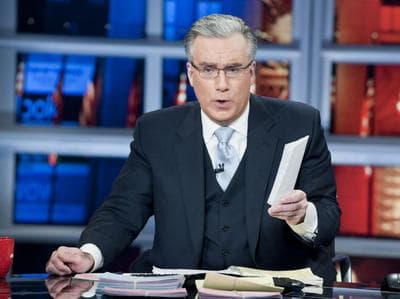
Leading the charge against Leavitt is the outspoken political commentator Keith Olbermann. A seasoned media veteran with a reputation for incisive and often caustic commentary, Olbermann has made Leavitt a recurring subject of his critiques. He has gone beyond mere commentary, actively compiling what he has dubbed a “Hall of Fame” of her on-air blunders. His assessment of her performance is brutally direct; he has described her as “belligerent, condescending, and aggressively stupid.” This kind of attack from a well-known media personality has lent a certain weight to the online chatter, elevating scattered criticisms into a cohesive and damaging narrative.

The specific examples fueling this narrative are striking. One of the most-cited instances involves her mispronunciation of Adolf Hitler’s name as “Hilter.” The slip-up, concerning one of history’s most notorious figures, was seen by many not as a simple error but as a profound gaffe that suggested a startling lack of basic knowledge. In another clip, while discussing economic policy, she referred to “apprenticeships” as “apprentinships.” Social media accounts, like CALL TO ACTIVISM, were quick to isolate and share these moments. Even the president’s name was seemingly misspoken in one clip as “Chump.”
Viewed in isolation, any one of these could be explained away as a momentary lapse under the intense pressure of live television. However, the cumulative effect of these incidents has created a powerful perception of a spokesperson who is out of her depth. In the digital age, perception quickly solidifies into reality. The constant repetition of these clips on platforms like X (formerly Twitter) and Facebook has ensured that for a significant portion of the public, Leavitt is now defined by her verbal stumbles rather than by the messages she is tasked with delivering.
Critics argue that this issue goes beyond simple mockery. They contend that a press secretary’s ability to communicate clearly and accurately is paramount to the job. When the primary spokesperson for the White House struggles with basic pronunciation, it can erode the credibility of the entire communications operation. It raises questions about the vetting process for such a high-profile position and reflects on the administration’s priorities. Is the ability to articulate policy clearly less important than the willingness to engage in partisan combat?
This question lies at the heart of the divide in how Leavitt’s performance is perceived. While critics see incompetence, her supporters and the administration itself appear to see a loyal and effective fighter. Her combative style, which Olbermann and others decry as unprofessional, is likely seen internally as a feature, not a bug. In an era of hyper-partisanship, the administration may value a press secretary who aggressively pushes back against a media establishment it views as inherently hostile. President Trump’s own praise for Leavitt suggests that he is unbothered by the criticism and may even welcome the controversy she generates.
From this perspective, the focus on her gaffes is nothing more than a bad-faith attack by political opponents looking for any angle to criticize the administration. Her supporters would argue that the substance of her message is what matters, not the occasional slip of the tongue. They see the media’s fixation on these minor errors as proof of their bias, a classic case of focusing on trivialities to avoid engaging with the administration’s actual policies and achievements.
The Karoline Leavitt situation thus becomes a microcosm of the broader political and media landscape. It is a story about the weaponization of social media, where gaffes are not just embarrassing moments but ammunition to be used in an ongoing information war. It highlights the profound disconnect between what different segments of the population value in their political leaders and representatives. Is it more important to be a polished, eloquent speaker, or a loyal, unyielding fighter?
As Leavitt continues in her role, she does so under a level of scrutiny that is perhaps unprecedented for a press secretary. Every briefing is a high-wire act, where the content of her answers is often secondary to the manner in which they are delivered. Every word is parsed, not just for its political meaning, but for its phonetic accuracy. This relentless pressure creates a feedback loop where the anxiety of making a mistake can, in itself, lead to more mistakes. For now, she retains the support of her boss, which in the current political climate, is the only metric that truly matters for her job security. However, the court of public opinion remains deeply divided, and the viral clips of her verbal missteps continue to circulate, shaping a legacy one gaffe at a time.