D’Angelo, Pioneering Neo-Soul Artist, Dead at 51
Michael Eugene Archer, the influential R&B singer and musician known professionally as D’Angelo, has died at the age of 51. A source confirmed to PEOPLE on October 14 that the artist passed away following a private battle with pancreatic cancer. The source elaborated on his final months, stating, “He was in hospice for two weeks but had been in the hospital for months.”
His death marks the end of an era for the neo-soul genre, which he helped shape and define in the 1990s. His former collaborator, DJ Premier, expressed his grief, writing, “Such a sad loss to the passing of D’angelo. We have so many great times. Gonna miss you so much. Sleep Peacefully D’ Love You KING.”

An Architect of a New Sound
Born in Richmond, Virginia, on February 11, 1974, D’Angelo’s prodigious musical talent was evident from a very young age. The son of a church minister, he began playing the piano at just three years old and was performing alongside his father by the age of five. This foundation in gospel and soul music would become a hallmark of his innovative sound.
In pursuit of a professional career, he relocated to New York around 1991 and became a member of the group I.D.U., where he honed his skills as a producer and rapper. His talent quickly gained recognition in the city’s competitive music scene, evidenced by several victories during amateur night at Harlem’s famed Apollo Theater.
His first major industry success came not as a performer but as a songwriter. In 1993, he penned the hit “U Will Know” for the supergroup Black Men United, a collective that featured prominent artists such as Usher, Brian McKnight, Boyz II Men, Gerald Levert, and Raphael Saadiq. The track was featured in the 1994 film Jason’s Lyric, solidifying his reputation as a formidable creative force.
A Career Defined by Landmark Albums
In 1995, D’Angelo released his debut album, Brown Sugar, to widespread critical acclaim. The album was a landmark release for the burgeoning neo-soul movement, blending traditional R&B with elements of jazz, funk, and hip-hop. It achieved platinum status and earned three nominations at the 38th annual Grammy Awards. During this period, he was in a relationship with fellow artist Angie Stone, who served as a muse for the album. He also contributed to her work as a producer, and the two had a son, Michael Archer Jr., before their relationship ended in 1999. Stone passed away earlier this year following a car accident. D’Angelo also had two other children, a daughter named Imani and a son named Morocco.
Following an extensive tour for Brown Sugar, D’Angelo entered a period of creative hiatus, citing writer’s block. He returned five years later with his sophomore album, Voodoo, in 2000. The album was even more ambitious and critically lauded than its predecessor, winning two Grammy Awards for Best R&B Album and Best Male Vocal Performance for its lead single, “Untitled (How Does It Feel).” The song’s accompanying music video, which featured a shirtless D’Angelo, catapulted him to international fame and cemented his status as a sex symbol.
His third and final album, Black Messiah, arrived after a 14-year wait in 2014. Released with little prior announcement, the record was immediately hailed by fans and critics as a masterpiece. It secured two more Grammy Awards for D’Angelo: Best R&B Album and Best R&B Song for the track “Really Love.”
A Difficult Relationship with Fame
Despite his undeniable musical genius and critical success, D’Angelo had a deeply conflicted relationship with fame. The intense pressure and public image that followed the release of Voodoo took a significant toll on him. He struggled with the “sex symbol” label and retreated from the spotlight, battling addictions to drugs and alcohol.
His personal difficulties led to several encounters with law enforcement. In 2005, he was arrested and charged with possession of cocaine and marijuana, as well as driving while intoxicated. Tragedy nearly struck just a week after his sentencing in September of that year when he was involved in a serious car accident. Reflecting on the incident, D’Angelo later told PEOPLE, “To tell you the truth, I don’t really remember anything” about the crash.
After this turbulent period, he largely remained out of the public eye until resurfacing in 2012 for the D’Angelo and Friends Tour across several European cities. However, following the success of Black Messiah, he once again withdrew into a private life. A source described his reclusive nature to PEOPLE, noting, “D’Angelo was very eccentric, he had a manager but he wouldn’t work. He was a recluse; he didn’t like going out of the house.” This tendency to retreat defined the final years of a singular artist whose influence continues to resonate throughout the music industry.
News
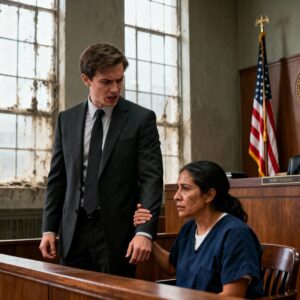
The gavel fell, sealing the one-armed veteran’s fate. But from the back of the courtroom, a single, mournful howl became the first shot in a new war—one fought by a dog who remembered everything they buried.
Courtroom 3 of the Hamilton District Court was a vessel of held breath. The morning light, strained through tall, dusty windows, seemed to congeal in the air, thick and heavy as the silence itself. On the polished wooden benches, people…

He went to an Alaskan cabin to silence the echoes of war. But in the heart of a blizzard, his dog sensed a secret the storm was sent to bury—a secret that would force him into one last fight.
The wilderness beyond Anchorage doesn’t ask for permission; it simply takes. It swallows roads, erases landmarks, and devours the faint, tinny signal of a cell phone until the only voice left is the wind. It was in this vast, unforgiving…

He told the quiet woman she didn’t belong on his elite sniper range. But when her backpack split open, a single photo fell out that made every decorated Marine in the room snap to a salute in shame.
The crack of a rifle shot was the only sound that made sense anymore. It split the dry California air over Marine Corps Base Camp Pendleton, a clean, percussive thunder that echoed off the brown hills and settled in your…

As the young officer moved to detain the 89-year-old man, she was blind to the truth. The very name of the warship she guarded was a whisper of the 70-year-old secret hidden on his faded patch.
The voice sliced through the humid air of the naval pier, a sharp tool meant to carve out immediate compliance. “Sir, I’m going to have to ask you to step away from the gangway. This area is for authorized personnel…
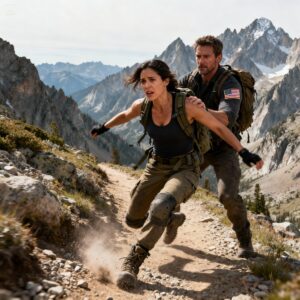
They chose a desolate mountain to be her grave, thinking a thousand-foot drop was the perfect, silent crime. But as she fell into the void, they made a fatal miscalculation about the kind of woman they just betrayed.
The mountain didn’t make a sound when it happened. There was no grand echo to mark the moment, no sympathetic rumble from the ancient stone. There was only the sharp, scattering kick of gravel, a sudden, violent silence where a…

In a circle of 282 elite soldiers, two men decided to humiliate the quiet medic during a demonstration. They intended to break her spirit. Instead, in seven brutal seconds, they discovered a truth that broke them completely.
The wind that came off the Atlantic that morning had teeth. It wasn’t a breeze; it was a hard, scouring force that snapped across the open-air corridors of Naval Special Warfare Command Unit 7, carrying the briny scent of the…
End of content
No more pages to load