A Legend’s Verdict: Bob Cousy Champions Caitlin Clark Amidst League-Wide Turbulence
In an era of sports dominated by hot takes and fleeting social media commentary, a voice from basketball’s golden age has cut through the noise with startling clarity and conviction. At 97 years old, Bob Cousy, the iconic Boston Celtics point guard and Hall of Famer, remains a sharp and invested observer of the game he helped build. His latest observations are not about the league he once dominated, but about the burgeoning world of women’s basketball and its electrifying new centerpiece, Caitlin Clark. The rookie sensation has been at the heart of a cultural phenomenon known as the Caitlin Clark effect, a tidal wave of attention and revenue flooding the WNBA. Yet, her arrival has been met with a mix of celebration and stark, physical opposition from her peers. This duality has sparked a nationwide debate, and now, Cousy has weighed in, offering a perspective steeped in decades of experience. He sees Clark not as a threat, but as a generational tide lifting all boats, and he simply cannot comprehend why some players seem intent on trying to sink the ship. His powerful words have added a significant, authoritative voice to a conversation that is defining the future of a professional sports league.
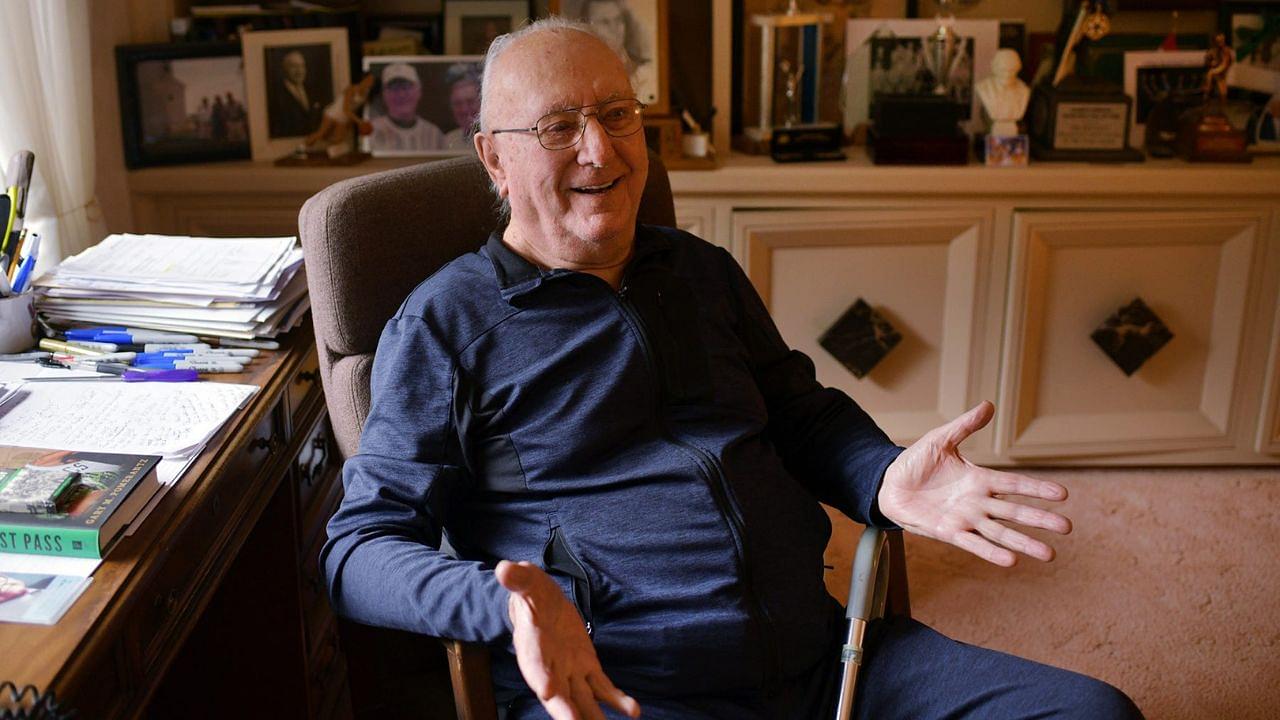
The Unfiltered Opinion of a Basketball Pioneer
Bob Cousy’s opinion carries the weight of history. As the “Houdini of the Hardwood,” he revolutionized the point guard position, leading the Boston Celtics to six NBA championships in the 1950s and 60s. His perspective isn’t just that of a fan; it’s that of an architect of modern basketball. So when he speaks, people listen. In a recent interview with Dan Shaughnessy of the Boston Globe, Cousy didn’t mince words about the treatment the young Indiana Fever guard has received. He expressed a profound sense of bewilderment at the apparent resentment directed at Clark by some WNBA veterans.
“She’s had a tremendous impact on that league and their earning potential. They should be kissing the ground she walks on, not trying to foul her and get her out of the game,” Cousy stated emphatically. This single quote encapsulates the core of the controversy. On one hand, there is the undeniable positive impact Clark is having on WNBA popularity. On the other, there is the on-court aggression that has, at times, crossed the line from competitive to contentious. Cousy sees this as a fundamentally flawed business and sporting approach. He views Clark as the league’s greatest asset, a “saleable product” who is masterfully growing the game for everyone. “It’s a saleable product and she’s done a really good job selling it. It’s enjoyable,” he added, noting his own family’s admiration for her. “My son-in-law is from Indiana and he’s a Clark fan. She’s exceptional.”
:max_bytes(150000):strip_icc():focal(999x0:1001x2)/caitlin-clark-indiana-fever-091925-0b3bf98503804237aefd6ca667d77cd9.jpg)
Understanding the On-Court Friction and the Caitlin Clark Effect
To appreciate Cousy’s perspective, one must understand the environment Clark has entered. Her transition from college superstardom at Iowa to the WNBA has been anything but smooth. While her talent is undeniable—through her first dozen games, she’s proven her first overall draft selection was no fluke, averaging an impressive 19.2 points and a league-leading 8.4 assists per game—the welcome from her peers has been rough. She has been subjected to hard fouls, off-ball shoves, and pointed verbal jabs that have been scrutinized by fans and media alike. Incidents involving players like Chennedy Carter and Angel Reese have been dissected frame by frame, fueling a debate about whether this is typical “welcome to the league” rookie treatment or something more personal, rooted in jealousy over the unprecedented attention she commands. This is where the Caitlin Clark effect becomes a double-edged sword. While it brings more eyes and money to women’s basketball, it also places a target on the back of the player responsible for it.
The Undeniable Numbers Behind the Phenomenon
Bob Cousy’s argument is firmly rooted in tangible evidence. The Caitlin Clark effect is not a marketing buzzword; it is a measurable economic and cultural boom. The data is overwhelming. The Indiana Fever, long a low-attendance team, are now the league’s hottest ticket. Opposing teams are moving their games against the Fever to larger NBA arenas to accommodate the surge in demand. Ticket prices on secondary markets have skyrocketed, and television ratings have shattered previous records. Clark’s debut game drew an average of 2.1 million viewers, the most-watched WNBA game on ESPN platforms in history. League-wide, games featuring Clark are seeing viewership increases of over 200% compared to last season’s averages.
This surge extends to merchandise sales, social media engagement, and overall media coverage. For the first time, the WNBA is a consistent topic on major sports talk shows, a testament to the level of interest Clark has generated. This is the “earning potential” Cousy referred to. More viewers lead to more lucrative television rights deals. More fans in seats mean more revenue for every team. Increased visibility attracts bigger corporate sponsorships. Ultimately, this financial growth is what will lead to higher salaries, better facilities, and greater opportunities for every single player in the league, not just Clark. From this pragmatic viewpoint, Cousy’s assessment that her peers should be grateful seems less like a hyperbole and more like sound business advice.
A Generational Perspective on a Modern Dilemma
What makes Bob Cousy‘s intervention so compelling is the generational bridge it creates. Here is a 97-year-old man, a legend from a vastly different era of sport and society, looking at the current landscape of women’s basketball and seeing the situation with perfect clarity. He isn’t caught up in the nuances of modern player rivalries or social media drama. Instead, he sees a simple, powerful truth: a transcendent talent is elevating her entire sport, and the logical response should be support and appreciation, not hostility. His perspective serves as a reminder that the core principles of sports and business are timeless. When someone’s individual success directly contributes to the collective good, it is counterproductive to try to tear that person down. His defense of Clark is a testament to her universal appeal and the undeniable, positive change she represents for the future of her sport.
In conclusion, the debate surrounding Caitlin Clark’s rookie season is complex, touching on issues of professional jealousy, competitive integrity, and the growing pains of a league in the midst of an explosive expansion of its popularity. While some argue that the physical play is just part of the game, a necessary rite of passage for any rookie, others see it as a targeted, resentful reaction to her stardom. Bob Cousy’s powerful, unfiltered opinion has firmly sided with the latter interpretation. He sees the bigger picture—the economic and cultural revolution being driven by the Caitlin Clark effect. His words serve as both a defense of a young star and a piece of sage advice to a league at a critical juncture. The way the WNBA and its players navigate this moment could very well determine the trajectory of their success for years to come. For a legend who has seen it all, the path forward is obvious: embrace the phenom who is changing the game for the better.
News

The gavel fell, sealing the one-armed veteran’s fate. But from the back of the courtroom, a single, mournful howl became the first shot in a new war—one fought by a dog who remembered everything they buried.
Courtroom 3 of the Hamilton District Court was a vessel of held breath. The morning light, strained through tall, dusty windows, seemed to congeal in the air, thick and heavy as the silence itself. On the polished wooden benches, people…

He went to an Alaskan cabin to silence the echoes of war. But in the heart of a blizzard, his dog sensed a secret the storm was sent to bury—a secret that would force him into one last fight.
The wilderness beyond Anchorage doesn’t ask for permission; it simply takes. It swallows roads, erases landmarks, and devours the faint, tinny signal of a cell phone until the only voice left is the wind. It was in this vast, unforgiving…

He told the quiet woman she didn’t belong on his elite sniper range. But when her backpack split open, a single photo fell out that made every decorated Marine in the room snap to a salute in shame.
The crack of a rifle shot was the only sound that made sense anymore. It split the dry California air over Marine Corps Base Camp Pendleton, a clean, percussive thunder that echoed off the brown hills and settled in your…

As the young officer moved to detain the 89-year-old man, she was blind to the truth. The very name of the warship she guarded was a whisper of the 70-year-old secret hidden on his faded patch.
The voice sliced through the humid air of the naval pier, a sharp tool meant to carve out immediate compliance. “Sir, I’m going to have to ask you to step away from the gangway. This area is for authorized personnel…

They chose a desolate mountain to be her grave, thinking a thousand-foot drop was the perfect, silent crime. But as she fell into the void, they made a fatal miscalculation about the kind of woman they just betrayed.
The mountain didn’t make a sound when it happened. There was no grand echo to mark the moment, no sympathetic rumble from the ancient stone. There was only the sharp, scattering kick of gravel, a sudden, violent silence where a…

In a circle of 282 elite soldiers, two men decided to humiliate the quiet medic during a demonstration. They intended to break her spirit. Instead, in seven brutal seconds, they discovered a truth that broke them completely.
The wind that came off the Atlantic that morning had teeth. It wasn’t a breeze; it was a hard, scouring force that snapped across the open-air corridors of Naval Special Warfare Command Unit 7, carrying the briny scent of the…
End of content
No more pages to load