Matthew Dowd Fired From MSNBC After Controversial On-Air Commentary
In the fast-paced, high-stakes world of cable news, the line between incisive political analysis and insensitive commentary can be perilously thin. A single on-air moment can ignite a firestorm, leading to swift and severe consequences. This reality was starkly illustrated when veteran political analyst Matthew Dowd was fired from MSNBC following remarks he made about the tragic death of conservative activist Charlie Kirk. The incident, which unfolded during a live broadcast, sent shockwaves through the media landscape, raising profound questions about accountability, the responsibilities of commentators, and the heated nature of modern political discourse. What began as a segment discussing a national tragedy quickly spiraled into a network-defining controversy, culminating in a public apology from the network president and the termination of a well-known voice. The Matthew Dowd Fired incident serves as a powerful case study in the immediate and irreversible impact of words spoken on a national stage, highlighting the delicate balance news organizations must strike in an era of unprecedented political polarization. The fallout from his comments continues to reverberate, forcing a necessary conversation about the standards to which public figures should be held, especially in moments of grief and national mourning.

The On-Air Comments That Ignited a Firestorm
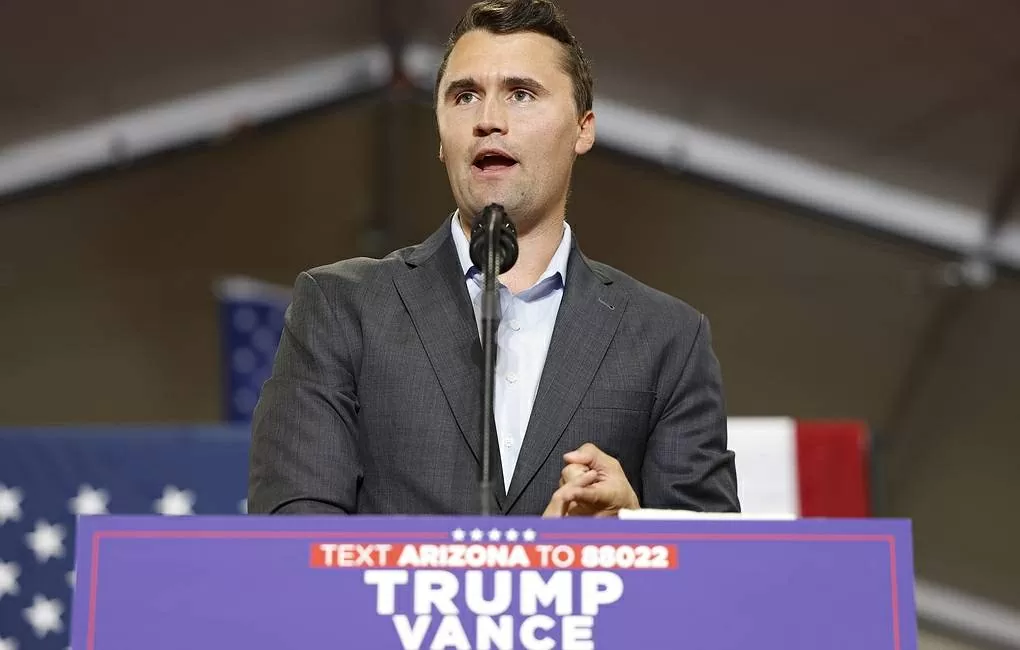
The controversy began during MSNBC’s live coverage of Charlie Kirk’s untimely death. Anchor Katy Tur posed a question to Matthew Dowd about the broader political climate, asking him to comment on “the environment in which a shooting like this happens.” Dowd’s response would become the catalyst for his dismissal. He characterized Kirk as one of the “most divisive, especially divisive younger figures,” who he claimed was “constantly sort of pushing this sort of hate speech or sort of aimed at certain groups.”
He then articulated a philosophy that directly connected rhetoric to violence, stating, “And I always go back to, hateful thoughts lead to hateful words, which then lead to hateful actions. And I think that is the environment we are in. You can’t stop with these sort of awful thoughts you have and then saying these awful words and not expect awful actions to take place. And that’s the unfortunate environment we are in.” These words, spoken just hours after Kirk’s death was announced, were immediately interpreted by many viewers as blaming the victim for his own demise. The commentary did not land as an abstract analysis of the political climate but as a direct and personal indictment of a man who could no longer defend himself, triggering an immediate and furious public response.
:max_bytes(150000):strip_icc():focal(749x389:751x391)/mark-dowd-2d3571955f994ab6bcb9d4a958d27b42.jpg)
MSNBC’s Swift Response: The Matthew Dowd Fired Decision
The backlash against Dowd’s comments was instantaneous and overwhelming, spreading rapidly across social media platforms. Viewers, political figures, and media critics from across the ideological spectrum condemned the remarks as callous and inappropriate. The sheer volume of the outrage demanded a quick and decisive response from MSNBC’s leadership.
Network president Rebecca Kutler acted swiftly, issuing a formal apology that left no room for ambiguity. In a statement posted to the MSNBC Public Relations X account, she slammed Dowd’s commentary, labeling it “inappropriate, insensitive and unacceptable.” Kutler’s words were a clear attempt to distance the network from its analyst’s impromptu analysis. “We apologize for his statements, as has he,” she continued. “There is no place for violence in America, political or otherwise.” This public denunciation was followed by the internal decision that Matthew Dowd was fired, a move that underscored the network’s zero-tolerance policy for what it deemed a severe breach of professional and ethical standards. The termination sent a clear message that in moments of tragedy, sensitivity and respect must override partisan analysis, no matter the intent.
The Network’s Stance on Political Analyst Commentary
The Matthew Dowd Fired episode forced MSNBC to publicly reinforce its standards for on-air talent. The network’s swift action demonstrated a commitment to holding its commentators accountable, particularly when their words could be perceived as lacking empathy or crossing a line of basic human decency. In today’s media environment, where outrage can be weaponized and clips can go viral in minutes, news organizations are under immense pressure to manage their brand and maintain credibility. The MSNBC controversy highlighted the inherent risk of live, unscripted commentary on sensitive subjects. An analyst’s personal philosophy, while perhaps intended as a broader critique of society, can easily be misconstrued or seen as deeply offensive in the context of a recent tragedy. Kutler’s decisive action was not just about one analyst’s comments; it was about protecting the network’s reputation and reassuring its audience that there are, indeed, lines that cannot be crossed.
An Apology and a Tribute
Facing intense public pressure and the loss of his job, Matthew Dowd issued his own apology via his BlueSky account. He sought to clarify his intentions and express regret for the way his words were delivered and received. “I apologize for my tone and words,” Dowd wrote. “Let me be clear, I in no way intended for my comments to blame Kirk for this horrendous attack. Let us all come together and condemn violence of any kind.” His statement was an attempt to reframe his commentary as a broader plea against violence rather than a specific accusation, but by then, the damage had been done.
Meanwhile, tributes for Charlie Kirk poured in, illustrating the deep impact he had on his followers and the conservative movement. Former President Donald Trump announced Kirk’s death on Truth Social with a heartfelt message. “The Great, and even Legendary, Charlie Kirk, is dead,” Trump wrote. “No one understood or had the Heart of the Youth in the United States of America better than Charlie. He was loved and admired by ALL, especially me, and now, he is no longer with us.” He extended sympathies on behalf of himself and Melania Trump to Kirk’s wife, Erika, and his family. This tribute underscored the profound sense of loss felt by Kirk’s supporters and stood in stark contrast to the Charlie Kirk comments that had led to Dowd’s termination, further amplifying the controversy.
The Broader Debate on Media Responsibility
This incident has reignited a fierce debate about media responsibility in a deeply divided country. Pundits and analysts are paid to offer opinions and connect dots, but where is the boundary between sharp analysis and harmful speculation, especially in the immediate aftermath of a tragedy? Critics of Dowd argue that his comments exemplified a troubling trend of political commentators using moments of grief to score ideological points. Supporters, however, might suggest he was making a legitimate, if poorly timed, observation about the consequences of inflammatory rhetoric. The decision by MSNBC to fire Dowd is seen by some as a necessary enforcement of ethical standards and by others as another example of “cancel culture” stifling free expression. Ultimately, the situation serves as a critical reminder that words have power, and for those with a national platform, that power comes with an immense responsibility to exercise judgment, empathy, and restraint.
Conclusion: A Lesson in the Power of Words
The sequence of events—from a tragic death to a controversial on-air comment, a public outcry, and a swift termination—encapsulates the volatile state of modern media and politics. The case of Matthew Dowd Fired from MSNBC is more than just a story about one analyst’s misstep; it is a reflection of our polarized times, where every word is scrutinized and every tragedy risks becoming fodder for ideological battles. Matthew Dowd’s comments on Charlie Kirk, regardless of his intent, crossed a line for his employer and a large segment of the public, leading to the abrupt end of his tenure at the network. The incident forces a necessary and ongoing conversation about the role of political commentators, the standards of broadcast journalism, and the fundamental need for empathy in public discourse. As news cycles continue to accelerate and social media amplifies every controversy, the line between insightful commentary and unacceptable speech will remain a fiercely contested battleground, with the careers of public figures hanging in the balance. The fallout from this event will likely influence newsroom policies and the conduct of on-air personalities for years to come.
News

The gavel fell, sealing the one-armed veteran’s fate. But from the back of the courtroom, a single, mournful howl became the first shot in a new war—one fought by a dog who remembered everything they buried.
Courtroom 3 of the Hamilton District Court was a vessel of held breath. The morning light, strained through tall, dusty windows, seemed to congeal in the air, thick and heavy as the silence itself. On the polished wooden benches, people…

He went to an Alaskan cabin to silence the echoes of war. But in the heart of a blizzard, his dog sensed a secret the storm was sent to bury—a secret that would force him into one last fight.
The wilderness beyond Anchorage doesn’t ask for permission; it simply takes. It swallows roads, erases landmarks, and devours the faint, tinny signal of a cell phone until the only voice left is the wind. It was in this vast, unforgiving…

He told the quiet woman she didn’t belong on his elite sniper range. But when her backpack split open, a single photo fell out that made every decorated Marine in the room snap to a salute in shame.
The crack of a rifle shot was the only sound that made sense anymore. It split the dry California air over Marine Corps Base Camp Pendleton, a clean, percussive thunder that echoed off the brown hills and settled in your…
As the young officer moved to detain the 89-year-old man, she was blind to the truth. The very name of the warship she guarded was a whisper of the 70-year-old secret hidden on his faded patch.
The voice sliced through the humid air of the naval pier, a sharp tool meant to carve out immediate compliance. “Sir, I’m going to have to ask you to step away from the gangway. This area is for authorized personnel…

They chose a desolate mountain to be her grave, thinking a thousand-foot drop was the perfect, silent crime. But as she fell into the void, they made a fatal miscalculation about the kind of woman they just betrayed.
The mountain didn’t make a sound when it happened. There was no grand echo to mark the moment, no sympathetic rumble from the ancient stone. There was only the sharp, scattering kick of gravel, a sudden, violent silence where a…

In a circle of 282 elite soldiers, two men decided to humiliate the quiet medic during a demonstration. They intended to break her spirit. Instead, in seven brutal seconds, they discovered a truth that broke them completely.
The wind that came off the Atlantic that morning had teeth. It wasn’t a breeze; it was a hard, scouring force that snapped across the open-air corridors of Naval Special Warfare Command Unit 7, carrying the briny scent of the…
End of content
No more pages to load