Michael Porter Jr. Cites Sophie Cunningham in Attempt to Quell Fiery WNBA Controversy
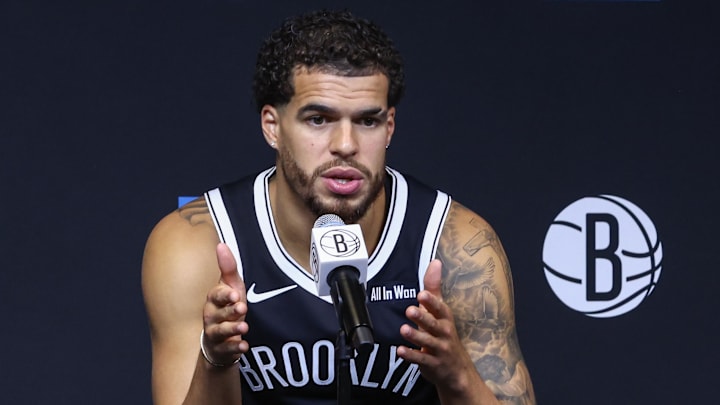
The intersection of men’s and women’s professional sports is often a landscape fraught with passionate debate, particularly concerning issues of pay, viewership, and perceived skill levels. In the world of basketball, this conversation is a constant, simmering under the surface of every season. Recently, Brooklyn Nets player Michael Porter Jr. thrust himself directly into the center of this firestorm, becoming a lightning rod for criticism with his comments on the WNBA. After facing significant backlash from fans, players, and analysts, Porter Jr. has now invoked the name of a prominent WNBA star, Sophie Cunningham, in what appears to be an effort to reframe the narrative and mend fences with a community he has alienated. This move has added a new, personal layer to the ongoing discussion about the Michael Porter Jr. WNBA controversy, leaving many to question the sincerity and motivation behind his sudden change of tune.
The debate is not a new one, but Porter Jr.’s words carried the weight of an NBA champion, amplifying their impact across social media and sports media alike. His comments tapped into long-standing, often dismissive, tropes used against female athletes, reigniting frustrations over the struggle for respect and equitable recognition. Now, by bringing his personal relationship with the Indiana Fever’s Sophie Cunningham into the public eye, he has created a fascinating and complex situation. Is this a genuine attempt at dialogue and understanding, or simply a strategic move to deflect criticism? The answer remains unclear, but the situation has undeniably opened a new chapter in the broader discourse surrounding the WNBA’s place in the professional sports ecosystem.
The Comments That Sparked the Firestorm
The controversy surrounding the Michael Porter Jr. WNBA debate began with two specific instances where the NBA player shared his unfiltered opinions. The first occurred during a January 2024 appearance on “The Pivot Podcast.” When discussing the hot-button issue of WNBA pay, Porter Jr. made a comparison that many found dismissive of the league’s value. “I know these females [WNBA players] want to get paid more, and they’re very talented,” he began, before adding, “But so is a famous ping-pong player… That doesn’t mean that they’re going to get paid the same, because it’s what the people wanna watch. As much as I understand females wanting the same treatment as men basketball players, it’s a different sport.” This comment immediately drew criticism for oversimplifying the complex issue of the WNBA pay disparity and tying player value solely to current viewership metrics, ignoring factors like marketing, investment, and historical disparities in media coverage.
The second, and perhaps more inflammatory, comment came during an August 29 stream with the popular streamer plaqueboymax. In a conversation about skill comparison, Porter Jr. waded into the hypothetical matchup between a top high school boys’ team and a professional WNBA team. “If the WNBA All-Star team, if the Olympic team played the McDonald’s All-American high school players, it’s one of them things, bro. You can’t dance around it,” he stated, before hesitating. “In high school, when I was in high school… If we play the WNBA All-Star team, that, no disrespect, bro. No disrespect, bro. I’m not even gonna say it.” Though he stopped short of explicitly stating who he thought would win, his implication was clear and echoed a common, and heavily criticized, argument used to question women’s basketball skills. The “no disrespect” qualifier did little to soften the blow for fans and players who have long fought against such comparisons as a basis for invalidating their athleticism and professionalism.
The Olive Branch: Invoking a Friendship with Sophie Cunningham
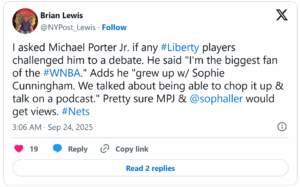
After months of simmering criticism, it appears Porter Jr. is seeking a path toward reconciliation. In a September 23 article for the New York Post, he addressed the backlash head-on, but not with a direct apology. Instead, he attempted to reposition himself as an ally of the WNBA by citing his personal connections to the sport. He began by noting that he has two older sisters who used to beat him in basketball as a child, before declaring, “I’m the biggest fan of the WNBA.”
The most significant part of his statement, however, was his specific mention of Indiana Fever guard Sophie Cunningham. Porter Jr. revealed a personal history with the WNBA star that few knew about. He noted that he “grew up with Sophie Cunningham,” explaining that they were both raised in Columbia, Missouri. This reference was not just a passing comment; he followed it up with a forward-looking suggestion. “[Cunningham and I have] talked about being able to chop it up and talk on a podcast,” Porter Jr. added. This statement immediately shifted the dynamic of the controversy. By name-dropping a respected WNBA player and suggesting a public dialogue, he was seemingly offering an olive branch and proposing a platform for a more nuanced conversation, moving beyond the soundbites that landed him in hot water.
Who is Sophie Cunningham?
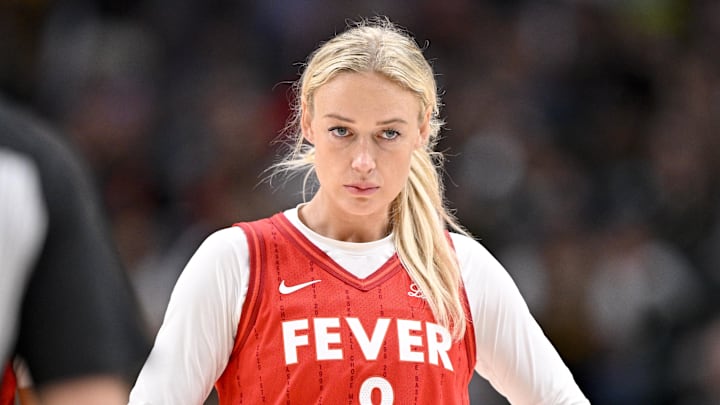
For those unfamiliar with the WNBA, the mention of Sophie Cunningham may not immediately register. However, she is a formidable figure in the league and a key player for the Indiana Fever. Known for her tenacity, sharpshooting, and vocal leadership on the court, Cunningham has carved out a reputation as a fierce competitor. Her connection to Columbia, Missouri, is deep-rooted, as she was a local hero playing for the University of Missouri, where she became the all-time leading scorer.
Beyond her on-court achievements, Cunningham is also building her own media platform. She hosts the Show Me Something podcast, where she discusses basketball, culture, and life in the WNBA. This is a crucial detail in the context of the Michael Porter Jr. WNBA saga. It means a ready-made platform already exists for the very conversation Porter Jr. alluded to. His suggestion was not a vague wish but a tangible possibility. This makes his reference to her more than just a casual name-drop; it’s a direct nod to a peer with the means and the voice to engage him in the very debate he started.
A Podcast Showdown: The Next Step in the Michael Porter Jr. WNBA Dialogue?
The prospect of Porter Jr. appearing on Cunningham’s podcast is intriguing and presents a potential turning point in this public relations crisis. Such a conversation could serve as a powerful forum for genuine dialogue, moving beyond the often-toxic discourse found on social media. It would give Porter Jr. a chance to clarify his intentions and perhaps gain a deeper understanding of why his comments were so hurtful to the women’s basketball community. For Cunningham, it would be an opportunity to represent the perspective of WNBA players directly to someone who has publicly questioned their value, all on her own turf. The The Pivot Podcast comments and the livestream incident could be dissected in a long-form conversation, allowing for context and nuance that is often lost in clips and headlines.
However, whether this podcast appearance will actually happen remains to be seen. It would require a willingness from both parties to engage in a potentially uncomfortable but necessary conversation. Cunningham would have to decide if giving Porter Jr. her platform is the right move—is it an opportunity for education and progress, or does it simply give more airtime to a narrative she and her colleagues have fought against for years? The public would be watching closely, and the outcome of such a discussion could either help bridge the gap in understanding or further entrench the existing divides.
In conclusion, the saga surrounding Michael Porter Jr.’s comments on the WNBA has evolved from a simple case of a player’s controversial opinion into a more complex narrative about accountability, dialogue, and the power of personal relationships in professional sports. His initial statements on pay and skill tapped into a deep well of frustration within the women’s basketball community, highlighting the ongoing battle for respect and recognition. His subsequent attempt to quell the controversy by mentioning his shared history with Sophie Cunningham has opened the door for a new kind of conversation—one that could potentially be held publicly on her podcast. Whether this gesture is a sincere effort at understanding or a calculated move to repair his image is a question that lingers. Ultimately, the Michael Porter Jr. WNBA incident serves as a potent reminder that the conversation around women’s sports is about more than just viewership numbers or hypothetical matchups; it’s about valuing athletes for their skill, dedication, and contribution to the game, regardless of gender.
News

The gavel fell, sealing the one-armed veteran’s fate. But from the back of the courtroom, a single, mournful howl became the first shot in a new war—one fought by a dog who remembered everything they buried.
Courtroom 3 of the Hamilton District Court was a vessel of held breath. The morning light, strained through tall, dusty windows, seemed to congeal in the air, thick and heavy as the silence itself. On the polished wooden benches, people…

He went to an Alaskan cabin to silence the echoes of war. But in the heart of a blizzard, his dog sensed a secret the storm was sent to bury—a secret that would force him into one last fight.
The wilderness beyond Anchorage doesn’t ask for permission; it simply takes. It swallows roads, erases landmarks, and devours the faint, tinny signal of a cell phone until the only voice left is the wind. It was in this vast, unforgiving…

He told the quiet woman she didn’t belong on his elite sniper range. But when her backpack split open, a single photo fell out that made every decorated Marine in the room snap to a salute in shame.
The crack of a rifle shot was the only sound that made sense anymore. It split the dry California air over Marine Corps Base Camp Pendleton, a clean, percussive thunder that echoed off the brown hills and settled in your…

As the young officer moved to detain the 89-year-old man, she was blind to the truth. The very name of the warship she guarded was a whisper of the 70-year-old secret hidden on his faded patch.
The voice sliced through the humid air of the naval pier, a sharp tool meant to carve out immediate compliance. “Sir, I’m going to have to ask you to step away from the gangway. This area is for authorized personnel…

They chose a desolate mountain to be her grave, thinking a thousand-foot drop was the perfect, silent crime. But as she fell into the void, they made a fatal miscalculation about the kind of woman they just betrayed.
The mountain didn’t make a sound when it happened. There was no grand echo to mark the moment, no sympathetic rumble from the ancient stone. There was only the sharp, scattering kick of gravel, a sudden, violent silence where a…

In a circle of 282 elite soldiers, two men decided to humiliate the quiet medic during a demonstration. They intended to break her spirit. Instead, in seven brutal seconds, they discovered a truth that broke them completely.
The wind that came off the Atlantic that morning had teeth. It wasn’t a breeze; it was a hard, scouring force that snapped across the open-air corridors of Naval Special Warfare Command Unit 7, carrying the briny scent of the…
End of content
No more pages to load