In the sprawling, often contentious world of American comedy and political commentary, few figures have carved out niches as distinct as Marc Maron and Bill Maher. For decades, both have navigated the treacherous currents of public opinion, one through raw, introspective long-form conversations and the other through sharp, politically charged monologues. While they operate in the same ecosystem, their paths have rarely crossed in open conflict. That changed recently, however, when Marc Maron appeared on the “Pod Save America” podcast and delivered a pointed, multi-layered critique that took aim not only at Maher’s professional ethos but also at the corporate machinery of a media behemoth like Netflix.
At the heart of Maron’s assessment was a charge that was both personal and analytical: he accused Bill Maher of a “desperate chasing of relevance.” It’s a potent accusation, suggesting that the “Real Time” host’s recent ideological shifts are not born of genuine intellectual evolution but of a fear of being left behind. “I always had a problem with his tone,” Maron explained, “and it happens with some of the other boomers, there’s this desperate chasing of relevance that changes someone’s mind in terms of how they approach what they do and also kind of makes the whole undertaking feel desperate.”
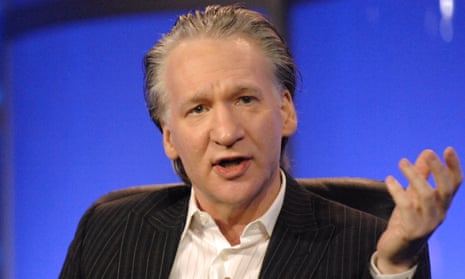
This comment peels back the curtain on a subtle but significant tension within the entertainment industry. For public figures whose careers are built on having a pulse on the cultural zeitgeist, relevance is currency. Maron’s critique implies that Maher, in an effort to maintain his place in the national conversation, has compromised his authentic voice. While acknowledging that Maher employs skilled joke writers who understand his signature style, Maron was unequivocal in his judgment: “I can’t see past the desperation and what he’s willing to do to stay in the conversation.”
This wasn’t the first time Maron had publicly taken issue with Maher. The groundwork for this broader philosophical critique was laid earlier in the year on his own “WTF” podcast. In a conversation with CNN host W. Kamau Bell, Maron recalled Maher’s apparent willingness to find common ground with some of Donald Trump’s actions. Maron’s reaction was visceral and blunt. “Are you going to be like Bill Maher, you know, ‘I’m going to agree with some of the things that Trump is doing.’ It’s like, dude, you’re a bitch.” The comment, though harsh, illuminated a deep ideological rift concerning the role of a public intellectual in a deeply polarized era. For Maron, any concession to a figure like Trump is a dangerous normalization of what he considers a threat to democracy.

His concern isn’t limited to Maher. Maron has been increasingly vocal about podcasters and comedians who provide a platform for controversial and far-right figures. After Trump’s appearance on Joe Rogan’s massively popular podcast, Maron authored a blog post decrying comedians who “joke around” with “shameless, self-proclaimed white supremacists and fascists on their show.” His argument is that such interactions, regardless of intent, serve to “humanize and normalize fascism,” softening its edges and making it more palatable to a mainstream audience. In this context, his criticism of Maher is not an isolated attack but part of a consistent worldview that demands accountability from those with a microphone.
However, Maron’s critique on “Pod Save America” did not stop with his fellow comedian. He expanded his focus from an individual’s perceived desperation to the systemic logic of a corporate giant, turning his attention to Netflix. The conversation pivoted to the streamer’s handling of the controversy surrounding Dave Chappelle, whose comedy specials have been widely criticized for jokes targeting the transgender community. For Maron, Netflix’s decision to stand by Chappelle despite significant pushback was a “pivotal moment.”
He described the situation in stark, uncompromising terms. “When they had pushback from the trans community about Chappelle, they realized after several days that that community was not going to affect their bottom line at all. And they cut ‘em loose,” Maron stated. He then delivered his most damning conclusion: “That is how fascism works in business.”
The phrase “business fascism” is deliberately provocative, designed to shock the listener into paying attention. Maron’s argument is that modern corporate power, driven by algorithms and profit motives, can operate with a chilling indifference to human consequence. In his view, Netflix performed a cold calculation and determined that the value of its partnership with Chappelle outweighed the social and ethical concerns raised by a marginalized group. This, he contends, is a dangerous precedent where the bottom line dictates morality. He even quipped that Netflix could quickly become “Reichflix,” a dark joke meant to underscore the perilous path of prioritizing engagement metrics above all else.
When confronted with the fact that Netflix hosts a wide variety of LGBTQ+ content, Maron was dismissive, viewing it as a token gesture designed to placate and silence critics. “But ultimately, who’s getting the big deals? Which shows stay on the air?” he countered. “That’s them saying, ‘We got this other stuff and we know there’s a few of you, but we’re throwing you a bone. So, shut up.’” His perspective suggests a deep cynicism about corporate diversity initiatives, seeing them not as genuine efforts toward inclusion but as a strategic component of brand management.
Taken together, Maron’s comments on Maher and Netflix weave a coherent, if sobering, narrative about the modern media landscape. He sees a world where both individual creators and corporate platforms are driven by a relentless, amoral pursuit of engagement. For Maher, it’s the “desperate” need to stay in the conversation; for Netflix, it’s the algorithmic imperative to secure the bottom line. In both cases, Maron argues, core principles are being sacrificed.
This clash of titans raises fundamental questions about the nature of comedy and commentary in the 21st century. What is the responsibility of a comedian? Is it simply to entertain, to provoke, and to hold a mirror up to society, no matter how distorted the reflection? Or is there a deeper obligation to consider the impact of one’s words, to avoid normalizing harmful ideologies, and to stand in solidarity with the vulnerable? Maron and Maher, through their work and now through this public conflict, represent two diverging answers to that question. Maron’s approach on “WTF” is rooted in empathy and nuanced exploration, while Maher’s “Real Time” thrives on confrontation and the demolition of sacred cows, regardless of who gets caught in the crossfire.
Ultimately, Marc Maron’s unfiltered interview serves as a powerful cultural document. It is more than a simple celebrity feud; it is a diagnosis of what he perceives as a sickness in the soul of American media. It’s a warning about the seductive allure of relevance and the cold calculus of corporate power. As the lines between entertainment, politics, and business continue to blur, the questions Maron raises are not just for Bill Maher or Netflix to answer, but for anyone who creates, consumes, or profits from the stories we tell ourselves. The conversation is far from over, and its reverberations will likely be felt for a long time to come.