Jon Stewart Defends Jimmy Kimmel in Fierce Satirical Stand After Show Suspension
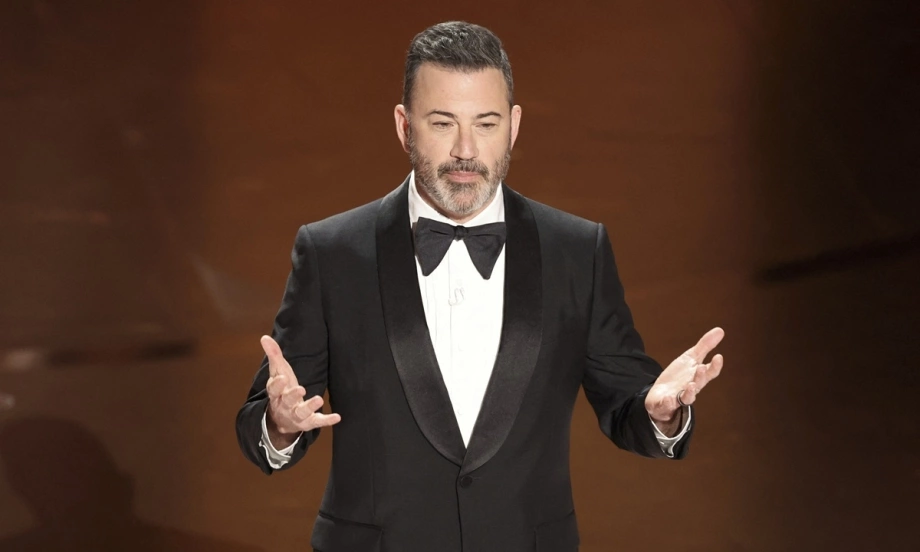
The world of late-night television was thrown into a tailspin this week when ABC made the unprecedented decision to pull “Jimmy Kimmel Live!” from its schedule “indefinitely.” The move, which came after host Jimmy Kimmel made controversial comments regarding the death of Charlie Kirk, sent ripples of shock and speculation across the media landscape. Viewers were left wondering about the future of the popular show and the implications of such a sudden removal. In the midst of the ensuing silence and uncertainty, one of comedy’s most revered voices stepped into the arena. Jon Stewart, in a masterful display of political satire on “The Daily Show,” didn’t just comment on the situation; he turned it into a powerful critique of the current political climate. The way Jon Stewart defends Jimmy Kimmel has transformed a network programming decision into a flashpoint for a much larger, and increasingly urgent, national conversation about free expression, political influence, and the role of comedy in holding power accountable. His response has ensured that the Jimmy Kimmel Live suspension will be remembered not just as a scheduling change, but as a pivotal moment in the ongoing freedom of speech debate.
:max_bytes(150000):strip_icc()/Jon-Stewart-The-Daily-Show-091825-1-7ee50804f73542edaf9fa3902108ec21.jpg)
The “Government-Approved” Daily Show: Stewart’s Sarcastic Stand
Jon Stewart returned to “The Daily Show” for a special Thursday episode with a clear, albeit veiled, mission. The show opened not with its usual fanfare, but with a voiceover announcing it as the “all-new, government-approved Daily Show, with your patriotically obedient host, Jon Stewart.” The tone was set. Stewart appeared on screen and, with a straight face, proceeded to shush his audience whenever they dared to laugh at his jokes, reminding them they were part of an “administration-compliant” program. This framing was the vehicle for his scathing critique. Throughout his monologue, he sarcastically lavished praise on President Donald Trump, referring to him as “our great leader” and a “perfectly tinted Trump.” By feigning absolute obedience, Stewart cleverly highlighted the absurdity of a media landscape where commentators might feel pressured to self-censor. His performance was a classic example of how late-night show hosts can use their platform to engage in potent political commentary. Instead of a direct condemnation, he chose satire as his weapon, forcing the audience to read between the lines and recognize the chilling implications of the events that had transpired.
Unpacking the Controversy: From Network Decision to Presidential Decree
The firestorm began with a network’s choice but quickly escalated to involve the highest office in the land. The core issue, the Jimmy Kimmel Live suspension, was already a significant event, but it was the subsequent reactions that fanned the flames.
The Comment and the Consequence
The suspension was ABC’s response to comments Kimmel made on his Monday show concerning the passing of political commentator Charlie Kirk. While the network has remained tight-lipped about the specifics, the decision to pull the show indefinitely was a stark and immediate consequence. This action alone raised serious questions among viewers and media analysts about the line between edgy commentary and network standards. The swiftness of the move left many wondering if it was a carefully considered decision based on community values or a reaction to external pressure, setting the stage for the intense freedom of speech debate that followed.
Trump’s Take: It’s All About the Ratings
The controversy took a surreal turn during President Trump’s state visit to the UK. When a reporter directly asked him about Kimmel’s suspension, the President offered a surprisingly simple explanation. As Stewart highlighted in a clip on his show, Trump dismissed the idea of a politically motivated removal. Instead, he claimed Kimmel was taken off the air because “he had bad ratings more than anything else.” This Donald Trump ratings comment became a central piece of Stewart’s satirical puzzle. Stewart mockingly defended the President’s logic, pretending to scold the reporter for even asking the question. By juxtaposing the gravity of a potential free speech issue with the President’s focus on television ratings, Stewart underscored the perceived triviality with which the administration was treating a fundamental democratic principle.
A “Cynical Ploy”? How Jon Stewart Defends Jimmy Kimmel by Exposing the Stakes
The heart of Stewart’s monologue was his articulation of what he sarcastically claimed not to believe. He laid out the argument that many critics were already forming, suggesting that “some naysayers” might view the administration’s sudden concern over on-air speech as a “cynical ploy.” He continued, describing it as a “thin gruel of a ruse, a smokescreen to obscure an unprecedented consolidation of power and unitary intimidation, principleless and coldly antithetical to any experiment in a constitutional republic governance.” After delivering this powerful, complex indictment, he immediately pulled back with a smirk. “Some people would say that,” he conceded, before adding with perfect comedic timing, “Not me, though, I think it’s great.” This moment was the pinnacle of his defense. By voicing the deepest fears of critics under the guise of refuting them, he gave the argument a massive platform while maintaining his satirical cover. This is how Jon Stewart defends Jimmy Kimmel—not by simply stating his support, but by deconstructing the entire political theater surrounding the suspension.
The Chorus of Dissent: Stephen Colbert and Others Join the Fray
Jon Stewart was not a lone voice in the wilderness. The concern over Kimmel’s suspension rippled across the community of late-night show hosts. On “The Late Show,” Stephen Colbert offered a more direct, but no less passionate, critique. He minced no words, calling Kimmel’s removal a “blatant assault on the freedom of speech.” Colbert also took aim at Federal Communications Commission (FCC) chair Brendan Carr, who had recently posted on social media that broadcasters should push back on programming that “falls short of community values.” Colbert humorously retorted that his community’s primary value was, in fact, freedom of speech. The combined reactions of Stewart and Colbert demonstrated a unified front among some of television’s most influential commentators. Their willingness to speak out transformed the incident from a story about one host into a collective stand against what they perceive as a growing threat to their industry and to the very principles of free expression.
In conclusion, the indefinite suspension of “Jimmy Kimmel Live!” has proven to be far more than a programming footnote. It became the catalyst for a powerful and revealing moment in American media, largely thanks to the incisive response from Jon Stewart. His decision to employ biting satire rather than straightforward outrage was a strategic masterstroke, allowing him to critique the administration’s actions and the broader political climate with devastating effect. The way Jon Stewart defends Jimmy Kimmel has served as a rallying cry, amplified by the direct condemnations from peers like Stephen Colbert. This episode has pulled back the curtain on the delicate balance between corporate interests, political pressures, and the foundational right to speak freely. It has ignited a necessary freedom of speech debate, forcing audiences to consider where the lines should be drawn and what is at stake when a powerful voice is suddenly silenced. The conversation is far from over, but it is one that has been irrevocably shaped by the return of Stewart’s comedic, and profoundly serious, voice.
News

The gavel fell, sealing the one-armed veteran’s fate. But from the back of the courtroom, a single, mournful howl became the first shot in a new war—one fought by a dog who remembered everything they buried.
Courtroom 3 of the Hamilton District Court was a vessel of held breath. The morning light, strained through tall, dusty windows, seemed to congeal in the air, thick and heavy as the silence itself. On the polished wooden benches, people…
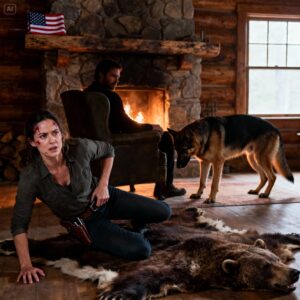
He went to an Alaskan cabin to silence the echoes of war. But in the heart of a blizzard, his dog sensed a secret the storm was sent to bury—a secret that would force him into one last fight.
The wilderness beyond Anchorage doesn’t ask for permission; it simply takes. It swallows roads, erases landmarks, and devours the faint, tinny signal of a cell phone until the only voice left is the wind. It was in this vast, unforgiving…
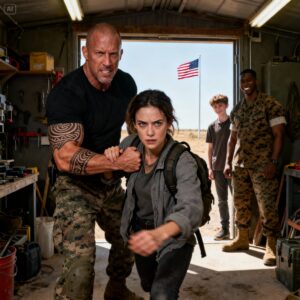
He told the quiet woman she didn’t belong on his elite sniper range. But when her backpack split open, a single photo fell out that made every decorated Marine in the room snap to a salute in shame.
The crack of a rifle shot was the only sound that made sense anymore. It split the dry California air over Marine Corps Base Camp Pendleton, a clean, percussive thunder that echoed off the brown hills and settled in your…
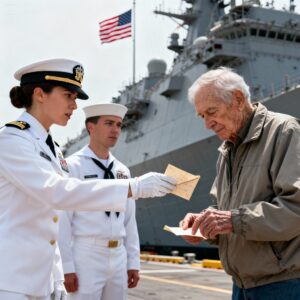
As the young officer moved to detain the 89-year-old man, she was blind to the truth. The very name of the warship she guarded was a whisper of the 70-year-old secret hidden on his faded patch.
The voice sliced through the humid air of the naval pier, a sharp tool meant to carve out immediate compliance. “Sir, I’m going to have to ask you to step away from the gangway. This area is for authorized personnel…

They chose a desolate mountain to be her grave, thinking a thousand-foot drop was the perfect, silent crime. But as she fell into the void, they made a fatal miscalculation about the kind of woman they just betrayed.
The mountain didn’t make a sound when it happened. There was no grand echo to mark the moment, no sympathetic rumble from the ancient stone. There was only the sharp, scattering kick of gravel, a sudden, violent silence where a…
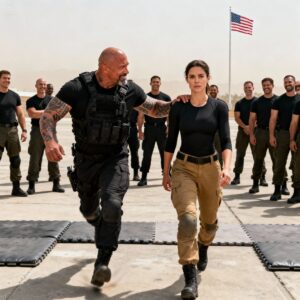
In a circle of 282 elite soldiers, two men decided to humiliate the quiet medic during a demonstration. They intended to break her spirit. Instead, in seven brutal seconds, they discovered a truth that broke them completely.
The wind that came off the Atlantic that morning had teeth. It wasn’t a breeze; it was a hard, scouring force that snapped across the open-air corridors of Naval Special Warfare Command Unit 7, carrying the briny scent of the…
End of content
No more pages to load