In an era of hyper-reactive social media feeds and 24/7 news cycles, where cultural commentary can become dated in a matter of hours, one animated family from Springfield has managed to remain profoundly relevant for over three decades. The Simpsons, a cornerstone of American television, has navigated the treacherous waters of social and political critique with a unique brand of humor that often feels both prescient and timeless. How does a show with a notoriously long production schedule tackle a world that changes at lightning speed? According to co-showrunner Matt Selman, the secret lies not in trying to keep up, but in deliberately staying behind. In a recent interview, Selman offered a rare glimpse into the philosophy that guides The Simpsons political satire, while also weighing in on a flashpoint media controversy involving late-night host Jimmy Kimmel and the ever-present threat of censorship. His insights reveal a carefully crafted strategy that prioritizes evergreen truths over fleeting headlines, a method that has allowed the show to endure long after its contemporaries have faded. This approach distinguishes it from other satirical giants and underscores a deeper understanding of what makes commentary resonate across generations, even as it navigates the sensitive landscape of modern television.

The Simpsons’ Timeless Take on a Turbulent World
For many viewers, satirical television is synonymous with immediacy. Shows like South Park or late-night monologues from hosts like Stephen Colbert and Seth Meyers are celebrated for their ability to dissect, mock, and analyze a news event just days, or even hours, after it happens. The Simpsons, however, operates on an entirely different timeline. Matt Selman, in a candid discussion with Entertainment Weekly, shed light on how the show’s lengthy production cycle shapes its entire creative process and, ultimately, its satirical voice.
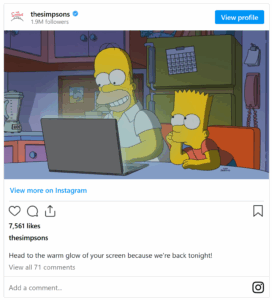
Why a 10-Month Lag is a Creative Blessing
Selman explained that the gap between writing an episode and its air date is a defining characteristic of their work. “When you write a show that doesn’t come out until 10 months after you write it, it kind of takes the pressure off, because who knows what the f— we’re gonna be looking at in 10 months,” he pointed out. This built-in delay makes it impossible for the writers to engage in the kind of rapid-response humor that defines much of the current media landscape. Instead of being a limitation, Selman views this as a liberation. It frees the creative team from the relentless pressure of being topical and forces them to dig deeper. Rather than satirizing a specific political gaffe or a trending scandal, the writers must focus on the underlying human behaviors, systemic flaws, and cultural absurdities that give rise to those events in the first place. This is the bedrock of The Simpsons political satire: a focus on the universal rather than the specific, the timeless rather than the timely. It’s why an episode from 1995 about political corruption or media manipulation can still feel just as relevant and biting today. The show isn’t just commenting on the news; it’s commenting on the nature of humanity itself.
The South Park Comparison
To illustrate his point, Selman drew a direct contrast with another animated titan, South Park. “So like, South Park, they make their show in a week, and even they can’t stay up to date on things. More crazy s— goes down faster than even they can do it,” he noted. This acknowledgment highlights the sheer velocity of modern events, a pace so frantic that even a show famous for its quick turnaround struggles to keep up. The South Park comparison is crucial because it defines what The Simpsons is not. While Trey Parker and Matt Stone’s creation thrives on its ability to offer a raw, almost instantaneous comedic take on the week’s events, The Simpsons plays the long game. Its humor is designed to marinate, to comment not on the chaos of the moment but on the enduring patterns of societal folly. This distinction is central to understanding the show’s lasting appeal and the thoughtful architecture behind its comedy. The show’s mission, as Selman sees it, is fundamentally different from that of its more reactive counterparts.
Matt Selman on the Jimmy Kimmel Live Return and Censorship
The conversation with Selman also veered into one of the most significant media controversies of the moment: the suspension and subsequent Jimmy Kimmel Live return. The incident served as a real-world example of the high stakes involved in political commentary and the powerful forces that can seek to control it. Selman’s remarks on the situation were unequivocal, revealing a strong conviction about the importance of free expression in a climate that often seems hostile to it.
The Controversy That Pulled a Late-Night Giant Off Air
The firestorm erupted following the fatal shooting of conservative activist and Turning Point USA founder Charlie Kirk, 31, during a speech at Utah Valley University on September 10. In his monologue on September 15, Jimmy Kimmel addressed the event, stating, “We had some new lows over the weekend with the MAGA gang desperately trying to characterize this kid who murdered Charlie Kirk as anything other than one of them and with everything they can to score political points from it.” The comments sparked immediate backlash, and on September 17, ABC took the extraordinary step of suspending Jimmy Kimmel Live! “indefinitely.” The show was pulled from the air for six days before the network reinstated it, with Kimmel making a record-breaking return on September 23. The incident sent shockwaves through the industry, raising urgent questions about where networks draw the line and the pressures faced by hosts who engage with sensitive political topics. It was a stark reminder of the potential consequences of speaking out, a theme central to any discussion about censorship in media.
A Firm Stance Against Censorship in Media
In his Matt Selman interview, the showrunner did not mince words when asked about the Kimmel situation. “Jimmy Kimmel’s great, and I’m glad he is back on TV,” Selman stated firmly. His following comment cut directly to the heart of the matter: “Censorship sucks. What can I say? Censorship sucks.” This blunt, passionate defense of Kimmel and free expression reflects a core principle held by many creators in the industry. For Selman, the issue is not about agreeing or disagreeing with Kimmel’s specific words but about defending the right to say them. The suspension of a major late-night show, even temporarily, was seen by many as a chilling precedent. Selman’s comment serves as a rallying cry for creative freedom, highlighting the fear that corporate or political pressure could increasingly stifle the vital role that comedians and satirists play in public discourse.
The Enduring Philosophy of The Simpsons Political Satire
Selman’s commentary on both the show’s production process and the Kimmel controversy ultimately points back to the foundational philosophy of The Simpsons. The show has outlasted presidents, cultural shifts, and technological revolutions because its core mission has remained remarkably consistent. It has never aimed to be a nightly news report or a political soapbox. Instead, its genius lies in using a static, unchanging universe to hold up a mirror to our ever-changing one.
Characters vs. The World: A Formula for Longevity
Expanding on the show’s purpose, Selman offered a concise and powerful summary of its mission statement. “It’s not our mission statement to respond to the crisis of the moment. It’s more about a town of good-natured dum-dums dealing with a changing world, yet our characters never really change. The world changes around them.” This is the essential formula for the show’s success. Homer, Marge, Bart, Lisa, and the other residents of Springfield are constants. They are archetypes of human nature—flawed, lovable, and, most importantly, predictable in their reactions. By placing these unchanging characters in a world that mirrors our own evolving society, the show creates a perfect comedic laboratory. The humor and satire emerge from the friction between the characters’ steadfast natures and the new challenges, technologies, and social norms they encounter. This structure ensures that the commentary remains grounded in human experience, making The Simpsons political satire feel personal and relatable, rather than abstract or preachy.
In conclusion, Matt Selman’s recent insights provide a valuable framework for understanding the enduring power and unique genius of The Simpsons. In a media environment that often prioritizes speed and sensationalism, the show’s deliberate, long-term approach to commentary sets it apart. By sidestepping the “crisis of the moment,” the writers have cultivated a form of satire that speaks to deeper, more universal truths about society, politics, and the human condition. The stark contrast with faster-paced shows like South Park and the firm stance against censorship, as exemplified by the Jimmy Kimmel controversy, further illuminate the principles that have guided the show for decades. Ultimately, the strength of The Simpsons political satire lies in its profound understanding that while headlines fade and scandals pass, the follies of “good-natured dum-dums” navigating a complex world are eternal. This timeless formula is not just the secret to the show’s longevity; it is a testament to the lasting impact of thoughtful, character-driven storytelling in an increasingly chaotic world.
News

The gavel fell, sealing the one-armed veteran’s fate. But from the back of the courtroom, a single, mournful howl became the first shot in a new war—one fought by a dog who remembered everything they buried.
Courtroom 3 of the Hamilton District Court was a vessel of held breath. The morning light, strained through tall, dusty windows, seemed to congeal in the air, thick and heavy as the silence itself. On the polished wooden benches, people…

He went to an Alaskan cabin to silence the echoes of war. But in the heart of a blizzard, his dog sensed a secret the storm was sent to bury—a secret that would force him into one last fight.
The wilderness beyond Anchorage doesn’t ask for permission; it simply takes. It swallows roads, erases landmarks, and devours the faint, tinny signal of a cell phone until the only voice left is the wind. It was in this vast, unforgiving…

He told the quiet woman she didn’t belong on his elite sniper range. But when her backpack split open, a single photo fell out that made every decorated Marine in the room snap to a salute in shame.
The crack of a rifle shot was the only sound that made sense anymore. It split the dry California air over Marine Corps Base Camp Pendleton, a clean, percussive thunder that echoed off the brown hills and settled in your…

As the young officer moved to detain the 89-year-old man, she was blind to the truth. The very name of the warship she guarded was a whisper of the 70-year-old secret hidden on his faded patch.
The voice sliced through the humid air of the naval pier, a sharp tool meant to carve out immediate compliance. “Sir, I’m going to have to ask you to step away from the gangway. This area is for authorized personnel…

They chose a desolate mountain to be her grave, thinking a thousand-foot drop was the perfect, silent crime. But as she fell into the void, they made a fatal miscalculation about the kind of woman they just betrayed.
The mountain didn’t make a sound when it happened. There was no grand echo to mark the moment, no sympathetic rumble from the ancient stone. There was only the sharp, scattering kick of gravel, a sudden, violent silence where a…
In a circle of 282 elite soldiers, two men decided to humiliate the quiet medic during a demonstration. They intended to break her spirit. Instead, in seven brutal seconds, they discovered a truth that broke them completely.
The wind that came off the Atlantic that morning had teeth. It wasn’t a breeze; it was a hard, scouring force that snapped across the open-air corridors of Naval Special Warfare Command Unit 7, carrying the briny scent of the…
End of content
No more pages to load