House Committee Compels Clintons to Testify in Deepening Epstein Probe
The House Oversight Committee has significantly escalated its investigation into the associations of high-profile political figures with the late convicted sex offender Jeffrey Epstein, ordering former President Bill Clinton and former Secretary of State Hillary Clinton to appear for depositions next month. The move signals a new, more confrontational phase of the probe, as Committee Chairman James Comer has rejected the Clintons’ offer to provide written statements, insisting instead on in-person testimony.
The directive requires Bill Clinton to appear for his deposition at 10 a.m. on December 17, with Hillary Clinton scheduled for the following day, December 18, at the same time. This action comes after an initial subpoena was issued in August. In response, the Clintons’ attorney, David Kendall, offered to provide “a written proffer of what little information” his clients possess. Chairman Comer flatly dismissed this proposal, underscoring the committee’s intent to pursue a more direct line of questioning.
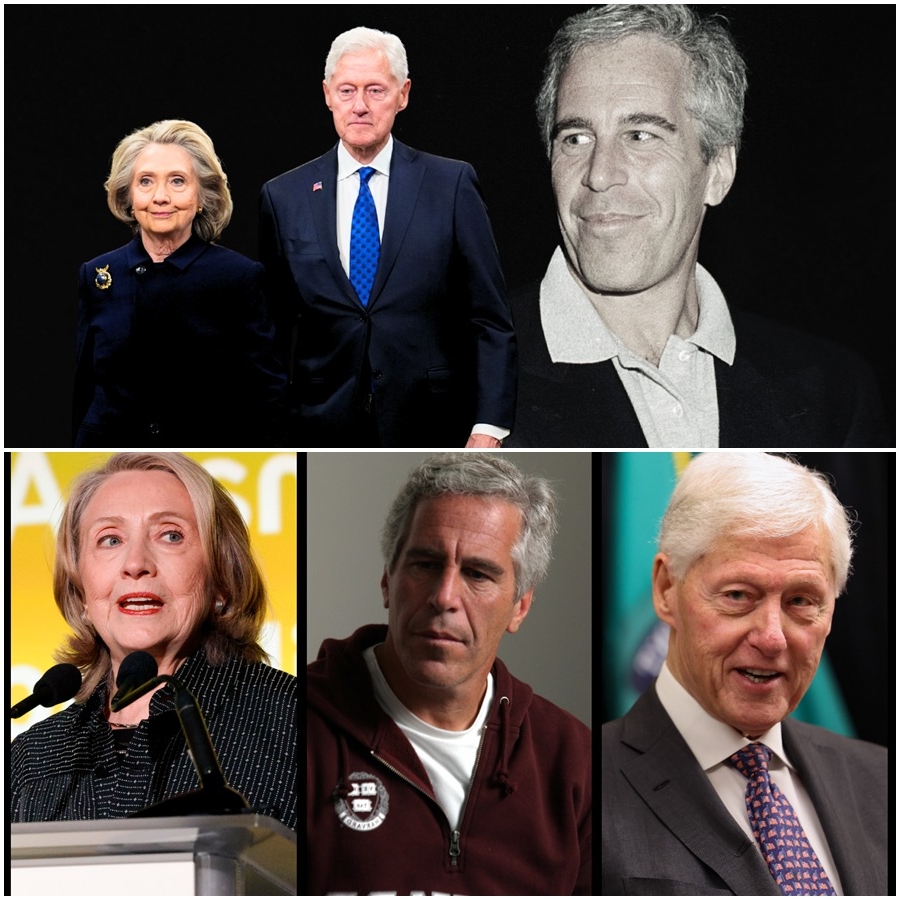
In a letter to Kendall, Comer articulated the committee’s position, stating, “Given the admission that your clients possess some relevant information, your position amounts to a demand that the Committee forgo in-person testimony, potentially relevant to its legislative oversight.” The chairman further clarified that the private nature of the relationships was central to the inquiry. “It is precisely the fact President Clinton and Secretary Clinton each maintained relationships with Mr. Epstein and Ms. Maxwell in their personal capacities as private citizens that is of interest to the Committee,” Comer wrote.
The committee’s investigation aims to scrutinize the network of influence surrounding Epstein, who, despite a 2008 guilty plea in Florida for soliciting a minor, continued to associate with powerful individuals in politics, business, and academia. Public records and previous reports have detailed several connections between the Clintons and the Epstein circle. Bill Clinton reportedly flew on Epstein’s private jet, later dubbed the “Lolita Express,” on more than a dozen occasions after his presidency. Ghislaine Maxwell, Epstein’s longtime companion who is now serving a 20-year federal prison sentence for sex trafficking, was a guest at Chelsea Clinton’s wedding in 2010. Furthermore, Hillary Clinton’s political campaigns had received donations from Epstein prior to his 2008 conviction.
In a letter responding to the committee, attorney David Kendall expressed that “what we have learned over the years about Jeffrey Epstein and Ghislaine Maxwell is abhorrent.” He added, “The public’s demand for transparency from its government about their criminality is both understandable and warranted,” and affirmed that the Clintons “welcome legitimate oversight in this matter that is grounded in fact.” However, Kendall maintained that the former president and secretary of state “have little to contribute to that legitimate goal, all of which can be readily submitted on paper.”
Legal experts suggest the Clintons might explore asserting executive privilege to avoid testifying, though the applicability of such a privilege to matters concerning their personal lives, which occurred largely outside their official duties, remains uncertain.
The push for depositions from the Clintons is part of a broader investigative effort by the Oversight Committee. In August, subpoenas were also sent to several former high-ranking justice officials, including Attorneys General Merrick Garland, Loretta Lynch, Eric Holder, Jeff Sessions, and Alberto Gonzales, as well as former FBI Directors James Comey and Robert Mueller. Most were permitted to submit written statements after indicating they had no relevant information. The subpoena for Mueller was withdrawn after his legal team disclosed his 2021 Parkinson’s diagnosis. Of that group, only former Attorney General Bill Barr, who was in office during Epstein’s 2019 arrest, appeared for questioning.
Epstein was arrested on federal sex trafficking charges in July 2019 and was found dead in his Manhattan jail cell a month later, a death ruled a suicide. A spokesperson for Bill Clinton stated after the 2019 arrest that the former president had “not spoken to Epstein in well over a decade” and knew “nothing about the terrible crimes.” This past July, the Department of Justice concluded its investigation into Epstein’s death and network, stating that no third parties could be reasonably charged and that contrary to public speculation, Epstein did not maintain a “client list” or blackmail material.
Despite the DOJ’s findings, the Oversight Committee remains steadfast in its belief that the Clintons hold unique and pertinent information. The committee is prepared to use its full authority to compel their testimony as it seeks to understand the full scope of Epstein’s influence and whether it was facilitated by his proximity to powerful figures.
News

The gavel fell, sealing the one-armed veteran’s fate. But from the back of the courtroom, a single, mournful howl became the first shot in a new war—one fought by a dog who remembered everything they buried.
Courtroom 3 of the Hamilton District Court was a vessel of held breath. The morning light, strained through tall, dusty windows, seemed to congeal in the air, thick and heavy as the silence itself. On the polished wooden benches, people…

He went to an Alaskan cabin to silence the echoes of war. But in the heart of a blizzard, his dog sensed a secret the storm was sent to bury—a secret that would force him into one last fight.
The wilderness beyond Anchorage doesn’t ask for permission; it simply takes. It swallows roads, erases landmarks, and devours the faint, tinny signal of a cell phone until the only voice left is the wind. It was in this vast, unforgiving…

He told the quiet woman she didn’t belong on his elite sniper range. But when her backpack split open, a single photo fell out that made every decorated Marine in the room snap to a salute in shame.
The crack of a rifle shot was the only sound that made sense anymore. It split the dry California air over Marine Corps Base Camp Pendleton, a clean, percussive thunder that echoed off the brown hills and settled in your…
As the young officer moved to detain the 89-year-old man, she was blind to the truth. The very name of the warship she guarded was a whisper of the 70-year-old secret hidden on his faded patch.
The voice sliced through the humid air of the naval pier, a sharp tool meant to carve out immediate compliance. “Sir, I’m going to have to ask you to step away from the gangway. This area is for authorized personnel…

They chose a desolate mountain to be her grave, thinking a thousand-foot drop was the perfect, silent crime. But as she fell into the void, they made a fatal miscalculation about the kind of woman they just betrayed.
The mountain didn’t make a sound when it happened. There was no grand echo to mark the moment, no sympathetic rumble from the ancient stone. There was only the sharp, scattering kick of gravel, a sudden, violent silence where a…

In a circle of 282 elite soldiers, two men decided to humiliate the quiet medic during a demonstration. They intended to break her spirit. Instead, in seven brutal seconds, they discovered a truth that broke them completely.
The wind that came off the Atlantic that morning had teeth. It wasn’t a breeze; it was a hard, scouring force that snapped across the open-air corridors of Naval Special Warfare Command Unit 7, carrying the briny scent of the…
End of content
No more pages to load