Is AI Actress Tilly Norwood the Future or a Threat to Hollywood?
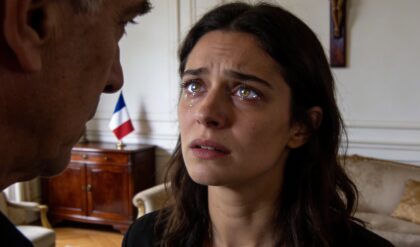
The entertainment industry has always been a battleground between tradition and technology, but a new digital creation has ignited a firestorm that cuts to the very core of what it means to be an actor. The controversy centers on Tilly Norwood, a fully digital persona generated by artificial intelligence, who is now reportedly being considered for representation by major talent agencies. This development has sent shockwaves through Hollywood, prompting sharp and immediate backlash from working actors who see the rise of the AI actress Tilly Norwood as an existential threat to their craft and livelihood. The creator, Eline Van der Velden, has pushed back, defending her creation as a new artistic tool, not a replacement for human talent. This clash of perspectives highlights a growing divide in an industry still reeling from recent labor disputes where artificial intelligence was a central point of contention, leaving many to wonder if we are witnessing the dawn of a new era in filmmaking or the beginning of the end for the human star.

The Unveiling of a Digital Star and the Immediate Hollywood Backlash
The controversy erupted when Eline Van der Velden, founder of the AI production studio Particle6 and its new spin-off AI talent studio Xicoia, spoke at the Zurich Summit. She announced that agents were actively “circling” Tilly Norwood, the studio’s first AI-generated actress, with a deal for representation expected in the coming months. The news spread rapidly across social media, and the reaction from the acting community was swift, unified, and overwhelmingly negative. The Hollywood backlash was not subtle, as actors took to platforms like Instagram to voice their anger and disbelief.
Melissa Barrera, known for her roles in the Scream franchise, wrote a pointed comment urging actors to take collective action against any agent who would sign a digital client. “Hope all actors repped by the agent that does this, drop their a$$. How gross, read the room,” she stated. Her sentiment was echoed by actress Kiersey Clemons, who demanded transparency, writing, “Out the agents. I want names.” Mara Wilson, a former child star, raised a critical ethical question about the creation process itself, asking, “And what about the hundreds of living young women whose faces were composited together to make her? You couldn’t hire any of them?” Even the anger was tinged with satirical humor. Actor Lukas Gage added a touch of industry mockery, quipping that Norwood was a “nightmare to work with!!!!” and “couldn’t her mark and was late!” Meanwhile, celebrated actress Toni Collette offered a simple but powerful reaction: a series of screaming face emojis, perfectly capturing the alarm felt by many of her peers.
Eline Van der Velden’s Defense: A “New Tool” or a Threat?
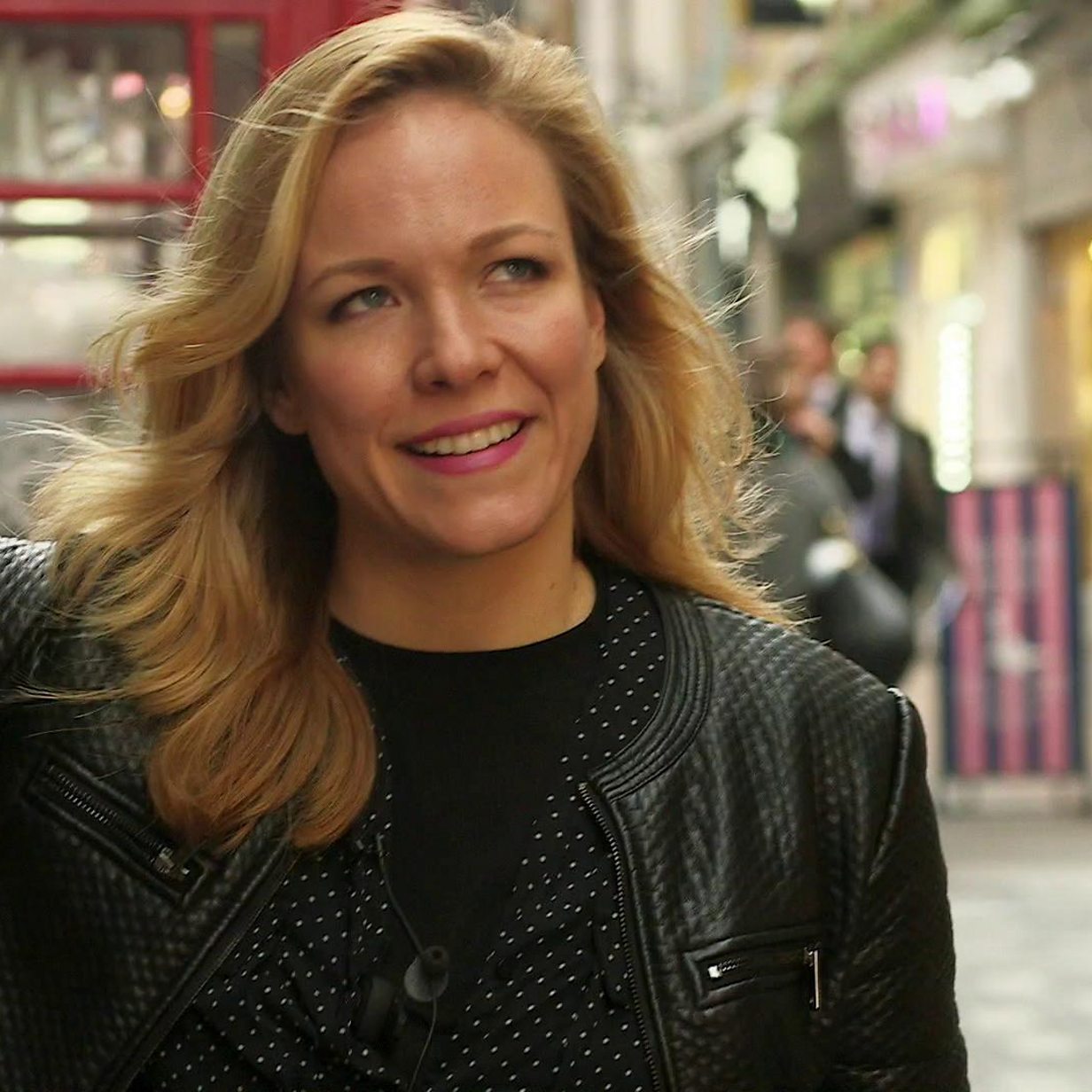
Facing the wave of criticism, Eline Van der Velden issued a formal statement to address the anger and clarify her intentions. She positioned the AI actress Tilly Norwood not as a competitor to human actors, but as a new form of artistic expression. “To those who have expressed anger over the creation of my AI character, Tilly Norwood, she is not a replacement for a human being, but a creative work – a piece of art,” Van der Velden wrote. “Like many forms of art before her, she sparks conversation, and that in itself shows the power of creativity.”
In her defense, Van der Velden drew parallels between artificial intelligence and other technological advancements that were once met with skepticism in the film industry. “I see AI not as a replacement for people, but as a new tool, a new paintbrush,” she explained. “Just as animation, puppetry, or CGI opened fresh possibilities without taking away from live acting, AI offers another way to imagine and build stories.” As an actor herself, she insisted that nothing could ever diminish the value or joy of a human performance. However, this comparison did little to soothe the anxieties of a workforce that fears AI is fundamentally different. While CGI and puppetry are tools wielded by human artists, generative AI has the potential to operate with a degree of autonomy that could displace the artist entirely.
The Ambition to Create the Next Scarlett Johansson
Adding another layer to the controversy is Van der Velden’s stated ambition for her creation. In a previous interview with Broadcast International, she made her goal clear, stating she wanted Norwood “to be the next Scarlett Johansson or Natalie Portman.” This comment, in particular, strikes at the heart of actors’ fears. It suggests that the aim is not merely to create background characters or digital doubles but to cultivate AI personalities capable of achieving A-list stardom. This directly challenges the unique charisma and emotional depth that human actors bring to their roles, qualities long considered irreplaceable. The idea of an AI headliner competing for the same roles, accolades, and audience connection as human beings is precisely the scenario that actors have been warning against.
Artificial Intelligence in Entertainment: A Larger Context
The uproar over the AI actress Tilly Norwood did not happen in a vacuum. It comes on the heels of the historic 2023 WGA and SAG-AFTRA strikes, where the threat of artificial intelligence in entertainment was a primary catalyst. For months, writers and actors marched on picket lines demanding protections against the unregulated use of AI. Writers fought for guarantees that AI would not be used to write or rewrite literary material and that their work would not be used to train AI models without consent and compensation. Actors sought similar safeguards, specifically regarding the creation and use of digital replicas of their likenesses.
The fear is that studios could scan a background actor, pay them for a single day’s work, and then use their digital likeness in perpetuity without further payment or permission. For lead actors, the concern is that their performances could be digitally altered or their likenesses used to create entirely new scenes or even full movies after their death. The final contracts included landmark protections, but the technology is evolving so rapidly that many in the industry feel the battle is far from over. Tilly Norwood represents the next phase of this conflict: not the replication of an existing actor, but the creation of a completely new, synthetic performer from scratch, one that requires no pay, no residuals, and no rest.
Are Digital Actors the Future of Cinema?
The concept of digital actors is not entirely new. From the de-aging of actors in films like The Irishman to the digital resurrection of Peter Cushing for Rogue One: A Star Wars Story, filmmakers have been experimenting with digital humanoids for years. However, these were either modifications of human performances or recreations of specific individuals. Tilly Norwood represents a shift towards creating original, standalone digital talent. Proponents argue this could unlock new creative possibilities, allowing filmmakers to craft characters that are not limited by human biology or physics. It could also potentially lower production costs and solve logistical challenges.
However, the ethical and artistic questions are immense. What happens to the thousands of aspiring actors trying to break into the industry if studios can simply generate the “perfect” face and persona? Can a series of algorithms truly replicate the nuance, vulnerability, and lived experience that a human actor channels into a performance? The connection between an audience and a character is often built on an unspoken understanding of shared humanity. Whether a digital creation, no matter how realistic, can ever achieve that same emotional resonance remains one of the most pressing questions facing the future of storytelling.
Conclusion: A Crossroads for Creativity and Technology
The intense debate sparked by the AI actress Tilly Norwood serves as a powerful symbol of the crossroads at which the entertainment industry now stands. On one side, you have innovators like Eline Van der Velden, who see artificial intelligence as a revolutionary tool for artistic expression, a “new paintbrush” to create worlds and characters previously unimaginable. On the other, you have a community of artists, represented by the voices of Melissa Barrera, Lukas Gage, and countless others, who see this technology as a direct assault on their profession and the very soul of performance art. The controversy is more than just a fleeting social media spat; it is a microcosm of a much larger struggle over the future of human creativity in an increasingly automated world. As technology continues to advance, the questions raised by Tilly Norwood will only become more urgent. The industry, and society as a whole, must grapple with where to draw the line between tool and replacement, and how to preserve the irreplaceable human element that gives art its enduring power.
News

The gavel fell, sealing the one-armed veteran’s fate. But from the back of the courtroom, a single, mournful howl became the first shot in a new war—one fought by a dog who remembered everything they buried.
Courtroom 3 of the Hamilton District Court was a vessel of held breath. The morning light, strained through tall, dusty windows, seemed to congeal in the air, thick and heavy as the silence itself. On the polished wooden benches, people…

He went to an Alaskan cabin to silence the echoes of war. But in the heart of a blizzard, his dog sensed a secret the storm was sent to bury—a secret that would force him into one last fight.
The wilderness beyond Anchorage doesn’t ask for permission; it simply takes. It swallows roads, erases landmarks, and devours the faint, tinny signal of a cell phone until the only voice left is the wind. It was in this vast, unforgiving…

He told the quiet woman she didn’t belong on his elite sniper range. But when her backpack split open, a single photo fell out that made every decorated Marine in the room snap to a salute in shame.
The crack of a rifle shot was the only sound that made sense anymore. It split the dry California air over Marine Corps Base Camp Pendleton, a clean, percussive thunder that echoed off the brown hills and settled in your…

As the young officer moved to detain the 89-year-old man, she was blind to the truth. The very name of the warship she guarded was a whisper of the 70-year-old secret hidden on his faded patch.
The voice sliced through the humid air of the naval pier, a sharp tool meant to carve out immediate compliance. “Sir, I’m going to have to ask you to step away from the gangway. This area is for authorized personnel…

They chose a desolate mountain to be her grave, thinking a thousand-foot drop was the perfect, silent crime. But as she fell into the void, they made a fatal miscalculation about the kind of woman they just betrayed.
The mountain didn’t make a sound when it happened. There was no grand echo to mark the moment, no sympathetic rumble from the ancient stone. There was only the sharp, scattering kick of gravel, a sudden, violent silence where a…

In a circle of 282 elite soldiers, two men decided to humiliate the quiet medic during a demonstration. They intended to break her spirit. Instead, in seven brutal seconds, they discovered a truth that broke them completely.
The wind that came off the Atlantic that morning had teeth. It wasn’t a breeze; it was a hard, scouring force that snapped across the open-air corridors of Naval Special Warfare Command Unit 7, carrying the briny scent of the…
End of content
No more pages to load