A primetime segment on CNN’s “NewsNight” became the stage for a fiery and pointed confrontation between former Trump administration official Katie Miller and political commentator Bakari Sellers, exposing the deep fissures in American political discourse over party loyalty, media narratives, and leadership accountability. The debate, moderated by host Abby Phillip, centered on former President Donald Trump’s perceived connections to controversial figures, a topic that Miller argued is irrelevant to the average Republican voter.
The exchange ignited when Sellers, a former South Carolina state representative and a frequent critic of Trump, brought up the issue of the former president’s past interactions and associations, specifically referencing white nationalist Nick Fuentes. Sellers contended that such connections, whether direct or indirect, reflect on a leader’s judgment and character. This prompted a swift and forceful rebuttal from Miller, who served as a spokeswoman for Vice President Mike Pence and later as a senior advisor for the Trump 2020 campaign.
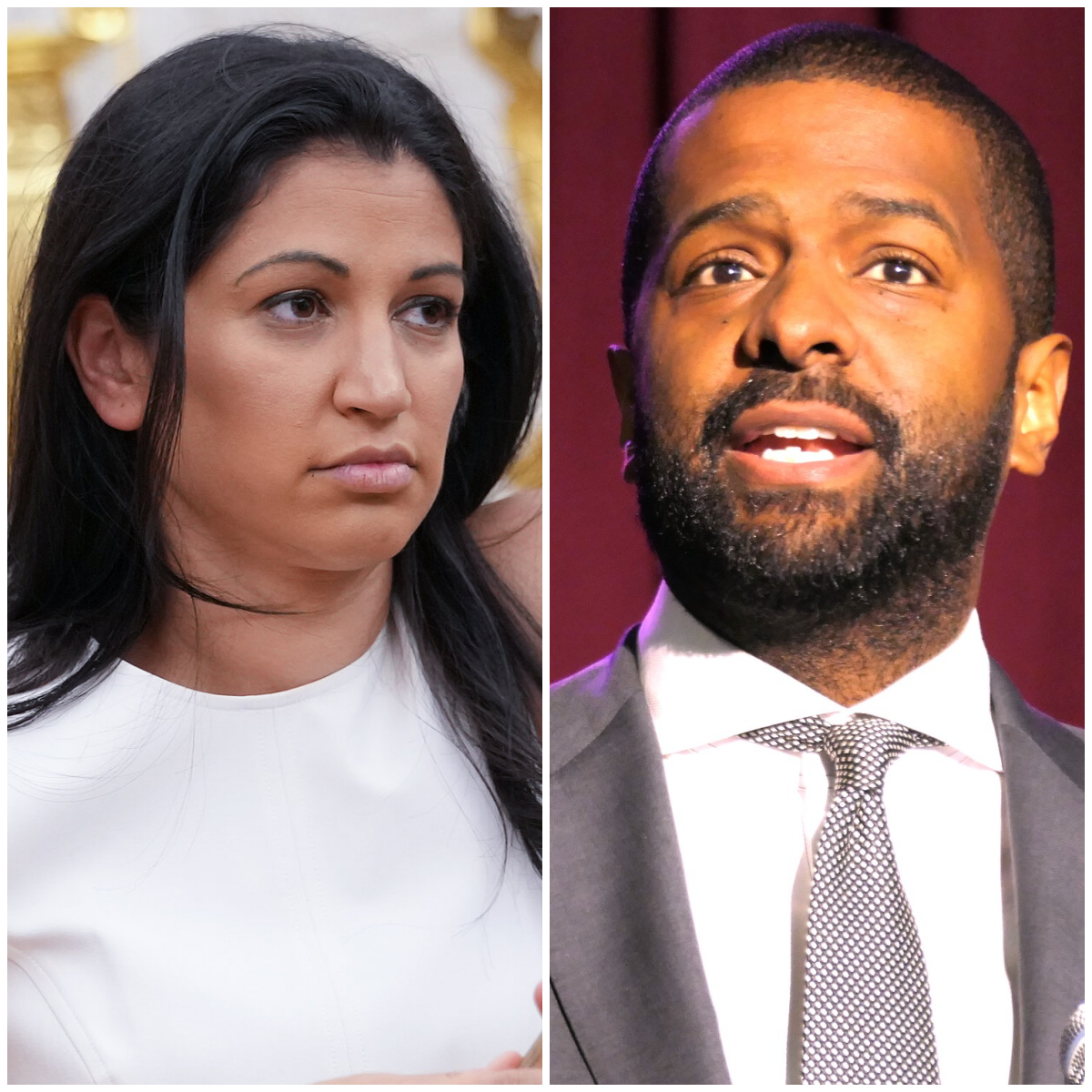
“He doesn’t have the pulse of Republicans,” Miller declared, directing her comment at Sellers. She asserted that concerns over figures like Fuentes are a fixation of the media and political opponents, not a genuine preoccupation for the Republican electorate. According to Miller, voters are more focused on economic issues, border security, and other kitchen-table concerns. She further defended Trump by stating unequivocally that he does not know who Nick Fuentes is, framing the entire line of inquiry as a manufactured controversy designed to damage him politically.
“This is a game that is played over and over again,” Miller stated, suggesting a pattern where Trump’s opponents attempt to link him to extremist elements to create a negative narrative. She portrayed Sellers’ argument as being fundamentally out of touch with the grassroots sentiment of the party, a common defense from Trump allies who believe the established media and political commentariat fail to understand the former president’s enduring appeal.
Sellers refused to yield, pushing back against Miller’s characterization of the issue. He argued that ignorance is not an excuse for a figure of Trump’s stature and influence. The responsibility of a leader, Sellers implied, is to be aware of the individuals and ideologies they are seen to be associated with. He framed the issue not as a niche media obsession but as a fundamental question of leadership and the moral direction of a political movement. The debate escalated as Sellers insisted on the importance of holding leaders accountable for their rhetoric and the company they keep, while Miller repeatedly dismissed his points as elite-driven talking points disconnected from the reality of the Republican base.
Abby Phillip, the show’s host, attempted to navigate the increasingly tense back-and-forth, seeking to maintain decorum while allowing both panelists to articulate their positions. The dynamic on screen offered a vivid snapshot of the current political landscape: one side arguing for a focus on policy and voter sentiment, dismissing certain criticisms as bad-faith attacks, and the other demanding a higher standard of conduct and accountability from public figures, especially those who have held the nation’s highest office.
The clash between Miller and Sellers is representative of a broader strategic and ideological conflict within and around the Republican party. Miller’s stance reflects the “America First” wing’s belief that the base is galvanized by Trump’s populist message and is immune to criticism from what they consider a hostile press. In this view, loyalty to the leader and the movement supersedes concerns about political optics or associations with fringe elements. Conversely, Sellers’ position echoes the concerns of Trump’s critics, both within and outside the GOP, who argue that the former president’s tenure has eroded political norms and that turning a blind eye to problematic rhetoric and associations is a dangerous abdication of civic responsibility.
Ultimately, the on-air dispute did not reach a resolution but instead served to highlight the polarized nature of contemporary political dialogue. For viewers, it was a raw display of two diametrically opposed worldviews colliding in real-time. Miller’s passionate defense of Trump and her dismissal of Sellers’ concerns resonated with those who feel the former president is unfairly targeted, while Sellers’ insistence on accountability likely found agreement among those who believe Trump’s influence remains a problematic force in American politics. The exchange on “NewsNight” thus became more than just a debate; it was a microcosm of the ongoing battle for the soul of the Republican party and the larger cultural and political divides in the United States.
News

The gavel fell, sealing the one-armed veteran’s fate. But from the back of the courtroom, a single, mournful howl became the first shot in a new war—one fought by a dog who remembered everything they buried.
Courtroom 3 of the Hamilton District Court was a vessel of held breath. The morning light, strained through tall, dusty windows, seemed to congeal in the air, thick and heavy as the silence itself. On the polished wooden benches, people…

He went to an Alaskan cabin to silence the echoes of war. But in the heart of a blizzard, his dog sensed a secret the storm was sent to bury—a secret that would force him into one last fight.
The wilderness beyond Anchorage doesn’t ask for permission; it simply takes. It swallows roads, erases landmarks, and devours the faint, tinny signal of a cell phone until the only voice left is the wind. It was in this vast, unforgiving…

He told the quiet woman she didn’t belong on his elite sniper range. But when her backpack split open, a single photo fell out that made every decorated Marine in the room snap to a salute in shame.
The crack of a rifle shot was the only sound that made sense anymore. It split the dry California air over Marine Corps Base Camp Pendleton, a clean, percussive thunder that echoed off the brown hills and settled in your…

As the young officer moved to detain the 89-year-old man, she was blind to the truth. The very name of the warship she guarded was a whisper of the 70-year-old secret hidden on his faded patch.
The voice sliced through the humid air of the naval pier, a sharp tool meant to carve out immediate compliance. “Sir, I’m going to have to ask you to step away from the gangway. This area is for authorized personnel…

They chose a desolate mountain to be her grave, thinking a thousand-foot drop was the perfect, silent crime. But as she fell into the void, they made a fatal miscalculation about the kind of woman they just betrayed.
The mountain didn’t make a sound when it happened. There was no grand echo to mark the moment, no sympathetic rumble from the ancient stone. There was only the sharp, scattering kick of gravel, a sudden, violent silence where a…

In a circle of 282 elite soldiers, two men decided to humiliate the quiet medic during a demonstration. They intended to break her spirit. Instead, in seven brutal seconds, they discovered a truth that broke them completely.
The wind that came off the Atlantic that morning had teeth. It wasn’t a breeze; it was a hard, scouring force that snapped across the open-air corridors of Naval Special Warfare Command Unit 7, carrying the briny scent of the…
End of content
No more pages to load