For a team that has already endured a season of relentless trials, the news felt like another tremor on unstable ground. The Indiana Fever, a franchise defined in 2025 by a harrowing string of injuries and a gritty fight to stay competitive, now faces its most profound challenge yet—one that strikes at the very heart of its leadership. Head Coach Stephanie White, the steady hand that has guided the team through a tumultuous year, is taking an indefinite leave of absence to address a personal matter.
The announcement, released by the team, was both concise and heavy with unspoken weight. It arrived without warning, sending ripples of concern and uncertainty through the organization and its fanbase. In a season where the Fever has become synonymous with resilience in the face of adversity, this latest development introduces a new and deeply personal element of instability.

In a formal statement, General Manager Lin Dunn expressed the organization’s unwavering support for their coach. “Our top priority is Stephanie’s well-being,” Dunn stated. “We have a strong group of leaders on this team, and I have full confidence in their ability to guide our players for however long is needed. We will be here to support Stephanie in any way we can and look forward to her return.”
The words conveyed a message of solidarity, but they could not mask the gravity of the situation. A head coach stepping away indefinitely mid-season is a rare and jarring event in professional sports. It immediately raises questions about the team’s direction and ability to navigate the remainder of a season that has already tested their limits.
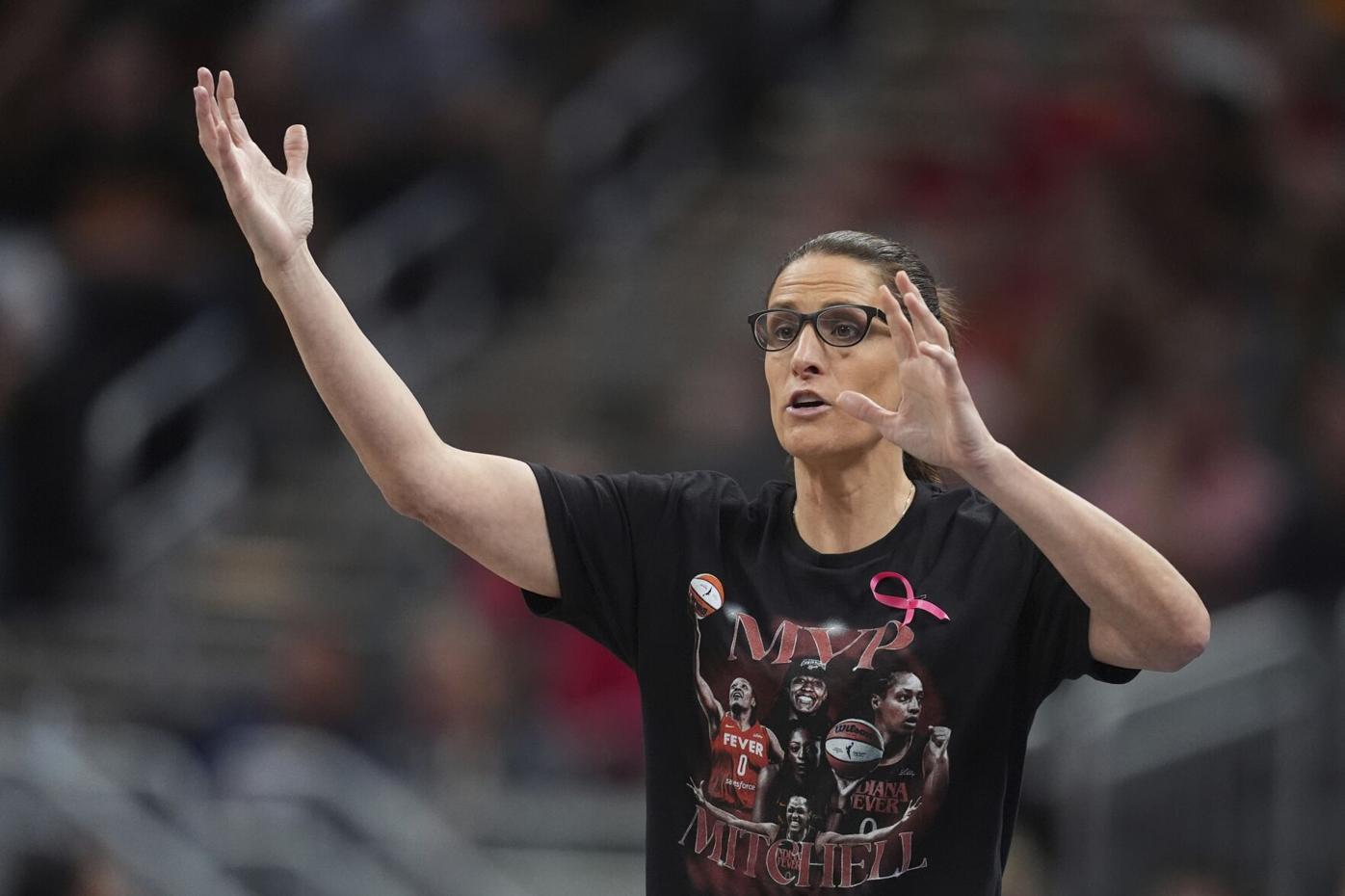
Taking the helm in White’s absence is Assistant Coach Paul Corsaro, who will serve as the interim head coach. Corsaro, a respected figure within the organization, is now thrust into one of the most challenging positions in the league. He inherits a team that is not only emotionally unsettled by their coach’s departure but is also still physically battered. The specter of injuries to key players, including superstar Caitlin Clark, has loomed over the entire season, forcing the team to constantly adapt and recalibrate.
The timing of this change is particularly critical. The Fever are in the thick of a desperate playoff race, where every single game carries immense weight. They have fought tooth and nail to remain in contention despite a roster that has often felt more like a revolving door of hardship contracts than the championship-caliber lineup assembled at the start of the year. White was the architect of their strategy, the emotional anchor on the sideline who kept the team focused and motivated through each successive blow.
Her presence was a constant—a source of stability in a season that has had anything but. She navigated the media storm surrounding Clark’s injuries with poise and guided a depleted roster to surprising victories. Her players have consistently praised her leadership and her ability to keep them united and fighting for a common goal, even when the odds were stacked against them.
Now, that constant is gone, replaced by a void filled with uncertainty. The phrase “personal matter” is intentionally private, a boundary that commands respect. It rightfully shields White from public speculation, but for the team, it leaves an unanswered question at the center of their locker room. The players are left to process the news while simultaneously preparing for their next opponent, a task that requires immense mental and emotional fortitude.
For Paul Corsaro, the challenge is twofold. He must first provide the emotional leadership necessary to keep the team from fracturing under the weight of this news. He needs to be a source of reassurance and stability, assuring the players that while the voice on the sideline has changed, the mission has not. Secondly, he must step into the strategic role of head coach, making critical in-game decisions, managing rotations, and preparing game plans for a team he knows well, but has never led from the front.
This is not simply a case of “next man up.” The bond between a head coach and their players is unique, forged in the heat of competition, in practices, film sessions, and private conversations. White had built that trust and rapport. Corsaro must now establish his own leadership dynamic on the fly, in the most high-pressure circumstances imaginable.
The impact of this leave will undoubtedly be felt throughout the organization. For General Manager Lin Dunn, it adds another complex variable to an already complicated puzzle. She must support her interim staff, keep the team’s morale from sinking, and manage the external narrative, all while respecting the privacy of her head coach.
For the fans, this is yet another emotional blow in a season full of them. They have ridden the highs of early-season optimism and endured the crushing lows of each injury report. They have rallied behind their team’s grit and determination, admiring their refusal to give in. Now, they are left to watch and wait, hoping for the best for both Coach White personally and for the team she has been forced to leave behind.
The 2025 Indiana Fever’s story was already one of perseverance. It was about a team refusing to be defined by its losses, whether of players or of games. With Stephanie White’s indefinite absence, that narrative is now deeper and more complex. It has become a story about an organization facing a crisis of leadership, a team of athletes forced to dig deeper than ever before, and the profound reminder that life, with all its personal challenges, continues to unfold even in the bright, unforgiving lights of a professional basketball season.