Kimmel’s Future at ABC Under Scrutiny as Epstein Jokes Ignite Political Firestorm
A recent broadcast of “Jimmy Kimmel Live!” has placed its host and the ABC network at the center of a raging political debate, sparking intense speculation about the future of one of late-night television’s most prominent figures. After Jimmy Kimmel delivered a monologue laced with jokes about the court-ordered release of Jeffrey Epstein-related documents, the ensuing backlash has raised a serious question: Could the sustained political pressure on ABC lead to the host’s removal from the air?
The controversy ignited on Wednesday evening when Kimmel, a host who has increasingly leaned into political satire, addressed the highly anticipated release of the Epstein files. One of the monologue’s targets was a powerful political figure who had recently, after initial opposition, signed a bill compelling the release of the documents. Kimmel provocatively asked his audience, “We are now one step closer to answering the question: What did the president know, and how old were these women when he knew it?”
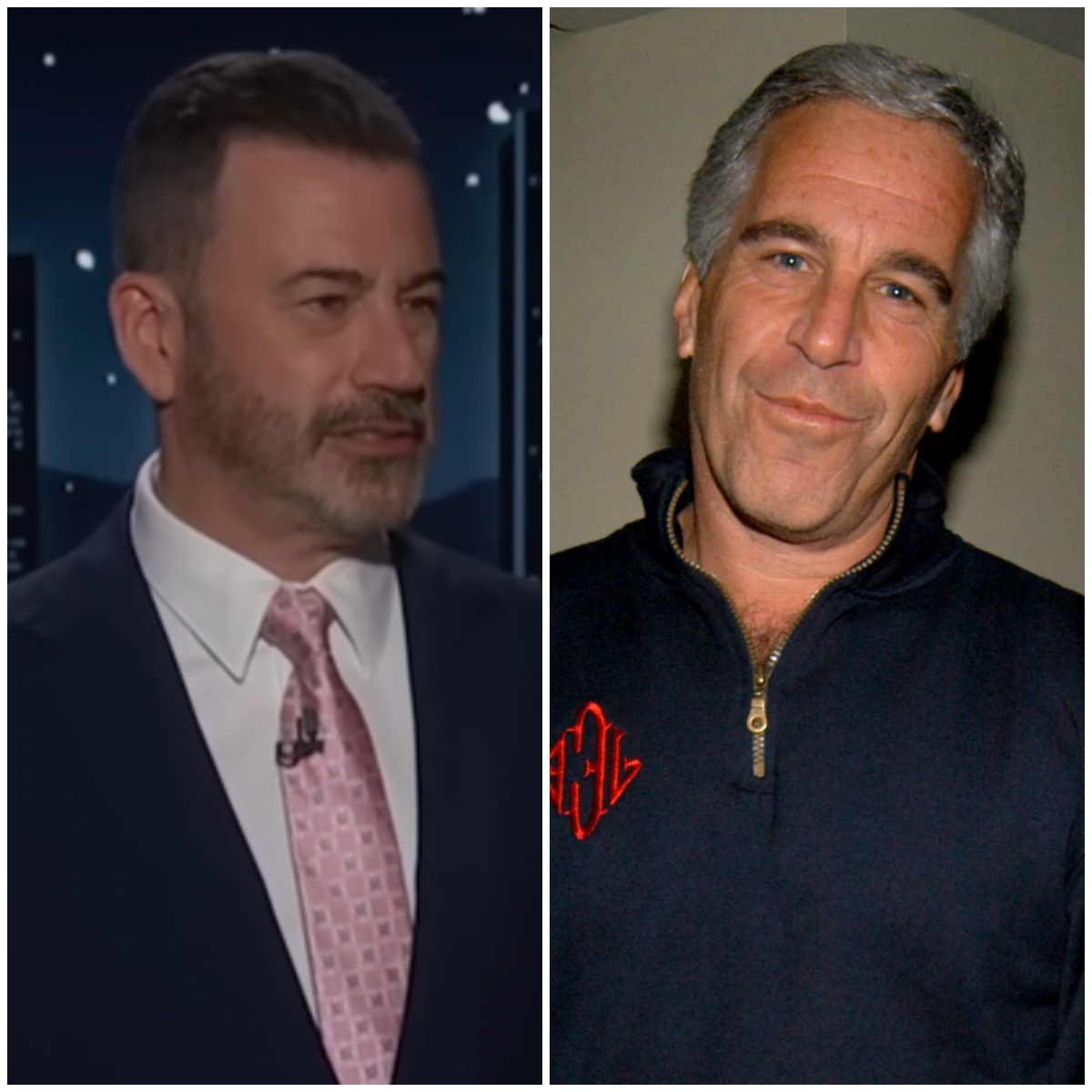
The jokes did not end there. Kimmel also took aim at the unwavering loyalty this political leader commands, quipping that his supporters were taking his word about the contents of the files. “They are taking the word of someone who paid a porn star $130,000 and claims he didn’t do anything with her,” Kimmel remarked, referencing a well-documented past scandal. He further satirized a recent dinner hosted by the political figure for Saudi Crown Prince Mohammed bin Salman, which included guests like Elon Musk and Stephen Miller. Labeling the group a “legion of doom,” Kimmel joked that “we might actually need Austin Powers to defeat them.”
The response was swift and furious. In a social media post published at 12:49 a.m. ET, the very figure targeted in the monologue issued a direct call for Kimmel’s termination. “Why does ABC Fake News keep Jimmy Kimmel, a man with NO TALENT and VERY POOR TELEVISION RATINGS, on the air?” the post demanded. “Why do the TV Syndicates put up with it? Also, totally biased coverage. Get the bum off the air!!!”
This public demand from a major political adversary has pushed the long-simmering tension between the host and his political targets to a boiling point, moving the conflict from the realm of commentary to a direct challenge against Kimmel’s employment and his network’s programming decisions.
This incident is far from an isolated spat. It represents the latest and perhaps most direct assault in a prolonged campaign against media entities and journalists perceived as critical. The same political figure has previously demonstrated a willingness to use the levers of power—or at least the threat of them—against news organizations. During an Oval Office appearance while he was in office, he berated ABC correspondent Mary Bruce for asking a question about Epstein. In that exchange, he suggested punitive action against the network, stating, “I think the license should be taken away from ABC because your news is so fake and it’s so wrong.” He added that the chairman of the Federal Communications Commission (FCC) “should look at that.”
On another recent occasion, when a Bloomberg reporter asked why he wouldn’t simply order the release of the files, he reportedly dismissed her with the insult, “Quiet, piggy.” This pattern of intimidation creates a high-pressure environment for any network, forcing it to weigh the value of a star host against the potential costs of sustained political warfare. There is even a disputed historical precedent; a previous incident involving Kimmel’s jokes about a political movement reportedly drew a warning from an FCC chairman and led to temporary network action before a backlash caused a reversal.
This history fuels the speculation that the current pressure campaign could have tangible consequences. However, any potential move by ABC would face significant legal, ethical, and business hurdles. Legally, the call to revoke a broadcast license over content is an exceedingly difficult threat to realize. The FCC is prohibited by the Communications Act and constrained by the First Amendment from censoring content or revoking licenses based on political viewpoints. The bar for such an action is reserved for extreme violations, not for satire or critical reporting.
From a business perspective, Kimmel remains a valuable asset for ABC and its parent company, Disney. He is an established star with a loyal following, and his political transformation has solidified his position as a key voice in the national conversation. Firing a host in response to political pressure would likely trigger a massive backlash from audiences, advertisers, and creative talent who value free expression. It would set a dangerous precedent, suggesting that powerful individuals can dictate a network’s programming through public attacks.
Nonetheless, the “Get the bum off the air!!!” directive is a clear signal to the network’s corporate leadership and its affiliated television syndicates. It is an attempt to create a chilling effect, making the network question if the controversy generated by its late-night host is worth the political headache. In an era of deep polarization, where audiences and advertisers can be mobilized by political grievances, such pressure cannot be entirely dismissed by executives.
The situation places ABC in a precarious position, caught between its commitment to its talent, the principles of a free press, and the realities of operating a business in a hyper-partisan landscape. While the legal grounds for firing Kimmel or for the network losing its license are virtually nonexistent, the relentless nature of the attacks creates a narrative of instability. For now, the question of Kimmel’s future remains speculative, but the incident serves as a stark case study in the escalating conflict between political power and the media’s freedom to critique and satirize it.
News

The gavel fell, sealing the one-armed veteran’s fate. But from the back of the courtroom, a single, mournful howl became the first shot in a new war—one fought by a dog who remembered everything they buried.
Courtroom 3 of the Hamilton District Court was a vessel of held breath. The morning light, strained through tall, dusty windows, seemed to congeal in the air, thick and heavy as the silence itself. On the polished wooden benches, people…
He went to an Alaskan cabin to silence the echoes of war. But in the heart of a blizzard, his dog sensed a secret the storm was sent to bury—a secret that would force him into one last fight.
The wilderness beyond Anchorage doesn’t ask for permission; it simply takes. It swallows roads, erases landmarks, and devours the faint, tinny signal of a cell phone until the only voice left is the wind. It was in this vast, unforgiving…

He told the quiet woman she didn’t belong on his elite sniper range. But when her backpack split open, a single photo fell out that made every decorated Marine in the room snap to a salute in shame.
The crack of a rifle shot was the only sound that made sense anymore. It split the dry California air over Marine Corps Base Camp Pendleton, a clean, percussive thunder that echoed off the brown hills and settled in your…
As the young officer moved to detain the 89-year-old man, she was blind to the truth. The very name of the warship she guarded was a whisper of the 70-year-old secret hidden on his faded patch.
The voice sliced through the humid air of the naval pier, a sharp tool meant to carve out immediate compliance. “Sir, I’m going to have to ask you to step away from the gangway. This area is for authorized personnel…

They chose a desolate mountain to be her grave, thinking a thousand-foot drop was the perfect, silent crime. But as she fell into the void, they made a fatal miscalculation about the kind of woman they just betrayed.
The mountain didn’t make a sound when it happened. There was no grand echo to mark the moment, no sympathetic rumble from the ancient stone. There was only the sharp, scattering kick of gravel, a sudden, violent silence where a…

In a circle of 282 elite soldiers, two men decided to humiliate the quiet medic during a demonstration. They intended to break her spirit. Instead, in seven brutal seconds, they discovered a truth that broke them completely.
The wind that came off the Atlantic that morning had teeth. It wasn’t a breeze; it was a hard, scouring force that snapped across the open-air corridors of Naval Special Warfare Command Unit 7, carrying the briny scent of the…
End of content
No more pages to load