Chloe Bibby AI Image Sparks Backlash, Leading to Heartfelt Public Apology
In today’s hyper-connected world, a single social media post can ignite a firestorm, transforming a public figure’s platform into a forum for intense debate overnight. This is precisely what happened when a seemingly innocuous post from basketball player Chloe Bibby became the center of a widespread controversy. The incident, involving a piece of AI-generated art, quickly spiraled into a serious discussion about technology, ethics, and cultural sensitivity, highlighting the immense responsibility that comes with having a public voice. The center of the storm was the Chloe Bibby AI image, a digital creation that carried more weight than anyone could have anticipated. For Bibby, a player for the Indiana Fever, what might have been intended as a simple share resulted in a wave of criticism from fans and followers who saw the post as problematic on multiple levels. The incident serves as a powerful case study in the modern challenges athletes face, where every online action is scrutinized and the line between personal expression and public responsibility is increasingly blurred. It forced a conversation not just about the content itself, but about accountability, education, and the path forward when a mistake is made in the public eye.

The Post That Ignited a Digital Firestorm
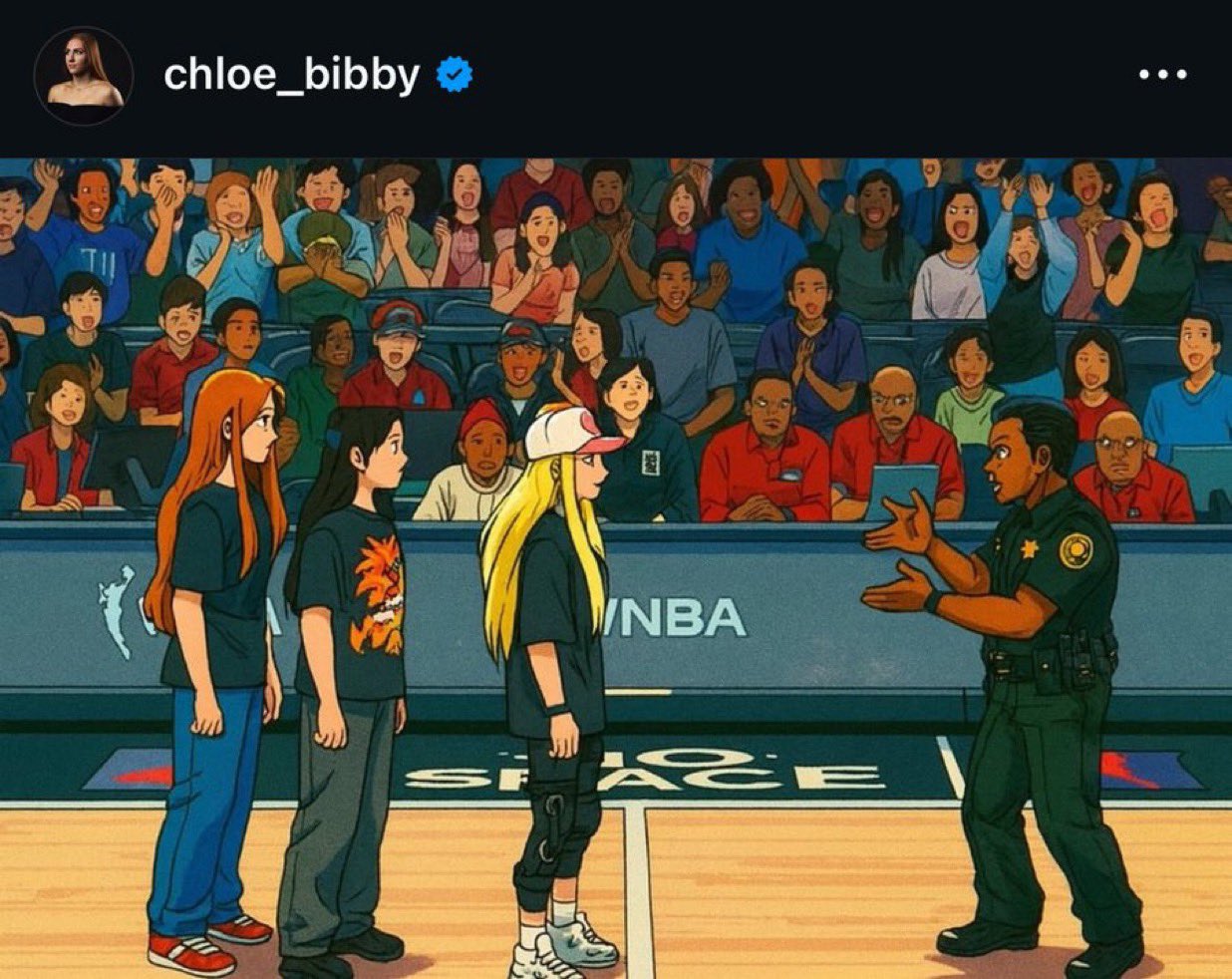
The controversy began with a social media post by Chloe Bibby that included an image created by artificial intelligence. At first glance, it might have seemed like any other piece of digital art shared online. However, it quickly drew criticism for two distinct but intertwined reasons. The first issue stemmed from the very nature of the artwork itself. The use of AI-generated art is a polarizing topic in creative communities. Many argue that promoting AI art devalues the work of human artists who dedicate years to honing their craft. This ongoing AI art controversy questions the ethics of using algorithms that often “learn” by scraping millions of images from the internet without the original creators’ consent. For some fans, Bibby’s post was seen as an implicit endorsement of a technology that threatens the livelihoods of artists, sparking frustration among those who advocate for supporting human creativity.
Understanding the Perceived Racial Undertones
While the AI debate was significant, it was the second, more serious issue that truly fueled the backlash: the perceived racial undertones within the image. Though the specifics of the image’s content were subject to interpretation, a vocal portion of the online community found elements within it to be racially insensitive or stereotypical. In the sensitive cultural climate of the United States, where conversations about race and representation are paramount, any content that appears to perpetuate harmful narratives is met with swift and strong opposition. Fans and critics immediately took to social media to express their disappointment and anger, explaining why the imagery was offensive. The combination of the contentious AI origin and the problematic racial themes created a perfect storm of outrage. For many, the Chloe Bibby AI image was not just a poor choice but a reflection of a lack of awareness regarding critical social issues, turning a simple post into a major public relations crisis.
A Swift Backlash and an Even Swifter Response
The reaction from the women’s basketball community and the wider public was immediate and intense. Social media platforms, particularly X (formerly Twitter) and Instagram, were flooded with comments expressing shock and disappointment. Fans who once cheered for Bibby on the court were now questioning her judgment off it. The backlash wasn’t just a few negative comments; it was a widespread wave of criticism that made it clear the post had deeply offended a significant portion of her audience. In the age of viral outrage, silence is often interpreted as complicity, and the pressure mounted on Bibby to address the situation.
To her credit, Bibby did not ignore the criticism. In a move that many praised as responsible and mature, she took swift and decisive action. The first step was removing the controversial image from her social media accounts, effectively pulling the source of the firestorm from public view. This action signaled that she was listening to the feedback and recognized the harm the post had caused. Deleting the post was a crucial first step, but it was her next move that truly defined her response to the crisis. An athlete apology can often feel forced or insincere, but Bibby’s approach was widely seen as genuine and accountable.
“I Need to Educate Myself”: A Breakdown of Bibby’s Apology
Shortly after deleting the image, Chloe Bibby took to her Instagram story to issue a direct and heartfelt apology. Her words were not defensive or evasive; instead, they conveyed a clear sense of remorse and a commitment to do better. She wrote, “Really sorry if I offended anyone with my post. That’s not who I am and I need to do a better job at understanding the racial undertones and issues within this country.” This statement was powerful because it took full ownership of the impact of her actions, regardless of her intent. She specifically acknowledged the “racial undertones,” showing that she had listened to the core of the criticism leveled against her.
Furthermore, Bibby, who is Australian, provided context without making excuses. She added, “No excuse I need to educate myself in this area and I will”. This part of her apology was particularly well-received. By acknowledging that her background may have contributed to a gap in her understanding of America’s complex racial landscape, she showed humility and a genuine desire for personal growth. Promising to educate herself transformed a moment of public failure into an opportunity for learning. This level of self-awareness and accountability is often what the public looks for in an apology, and Bibby’s willingness to hold herself to a higher standard resonated with many who had initially been critical. The Chloe Bibby AI image incident thus became a lesson in how to handle a public misstep with grace.
The Bigger Picture: Social Media, Athletes, and Accountability
This incident highlights a much broader trend involving public figures, particularly athletes, and the immense pressures of managing a social media presence. Every post on a platform like the Indiana Fever social media network or a player’s personal account is subject to intense scrutiny. Athletes are no longer just performers on the court; they are brands, role models, and public commentators, whether they intend to be or not. This dual role comes with the responsibility to be mindful of the social and cultural impact of their online activities. The controversy shows how quickly a digital misstep can overshadow athletic achievements and spark difficult but necessary conversations.
Bibby’s handling of the situation—listening to criticism, acting quickly, and apologizing sincerely—offers a blueprint for accountability. It demonstrates that the most effective way to navigate such a crisis is not to double down or disappear but to engage with the issue head-on, acknowledge the harm caused, and commit to learning. The focus now shifts to what comes next. As Bibby moves forward, her promise to educate herself will be watched closely. This event also serves as a reminder for all public figures to be more thoughtful and discerning about the content they share, especially when it involves sensitive subjects or new technologies like AI, whose ethical implications are still being debated. The Chloe Bibby AI image controversy will likely be remembered not just for the initial mistake, but for the responsible and educational response that followed, prompting a wider dialogue that extends far beyond the world of basketball.
News

The gavel fell, sealing the one-armed veteran’s fate. But from the back of the courtroom, a single, mournful howl became the first shot in a new war—one fought by a dog who remembered everything they buried.
Courtroom 3 of the Hamilton District Court was a vessel of held breath. The morning light, strained through tall, dusty windows, seemed to congeal in the air, thick and heavy as the silence itself. On the polished wooden benches, people…

He went to an Alaskan cabin to silence the echoes of war. But in the heart of a blizzard, his dog sensed a secret the storm was sent to bury—a secret that would force him into one last fight.
The wilderness beyond Anchorage doesn’t ask for permission; it simply takes. It swallows roads, erases landmarks, and devours the faint, tinny signal of a cell phone until the only voice left is the wind. It was in this vast, unforgiving…

He told the quiet woman she didn’t belong on his elite sniper range. But when her backpack split open, a single photo fell out that made every decorated Marine in the room snap to a salute in shame.
The crack of a rifle shot was the only sound that made sense anymore. It split the dry California air over Marine Corps Base Camp Pendleton, a clean, percussive thunder that echoed off the brown hills and settled in your…

As the young officer moved to detain the 89-year-old man, she was blind to the truth. The very name of the warship she guarded was a whisper of the 70-year-old secret hidden on his faded patch.
The voice sliced through the humid air of the naval pier, a sharp tool meant to carve out immediate compliance. “Sir, I’m going to have to ask you to step away from the gangway. This area is for authorized personnel…

They chose a desolate mountain to be her grave, thinking a thousand-foot drop was the perfect, silent crime. But as she fell into the void, they made a fatal miscalculation about the kind of woman they just betrayed.
The mountain didn’t make a sound when it happened. There was no grand echo to mark the moment, no sympathetic rumble from the ancient stone. There was only the sharp, scattering kick of gravel, a sudden, violent silence where a…

In a circle of 282 elite soldiers, two men decided to humiliate the quiet medic during a demonstration. They intended to break her spirit. Instead, in seven brutal seconds, they discovered a truth that broke them completely.
The wind that came off the Atlantic that morning had teeth. It wasn’t a breeze; it was a hard, scouring force that snapped across the open-air corridors of Naval Special Warfare Command Unit 7, carrying the briny scent of the…
End of content
No more pages to load