Expert Affirms Caitlin Clark’s Views on Leadership Amidst WNBA Scrutiny
NEW YORK – Indiana Fever guard Caitlin Clark’s recent remarks on the necessity of strong leadership within the WNBA have drawn significant attention, culminating in a pointed validation from a renowned leadership expert. The 23-year-old superstar’s comments came in the wake of public criticism directed at WNBA Commissioner Cathy Engelbert by fellow player Napheesa Collier, a situation that has become a major focal point in women’s professional basketball.
The discussion was ignited on October 3, when Clark addressed the media following the Indiana Fever’s 2025 WNBA season. She directly referenced Collier’s widely circulated critique of the league’s commissioner. Clark offered a measured but firm perspective on the current climate, underscoring the gravity of the league’s position and the imperative for effective guidance. Her statements, captured in a post on X by @ericaf455, conveyed both respect for her peer and a clear vision for what the league requires.
“I have great respect for Phee, and I think she made a lot of very valid points,” Clark stated. “I think what people need to understand is, we need great leadership in this time, across all levels. This is straight-up the most important moment in our league. Where this league has been around for 25-plus years, and this is a moment we have to capitalize on.”

Clark Defines Leadership Through Relationships
Beyond acknowledging the critical juncture the WNBA faces, Clark articulated her personal philosophy on what constitutes effective leadership. She framed it not in terms of authority or strategy, but through the fundamental building block of human connection. Her view applies universally, from the court to the corporate world, and centers on the deliberate cultivation of genuine relationships.
“I’d say the most important part of leadership, whether that’s the WNBA, whether that’s corporate America, I think it comes down to relationships and really caring about the people you surround yourself with,” Clark explained. She further illustrated her point by applying it to her own role as a team leader. “Why would my teammates want to listen to me if I didn’t have a relationship with them? I think it’s the most simple thing, and you have to be very intentional about seeking those out and understanding your teammates.”
Her words were met with widespread praise, as many observers noted the maturity and insight of her stance, particularly for a player who, despite her young age, has extensive experience leading high-profile teams.
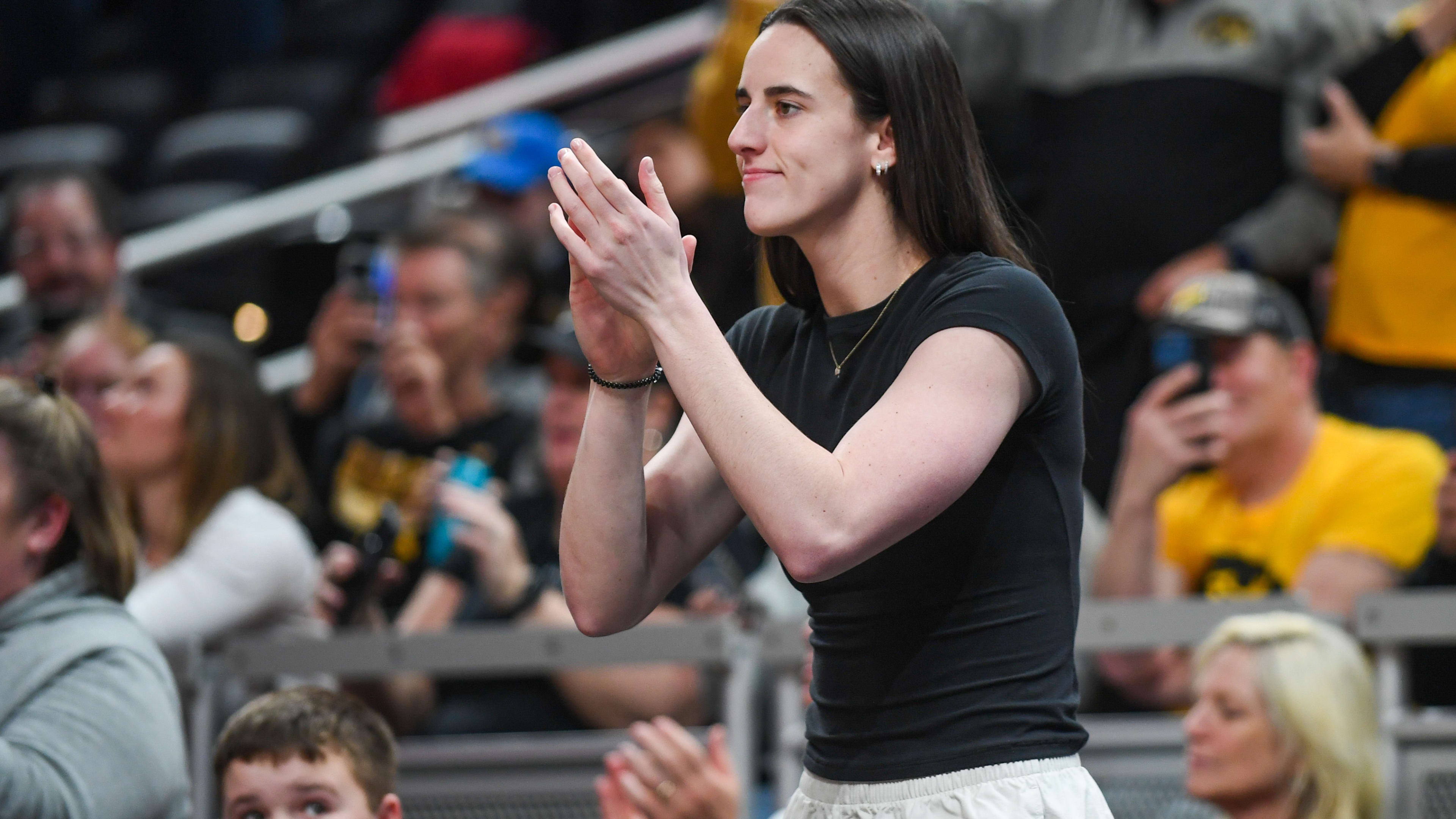
An Expert’s Corroboration and Deeper Insight
Clark’s impromptu treatise on leadership was subsequently subjected to professional scrutiny. In an article published by The Athletic on October 10, Dr. Ruth Gotian, an executive coach and leadership mentor for elite athletes including Olympians and NBA players, was asked to appraise the Fever star’s comments.
Dr. Gotian’s initial assessment was concise and unequivocal: “She’s right.”
The expert endorsement lent significant weight to Clark’s perspective. Dr. Gotian elaborated on the point, reinforcing the idea that the capacity to forge strong interpersonal connections is not merely a beneficial trait for a leader but a “foundational quality.” However, she also expanded upon Clark’s framework, introducing a critical layer of nuance that speaks directly to the ongoing friction within the league.
According to Dr. Gotian, the simple existence of a relationship is insufficient for true leadership to flourish. The determining factor, she argued, is the quality of that relationship. More specifically, she identified trust as the indispensable element that must be carefully cultivated and developed. The distinction is crucial; a connection without trust lacks the substance required to navigate challenges and inspire collective action.
The Trust Deficit at the League’s Core
This expert analysis sharpens the focus on the current discord between WNBA players and Commissioner Engelbert. The ongoing commentary from players like Collier, and now the contextual remarks from Clark, suggest that the core issue is a significant breakdown of trust. Dr. Gotian’s framework implies that without this foundational trust, leadership cannot function effectively, regardless of other efforts.
The gap between the commissioner’s office and the athletes appears to be widening, with little indication that a resolution is imminent. This dynamic has led to speculation about the future of the league’s leadership, with many observers believing that Engelbert’s tenure as commissioner could be at risk if this essential trust cannot be restored. For a league that Clark rightly identifies as being at a pivotal moment of growth and opportunity, resolving this internal leadership crisis has become an urgent priority.
News

The gavel fell, sealing the one-armed veteran’s fate. But from the back of the courtroom, a single, mournful howl became the first shot in a new war—one fought by a dog who remembered everything they buried.
Courtroom 3 of the Hamilton District Court was a vessel of held breath. The morning light, strained through tall, dusty windows, seemed to congeal in the air, thick and heavy as the silence itself. On the polished wooden benches, people…

He went to an Alaskan cabin to silence the echoes of war. But in the heart of a blizzard, his dog sensed a secret the storm was sent to bury—a secret that would force him into one last fight.
The wilderness beyond Anchorage doesn’t ask for permission; it simply takes. It swallows roads, erases landmarks, and devours the faint, tinny signal of a cell phone until the only voice left is the wind. It was in this vast, unforgiving…

He told the quiet woman she didn’t belong on his elite sniper range. But when her backpack split open, a single photo fell out that made every decorated Marine in the room snap to a salute in shame.
The crack of a rifle shot was the only sound that made sense anymore. It split the dry California air over Marine Corps Base Camp Pendleton, a clean, percussive thunder that echoed off the brown hills and settled in your…

As the young officer moved to detain the 89-year-old man, she was blind to the truth. The very name of the warship she guarded was a whisper of the 70-year-old secret hidden on his faded patch.
The voice sliced through the humid air of the naval pier, a sharp tool meant to carve out immediate compliance. “Sir, I’m going to have to ask you to step away from the gangway. This area is for authorized personnel…

They chose a desolate mountain to be her grave, thinking a thousand-foot drop was the perfect, silent crime. But as she fell into the void, they made a fatal miscalculation about the kind of woman they just betrayed.
The mountain didn’t make a sound when it happened. There was no grand echo to mark the moment, no sympathetic rumble from the ancient stone. There was only the sharp, scattering kick of gravel, a sudden, violent silence where a…

In a circle of 282 elite soldiers, two men decided to humiliate the quiet medic during a demonstration. They intended to break her spirit. Instead, in seven brutal seconds, they discovered a truth that broke them completely.
The wind that came off the Atlantic that morning had teeth. It wasn’t a breeze; it was a hard, scouring force that snapped across the open-air corridors of Naval Special Warfare Command Unit 7, carrying the briny scent of the…
End of content
No more pages to load