Beyond the Court: The Rise of WNBA Beauty Pros and the Business of Glam
In the world of professional sports, superstition can be as critical as strategy. For Las Vegas Aces star A’ja Wilson, her hairstylist Myesha Jamerson understood this perfectly during the team’s incredible 17-game winning streak. The secret weapon? A simple bun. Jamerson refused to change it, telling Wilson they wouldn’t dare touch the winning hairstyle. This small ritual is a window into a rapidly expanding and influential world: the universe of WNBA beauty pros. As the league shatters records for viewership, attendance, and merchandise sales, a specialized network of hairstylists, makeup artists, and nail technicians is rising alongside it. These professionals are not just creating stunning looks; they are becoming essential partners in their clients’ success, helping athletes feel confident, powerful, and ready for the spotlight. They are the architects of the “look good, feel good, play good” philosophy, transforming locker rooms and hotel suites into sanctuaries of self-expression and building a powerful new sector within the sports industry. This is the story of how glam became an integral part of the game.
The “Look Good, Play Good” Philosophy in Modern Sports
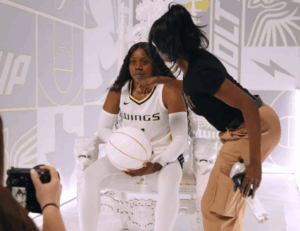
The mantra was famously articulated by Seattle Storm legend Sue Bird, who explained that a perfectly secured ponytail put her at ease, allowing her to focus entirely on the game. If her hair slipped, so did her concentration. This sentiment echoes throughout the league and is a core principle for today’s athletes. It speaks to a deeper psychological connection between appearance and performance. When players feel confident and authentic in how they present themselves, it can translate directly into their on-court prowess. This is where the specialized skills of the WNBA beauty pros become invaluable. They do more than just style hair or apply makeup; they provide a service that empowers players, boosts morale, and reinforces their identity in a high-pressure environment. The demand for their services is a direct reflection of this understanding that feeling your best is a fundamental part of playing your best.
A Demanding Niche in the Sports Beauty Industry
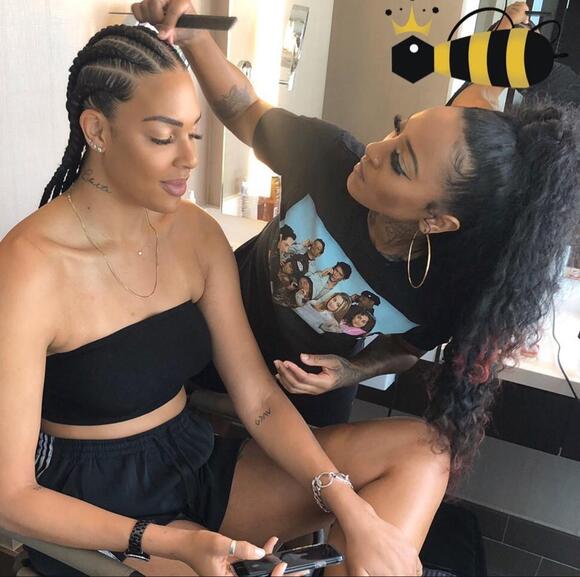
Working with professional athletes is unlike any other clientele. The creative work of these stylists must be as durable as it is beautiful. A hairstyle has to withstand hours of intense physical exertion, sweat, and contact without faltering. Adriunna Brown, a Dallas-based stylist with an All-Star client list including Arike Ogunbowale and Teaira McCowan, knows this firsthand. A former competitive track athlete herself, she understands the unique challenges. She advises her clients to sew down lace-front wigs rather than using glue, which can break down with sweat and cause the hairpiece to shift during a game.
The logistics are equally demanding. Stylists often work around the clock, fitting into the players’ grueling schedules. This can mean 2 a.m. appointments in hotel rooms, 14-hour workdays, and last-minute emergency sessions before big games or media events. Los Angeles-based stylist Sabrina Jackson, known as BeejayDidIt, recalls working for nearly three days straight to get every Las Vegas Aces player a fresh look for their 2023 championship parade. These pros travel with entire salons packed into suitcases, ready to create magic at a moment’s notice, proving their dedication goes far beyond the chair.
More Than Just a Hairstyle: How WNBA Beauty Pros Built Their Brands
The connections between players and stylists are rarely formed through official team channels. Instead, this thriving ecosystem has been built on trust, word-of-mouth, and the power of social media. Myesha Jamerson first connected with A’ja Wilson when Wilson was a rookie, thanks to a simple business card from her salon. Adriunna Brown’s career took off after Isabelle Harrison of the Dallas Wings sent her a direct message on Instagram.
These initial connections blossomed into flourishing businesses. Brown now styles some of the biggest names on the Wings, becoming part of their pre-game and pre-shoot rituals. For Arike Ogunbowale, her relationship with Brown is about feeling comfortable and confident for major brand shoots and commercials. Sabrina Jackson’s business grew from a DM from Tiffany Hayes into a long-standing relationship with the Las Vegas Aces, styling players like Sydney Colson and Chelsea Gray through back-to-back championships. These stylists have become trusted confidantes and indispensable members of the players’ support systems, their success intertwined with the athletes they serve.
The Economics of Glam: An Investment in Brand and Future
While teams or brands might cover beauty services for official media days or commercial shoots, players typically pay out of pocket for their regular-season glam. In a league where the maximum base salary is a fraction of what their NBA counterparts earn, this is a significant investment. However, players view it as a strategic and necessary expense. Their image is their brand, and in an era of social media and lucrative endorsement deals, marketability is paramount. Tunnel walks have become fashion runways, and every media appearance is an opportunity to build their personal brand.
This is where striking WNBA player hairstyles and flawless looks pay dividends. A’ja Wilson’s bold silver-and-pink wigs at recent WNBA media days generated massive online buzz, arguably more than some game highlights. Dana Evans of the Chicago Sky put it succinctly, explaining that players need to show they are marketable beyond the court—that they can model and be multifaceted personalities. The stylists’ rates reflect their specialized skills and round-the-clock availability. A custom wig installation can cost upwards of $650, with additional fees for after-hours appointments or house calls. For top stylists like Jamerson, her work with WNBA players now constitutes the majority of her income, allowing her to expand her own brand, Madame Muse Beauty, with an edge-control line designed for athletes.
Facing the Backlash: Athlete Self-Expression vs. Public Scrutiny
The league’s embrace of beauty has not been without controversy. Some fans and critics have argued that a focus on appearance—from long nails to eyelash extensions—is a distraction from the game. This scrutiny often targets Black women, who are simply expressing their culture and individuality. When Tennessee’s Tamari Key wore eyelash extensions, she faced a storm of social media criticism claiming it affected her performance, despite having worn the same style during a career-best season the year before.
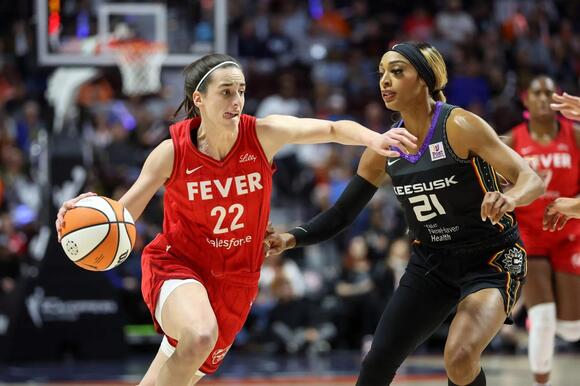
The issue came to a head when Dijonai Carrington, then with the Connecticut Sun, unintentionally scraped Caitlin Clark’s eye during a playoff game. Trolls immediately and unfairly fixated on her nails, despite photos showing they were short. The backlash grew so intense that a fan attended the next game with a “BAN NAILS” shirt. Carrington took to social media to defend herself, highlighting the unfair pressure. This clash underscores a central theme: the ongoing struggle for athlete self-expression. What stylists and players see as empowerment, some critics view as a violation of old, conservative norms about how female athletes should look and behave.
In conclusion, the rise of WNBA beauty pros is about far more than just aesthetics. It represents a powerful convergence of sport, culture, and commerce. These dedicated professionals are empowering athletes to take control of their image, build their personal brands, and perform at their peak with unshakable confidence. They are navigating a complex landscape, turning backlash into a statement of identity and proving that self-expression is not a distraction but a source of strength. As the WNBA continues its historic ascent, the stylists working tirelessly behind the scenes are not just supporting players—they are helping to define the look and feel of a new era in women’s sports. They are entrepreneurs, artists, and essential partners in a movement that champions authenticity both on and off the court.
News

The gavel fell, sealing the one-armed veteran’s fate. But from the back of the courtroom, a single, mournful howl became the first shot in a new war—one fought by a dog who remembered everything they buried.
Courtroom 3 of the Hamilton District Court was a vessel of held breath. The morning light, strained through tall, dusty windows, seemed to congeal in the air, thick and heavy as the silence itself. On the polished wooden benches, people…

He went to an Alaskan cabin to silence the echoes of war. But in the heart of a blizzard, his dog sensed a secret the storm was sent to bury—a secret that would force him into one last fight.
The wilderness beyond Anchorage doesn’t ask for permission; it simply takes. It swallows roads, erases landmarks, and devours the faint, tinny signal of a cell phone until the only voice left is the wind. It was in this vast, unforgiving…

He told the quiet woman she didn’t belong on his elite sniper range. But when her backpack split open, a single photo fell out that made every decorated Marine in the room snap to a salute in shame.
The crack of a rifle shot was the only sound that made sense anymore. It split the dry California air over Marine Corps Base Camp Pendleton, a clean, percussive thunder that echoed off the brown hills and settled in your…

As the young officer moved to detain the 89-year-old man, she was blind to the truth. The very name of the warship she guarded was a whisper of the 70-year-old secret hidden on his faded patch.
The voice sliced through the humid air of the naval pier, a sharp tool meant to carve out immediate compliance. “Sir, I’m going to have to ask you to step away from the gangway. This area is for authorized personnel…

They chose a desolate mountain to be her grave, thinking a thousand-foot drop was the perfect, silent crime. But as she fell into the void, they made a fatal miscalculation about the kind of woman they just betrayed.
The mountain didn’t make a sound when it happened. There was no grand echo to mark the moment, no sympathetic rumble from the ancient stone. There was only the sharp, scattering kick of gravel, a sudden, violent silence where a…

In a circle of 282 elite soldiers, two men decided to humiliate the quiet medic during a demonstration. They intended to break her spirit. Instead, in seven brutal seconds, they discovered a truth that broke them completely.
The wind that came off the Atlantic that morning had teeth. It wasn’t a breeze; it was a hard, scouring force that snapped across the open-air corridors of Naval Special Warfare Command Unit 7, carrying the briny scent of the…
End of content
No more pages to load