The Sister Who Faked Her Death
The rain fell as if the sky itself was in mourning. A sea of black umbrellas huddled together as shovels cast damp earth onto polished wood. People whispered prayers, dabbed at their tears, and shook their heads at the sheer injustice of it all. They said the woman in the casket was my twin, Leila Carter. That my other half, my mirror image, was gone forever.
I stood at the edge of the grave, my hands shoved deep into my coat pockets, fighting to draw a breath past the suffocating knot in my chest. I’m Maya Carter. I’m 35 years old, and until that afternoon, the hardest thing I’d ever endured was surviving the emotional shrapnel of my parents’ broken marriage. But this was a different kind of pain entirely.
As the pastor recited his final blessings, my phone vibrated. With vision blurred by the relentless downpour, I glanced at the screen. A message from an unknown number glowed back at me: “I’m alive. It’s not me.” My knees almost gave out. If Leila was alive, then who were we burying? And who had orchestrated this living nightmare?

To understand how I found myself in a cemetery, staring at a text message that shattered my world, I have to go back. I have to return to a time when Leila and I were just two little girls, trapped in a house that was too loud with arguments and far too small for hope. We were born on a frigid November morning in 1990, in the small town of East Riverton, Georgia. Leila was the dreamer; I was her shield. Together, we navigated the nights of shattered glass and the mornings of suffocating silence. When we were eight, my parents had one of their worst fights on Christmas Eve. Leila whispered to me, her voice trembling, “Did Santa forget us?” I lied. “No, he’s just late, but I’ll be your Santa.” That night, I slipped out and gathered smooth stones from the creek bed, dried them by the heater, and drew tiny flowers and stars on them. When I gave them to her the next morning, she smiled a genuine, brilliant smile, wrapped her arms around my neck, and told me, “You’re the best sister in the world, Maya.” That smile was the fuel that kept me going for years.
By the age of 12, we were already working. I had a paper route at dawn, and Leila watched Miss Dorsey’s rambunctious twins. We stashed our earnings in an old coffee can, hidden behind a loose floorboard in our closet. On the worst nights, when the screaming escalated, we’d drag a heavy dresser in front of our bedroom door and huddle together under the quilt. I would whisper promises into the darkness: “One day we’ll have our own place. No yelling, just peace.”
At 18, our paths finally diverged. Leila earned a scholarship to Magnolia State University in New Orleans. I stayed behind, working at the Riverton Freight and Auto, sending her what little money I could for her books. She called me every Sunday, her voice filled with stories of a city that was a world away from ours. “It smells like spices and rain,” she’d tell me. Then came the name that would change everything: Adrien Cole. “He’s in med school,” she said, her voice softer than I’d ever heard it. “He’s from North Carolina. His parents own a clinic. He’s different, Maya. He listens to me.” I warned her not to get distracted, to stay focused on her future. But when she brought him home, I understood. He was respectful and humble, and he looked at her as if she held the entire universe in her eyes. They married, and Leila was radiant. At the wedding, she whispered to me, “I’m happy, Maya. So happy.” I squeezed her hand and replied, “Then I’m happy, too.”
They built a beautiful life together, one filled with ocean views, easy laughter, and the kind of safety we’d only ever dreamed of. But a storm was gathering, not from the sea, but from within Adrien’s own body. An insidious illness that doctors were powerless to cure. His last words to me were, “Take care of her.” A month later, he was gone. In the lawyer’s office, we learned that Adrien had left everything to Leila: “$46 million in assets.” She was devastated. “I don’t want this without him,” she whispered, her voice choked with grief. I told her the simple truth: “He wanted you to be safe.” But money isn’t always a blessing; sometimes, it’s a curse. And it didn’t take long for that curse to find us.
The Yacht Accident
The first time I saw the yacht, I knew it didn’t belong in our story. It was too grand, too perfect. My parents had convinced us that a family trip was exactly what we needed to heal. The captain was a gaunt man with tired, hollow eyes, and while the crew seemed pleasant enough, something in the way they avoided my gaze made me uneasy. Leila stood on the bow, her face turned toward the sea, laughing as her braids whipped in the wind. “It’s like the Riverton creek,” she shouted over the roar of the engine, “only bigger!” I forced a smile, but the knot of dread in my stomach tightened.
On the second day, the sky turned a bruised, angry purple. The wind clawed at the sails like a cornered animal, and the radio crackled into silence. The ocean transformed from a serene expanse into a raging monster. Waves rose like liquid walls, slamming against the hull with concussive force. “Maya, I can’t,” Leila cried, her fingernails digging into my arm. “Just hold on,” I urged, my own voice strained. Then, a deafening explosion ripped through the ship from below. The entire vessel lurched violently. Glass shattered. Icy water flooded the deck. I fumbled to secure a life jacket on Leila. “Whatever happens, don’t let go of me.” The next wave was a colossal wall of black water that swallowed us whole.
I fought my way to the surface, coughing up saltwater, my eyes stinging as I desperately scanned the churning chaos for Leila. I screamed her name again and again, but the only response was the roar of the storm and the sight of splintered debris. Another wave crashed over me, dragging me under. My lungs burned. I managed to grab onto a floating piece of the wreckage. Hours bled into a dark, cold eternity. When the blinding beam of a Coast Guard searchlight finally found me, I could barely lift a hand to signal. They hauled me aboard, wrapped me in a thermal blanket, and one of them said the words that broke me: “There are no survivors.” I collapsed.
In the sterile white of the hospital, machines beeped a steady, monotonous rhythm. Two days later, my parents walked into my room. They said they were sorry, but their eyes were cold, assessing, calculating what was left for them to take. They peppered me with questions about the explosion and the shipwreck, their inquiries too sharp, too precise, as if they were trying to confirm that their plan had worked. “The Coast Guard said no one else made it,” my father murmured. His tone wasn’t one of grief. It was one of finality, of satisfaction. In that sickening moment, I realized they wanted my sister dead.
A week later, the Coast Guard called. They’d found a body. It was unrecognizable, but its location was consistent with the wreck. I demanded a DNA test, but my parents immediately shut it down, insisting on a quick funeral. “Let her rest in peace,” my father said, his voice laced with false piety. “Dragging this out won’t help anyone.” So we buried her. The rain fell as dirt thudded against the casket. My parents arrived late, whispering to each other—not prayers, but business. Fragments of their conversation, words like “inheritance” and “assets,” floated toward me on the damp air. I clenched my fists so tightly my nails broke the skin. And just as the last hymn concluded, my phone vibrated. A message from a private number. “I’m alive. It’s not me in the casket.” My world tilted on its axis. If Leila was alive, then someone had tried to erase her. And I already knew who had the most to gain.
The Search for the Truth
After the funeral, I drove aimlessly until I found myself in a dingy, all-night diner. My hands shook as I typed a reply: “If this is you, where are you?” There was no response. The silence was agonizing. The next morning, another message appeared: “Meet me at Driftwood Cabin. 9 p.m. Tell no one.” My heart hammered against my ribs. I didn’t know if it was a miracle or a trap, but I couldn’t ignore it. That night, I drove down a series of winding, unlit roads until I found the cabin. A single, dim light glowed in the window. I knocked. The door creaked open. And there she was. Leila. My twin. Alive. She was thinner, her eyes haunted and exhausted, but she was real. She threw her arms around me, sobbing. “Maya, it’s me. It’s really me.” I held her so tightly I thought we might fuse back into one.
She told me everything. A fisherman had pulled her from the wreckage, half-drowned and delirious. She’d begged him not to tell anyone, to take her somewhere she could hide. “Maya, I think someone wanted me dead,” she said, her voice barely a whisper. My chest tightened. “Our parents insisted I go on that trip,” she explained. “Then, at the last minute, they backed out, saying Dad was sick. Doesn’t that seem strange to you?” My own blood ran cold as I told her what I’d overheard at her own funeral. The way our parents had been talking to a banker. The whispers about her inheritance right beside her empty casket. Leila trembled. “I knew it. They wanted me out of the way to get everything Adrien left me.”
Then Leila told me a secret she’d kept. Before the trip, she had drawn up a private will. If anything happened to her, everything was to go to me. If I wasn’t alive, it would all go to charity. I was horrified. “I didn’t want you to worry,” she said with a sad smile. “I just wanted to make sure the money didn’t fall into the wrong hands.”
The weight of her trust settled on my shoulders. “If they find out you’re alive, they’ll come for both of us.” Her eyes hardened. “Then we have to get proof,” she said. Real proof. Under the dim cabin light, with the storm outside echoing the one in our hearts, we made a plan. I would meet with Leila’s lawyer, then head to the marina to see if anyone saw anything suspicious before the yacht set sail.
The next morning, I was in the office of her attorney, Dorian Wells. “Leila is alive,” I whispered, the words still feeling unreal. “She’s in hiding. If my parents find out, she won’t be safe.” Wells, a man of quiet integrity, opened a heavy safe and showed me the will. My sister’s wishes were clear, written in her own hand. Everything to me if she died; and if I was gone too, to a children’s charity. Not a single cent to our parents. I left his office with a small measure of relief, but the urgent need for more evidence drove me to Harborview Marina.
The manager pointed me toward a young dockhand named Eddie. I asked him if he’d seen anything unusual. “The night before that yacht left, I saw someone sneak aboard,” he said, lowering his voice. “Black trench coat, cap pulled down low. Spent some time in the engine room.” A chill snaked down my spine.
Back in Riverton, our parents were already living a new life. They had moved into a renovated house and bought a new car. It was Leila’s inheritance funding their sudden prosperity. I followed them for two days. On the third, I watched them meet a man at a seedy bar called “The Rusty Nail.” He wore a black trench coat and a cap and walked with a distinct limp. My stomach turned to ice. I sat at the bar, pretending to nurse a beer, straining to listen. I caught fragments of their conversation: “It’s done… No one suspects a thing… The insurance will pay out when the papers are finalized.” My pulse thundered in my ears. When the man left, I followed him into a dark alley. I pinned him against a brick wall. “Who paid you to touch that yacht?” I demanded. He struggled, but I shoved him harder. “Alright, alright!” he gasped. “Your parents. They gave me 50 grand to tamper with the engine and the radio. They said it just had to look like bad luck.” The words hit me like a physical blow. My own parents. I pulled out my phone and made him repeat everything, recording his confession. Then I forced him to write it down. “If you run,” I told him, my voice shaking with rage, “I will find you.” The moment I let go, he vanished into the darkness.
The next day, I called a friend who worked at Blue Horizon Insurance. His voice came back, laced with astonishment. “Maya, you’re not going to believe this. Two weeks before the yacht departed, your parents took out a massive policy on it. If Leila died, they stood to collect millions.” The final, sickening piece of the puzzle clicked into place.
The Revelation in Court
That night, I called Leila from a payphone. “We have it. We have the proof. A confession. The insurance policy. Mom and Dad planned the whole thing.” There was a long silence on the other end of the line. Then her voice, cracked with pain, came through. “I didn’t want to believe it. But now, Maya, we have to stop them.” “We will,” I said, my voice hardening. “But we’ll do it smart. We let them think they’ve won. And then, we’ll tear it all down in front of the entire world.”
The Seaview County courtroom felt too small to contain the stakes of that day. My mother sat in the front row, a perfect portrait of a grieving parent dressed in designer mourning clothes. My father wore a freshly pressed suit, his face a mask of solemnity. The judge cleared his throat. “If there are no objections or further evidence, we will proceed with the transfer of assets.”
I stood up. My voice cut through the hushed silence. “Your Honor, I object.” Every head in the room swiveled toward me. My mother stiffened. My father’s lips tightened into a thin line. “My sister, Leila Carter, is not dead,” I declared. “And the very people sitting in this courtroom tried to kill her.” A wave of murmurs swept through the room. The judge’s gavel struck the bench. “Miss Carter, do you have proof of these extraordinary claims?” I held up a small USB drive. “Yes, Your Honor. I do.”
I played the recording. The saboteur’s shaky voice filled the courtroom. “Her parents paid me 50 grand to tamper with the yacht. They said it just had to look like an accident.” My mother shot to her feet, shrieking, “Lies! Fabricated lies!” My father pulled her down, but his own eyes were wild with panic. I wasn’t finished. I placed the insurance policy on the table. “Two weeks before the trip, they took out a multi-million dollar policy. If Leila died, they collected. That’s not love, Your Honor. That’s greed.”
The judge looked at me, his expression grave. “And where is Miss Leila Carter now?” I turned toward the heavy oak doors at the back of the courtroom. “Right here.” The doors swung open. Leila walked in. She was thin, pale, but undeniably alive, her dark braids falling over her shoulders like a crown. The courtroom fell into a stunned, absolute silence. My mother’s scream shattered it—not a cry of joy, but one of pure terror. My father’s jaw hung open as if he’d seen a ghost. Leila’s voice trembled but held steady. “I am Leila Carter. I survived the shipwreck, and I went into hiding because I knew someone wanted me dead.”
She turned to our parents. “You called us burdens our entire childhood,” she said, her voice rising with a strength I’d never heard before. “And when Adrien gave me a future, you tried to erase me to steal it.” My mother began to sob, but the tears sounded hollow and false. My father barked, “How dare you accuse your own blood!”
The judge slammed his gavel. “This court will not be a stage for family theatrics. The evidence is clear. This court will order a full criminal investigation.” My mother’s hands were shaking uncontrollably. My father’s face darkened with rage. But it was too late. The truth was out.
The weeks that followed were a blur. The police arrested our parents on charges of conspiracy, fraud, and attempted murder. Leila sold the mansion and poured the proceeds into the Adrien Cole Foundation, creating scholarships, funding clinics, and starting youth programs in Riverton. “If this money almost destroyed us,” she told me, “then it’s only right that it saves someone else.” We met with the families of the crew who were lost at sea. Leila cried with them, apologized to them. “They were victims, too,” she said quietly. Our parents wrote us letters from jail, filled with blame and accusations, calling us ungrateful. We never wrote back. Some ties are meant to be broken.
One evening, Leila and I were sitting on my porch. “Maya,” she said softly, “you’ve been my family since the day we were born. Mom and Dad never were.” I put my arm around her. “That’s all we need, Leila. Just us.”
Our story didn’t end with riches or revenge. It ended with truth, with survival, and with the unbreakable bond between two sisters who had clung to each other from the very beginning. And this time, no storm—not even one born of our own blood—could ever tear us apart.
News
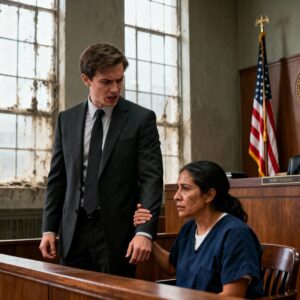
The gavel fell, sealing the one-armed veteran’s fate. But from the back of the courtroom, a single, mournful howl became the first shot in a new war—one fought by a dog who remembered everything they buried.
Courtroom 3 of the Hamilton District Court was a vessel of held breath. The morning light, strained through tall, dusty windows, seemed to congeal in the air, thick and heavy as the silence itself. On the polished wooden benches, people…
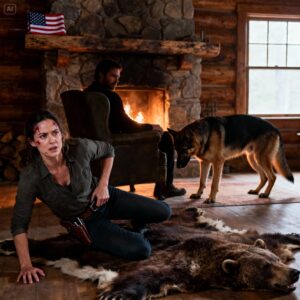
He went to an Alaskan cabin to silence the echoes of war. But in the heart of a blizzard, his dog sensed a secret the storm was sent to bury—a secret that would force him into one last fight.
The wilderness beyond Anchorage doesn’t ask for permission; it simply takes. It swallows roads, erases landmarks, and devours the faint, tinny signal of a cell phone until the only voice left is the wind. It was in this vast, unforgiving…
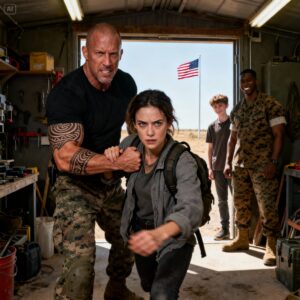
He told the quiet woman she didn’t belong on his elite sniper range. But when her backpack split open, a single photo fell out that made every decorated Marine in the room snap to a salute in shame.
The crack of a rifle shot was the only sound that made sense anymore. It split the dry California air over Marine Corps Base Camp Pendleton, a clean, percussive thunder that echoed off the brown hills and settled in your…
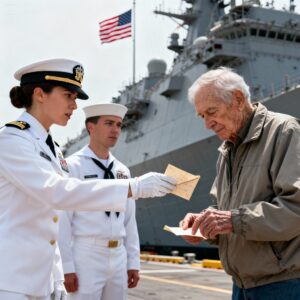
As the young officer moved to detain the 89-year-old man, she was blind to the truth. The very name of the warship she guarded was a whisper of the 70-year-old secret hidden on his faded patch.
The voice sliced through the humid air of the naval pier, a sharp tool meant to carve out immediate compliance. “Sir, I’m going to have to ask you to step away from the gangway. This area is for authorized personnel…

They chose a desolate mountain to be her grave, thinking a thousand-foot drop was the perfect, silent crime. But as she fell into the void, they made a fatal miscalculation about the kind of woman they just betrayed.
The mountain didn’t make a sound when it happened. There was no grand echo to mark the moment, no sympathetic rumble from the ancient stone. There was only the sharp, scattering kick of gravel, a sudden, violent silence where a…

In a circle of 282 elite soldiers, two men decided to humiliate the quiet medic during a demonstration. They intended to break her spirit. Instead, in seven brutal seconds, they discovered a truth that broke them completely.
The wind that came off the Atlantic that morning had teeth. It wasn’t a breeze; it was a hard, scouring force that snapped across the open-air corridors of Naval Special Warfare Command Unit 7, carrying the briny scent of the…
End of content
No more pages to load