In the theater of professional sports, the script is often written in moments of unbridled physicality and unspoken loyalty. A box score can tell you who won the game, but it can never capture the raw emotion of a team standing as one. For the Indiana Fever, a recent contest against the Minnesota Lynx became a powerful case study in this very dynamic. It wasn’t about the final buzzer or the point differential; it was about a single, jarring moment—an elbow to the face of guard Lexie Hull—and the deafening silence that followed from her own team. This incident has since ignited a firestorm of debate among the Fever faithful, shining a harsh spotlight on the void left by their injured enforcer, Sophie Cunningham.
The game itself was a tense, physical affair, typical of the WNBA’s competitive landscape. Plays were aggressive, space was limited, and every possession was a battle. It was within this cauldron of intensity that the pivotal moment occurred. As Lexie Hull navigated the paint, she was met by a sharp elbow from Lynx All-Star Kayla McBride. The contact was direct and forceful, sending Hull down. The referees intervened, handing McBride a technical foul for the transgression. On paper, justice was served. But for the thousands watching, the official ruling felt incomplete. They were looking for a different kind of justice, one that comes not from a referee’s whistle, but from the instinctive solidarity of teammates.
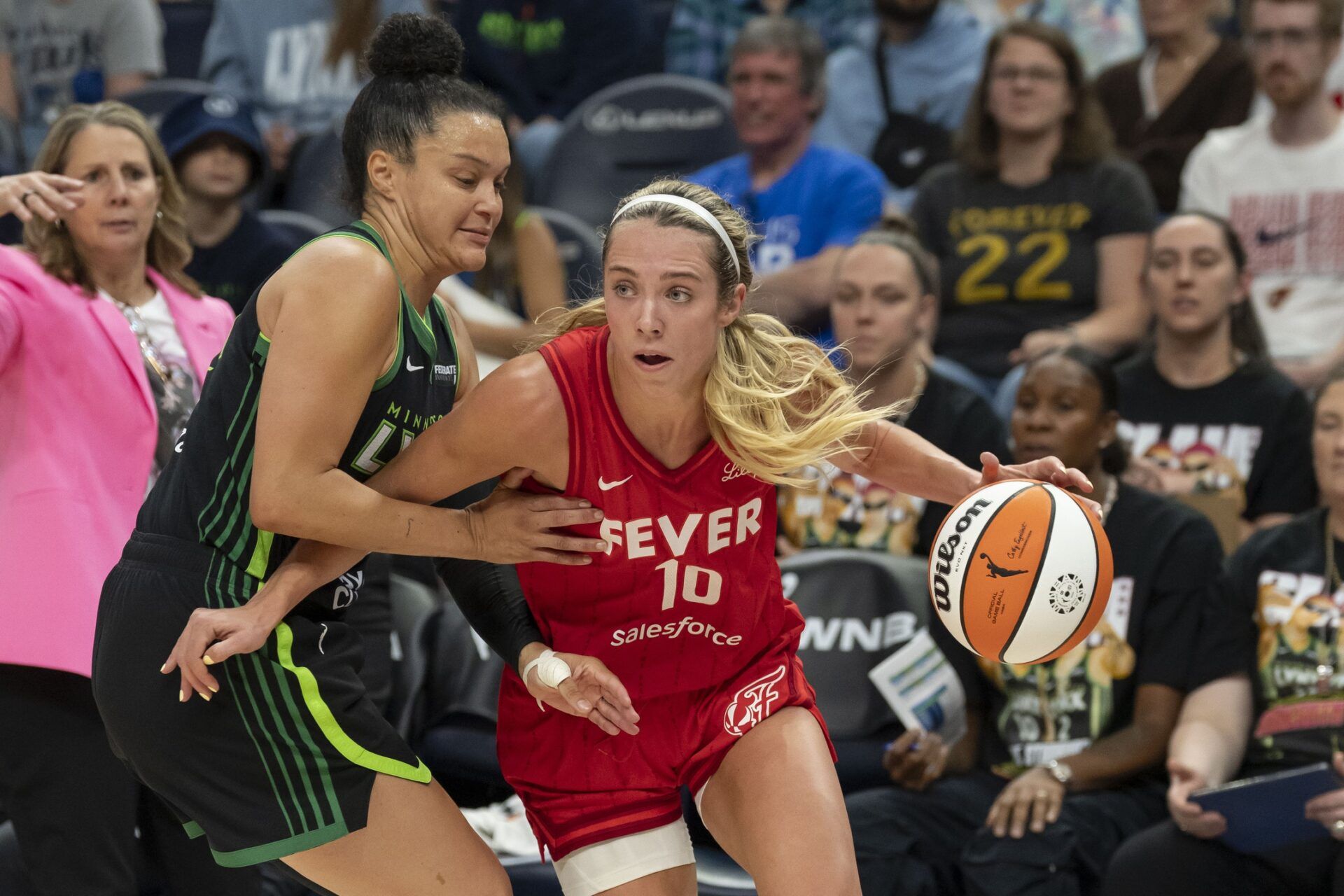
What they witnessed instead was a quiet dispersal. No Fever player immediately confronted McBride. There was no surge of protective anger, no visible sign that a line had been crossed. The players reset, the game moved on, but the fans were left frozen in that moment of inaction. The incident became an instant referendum on the team’s toughness, with social media platforms transforming into forums for passionate, and often critical, discussion. The consensus was swift and cutting: the team appeared to lack a backbone. And the name on everyone’s lips was Sophie Cunningham.
Cunningham, watching from the sidelines due to a season-ending MCL tear, has earned her reputation as the Fever’s soul and protector. She is the embodiment of grit, the player who will sacrifice her body for a loose ball and her composure for a teammate. This isn’t a manufactured narrative; it’s a role she has demonstrated with authority. Fans needed only to look back to a June game against the Connecticut Sun for definitive proof. In that contest, rookie sensation Caitlin Clark was on the receiving end of a hard shove from Marina Mabrey. The team’s response didn’t come in the form of a complaint to the officials. It came a quarter later, when Cunningham delivered a clear, retaliatory foul on an opposing player, an unmistakable message that the Fever would not be pushed around. That single act cemented her status as the team’s enforcer.

It was this memory that made the lack of response for Hull so jarring for fans. The contrast between Cunningham’s fiery defense of Clark and the perceived passivity surrounding Hull was impossible to reconcile. “The whole team soft,” one fan bluntly stated on X (formerly Twitter), a sentiment that was widely shared. Another lamented, “Sophie Cunningham would be right there sorting that mess out,” criticizing the other players for merely “standing there watching.” The online chatter wasn’t just about a single play; it was a broader commentary on the team’s identity. Without Cunningham, who was the heart? Who was the muscle?
This fan reaction speaks to a deeper truth about team sports. While coaches preach discipline and emotional control, fans crave a visible display of unity and fight. The enforcer is a time-honored role across all sports, the player who polices the unwritten rules and ensures that their teammates are protected from cheap shots and undue aggression. They are the emotional thermostat of the team, raising the temperature when necessary to send a message to the opposition. In Cunningham’s absence, the Fever’s thermostat seems to be broken.
The incident forces a difficult conversation within the Fever organization. Who is responsible for filling that void? Leadership on a professional sports team is multifaceted. It comes from veterans, from star players, and from the coaching staff. But the role of an enforcer is often innate, a combination of personality and a fierce competitive spirit that can’t simply be assigned. It must be assumed. The quiet on the court after Hull went down suggests that, for now, no one has been willing or able to step into Cunningham’s shoes.
This is not an indictment of the individual players’ character. In the heat of a game, focus is paramount, and retaliation can lead to costly penalties. However, the optics of the situation have created a narrative that the team will struggle to shake. The perception of being “soft” can be a difficult label to shed, and it can even invite more aggressive play from future opponents who sense a lack of consequence.
Ultimately, the passionate outcry from the fanbase is born from a place of deep investment. They see the team’s potential, they celebrate its stars, and they feel a sense of ownership over its culture. Their demand for a tougher response is a demand for a team that fights with the same passion that they bring to the stands. They are acting as the enforcers from afar, calling for a return to the grit that Cunningham so reliably provided. As the Fever look to finish their season and build for the future, the question of their on-court identity looms large. The memory of Lexie Hull on the floor, and the silence that followed, will serve as a powerful reminder that some of the most important battles aren’t reflected on the scoreboard.