In the hallowed halls of American culture, few accolades carry the weight and prestige of the Kennedy Center Honors. It is a lifetime achievement award that elevates its recipients into a pantheon of artistic greatness, celebrated by the nation’s highest leaders. The announcement of the 48th class of honorees was meant to be another moment of unified celebration, recognizing the indelible marks left by artists like George Strait, Sylvester Stallone, KISS, Michael Crawford, and the queen of disco herself, Gloria Gaynor. For Gaynor, an artist whose voice has fueled one of the most powerful anthems of resilience ever recorded, it was a long-overdue and well-deserved recognition. But in today’s deeply fractured political landscape, the celebration was short-lived, quickly overshadowed by a public plea that turned a cultural honor into a political crucible.
The catalyst was a direct and impassioned message from Ana Navarro, a prominent political commentator and co-host of “The View.” Known for her sharp wit and even sharper critiques of President Donald Trump, Navarro took to social media not to congratulate Gaynor, but to implore her to refuse the honor. The reason was simple and, for many, deeply resonant: President Trump would be the one bestowing the award.

Navarro’s appeal was crafted with a personal touch, recalling a cherished memory of meeting Gaynor and receiving a keychain that played “I Will Survive.” It was a token she held onto until, as she put it, its batteries died during Trump’s first term—a symbolic detail that framed her argument. While she called Gaynor a “goddess” who “deserves all the flowers that come her way,” her admiration was secondary to her political conviction. “I wish she wouldn’t accept an award from the hands of a man who has attacked the rights and history of women, people of color and LGBTQ,” Navarro wrote. She poignantly reminded her followers of the special significance Gaynor’s music holds for the gay community, which adopted “I Will Survive” as a declaration of strength and defiance during the darkest days of the AIDS crisis.
The plea culminated in a stark conclusion, declaring President Trump “a stain on the prestige and significance of the KCH,” followed by the simple, direct command: “Don’t do it, Gloria!” With those four words, Navarro drew a line in the sand, transforming Gaynor’s personal achievement into a public test of allegiance. It was no longer just about a medallion and a ceremony; it was about the symbolic power of acceptance and the perceived moral responsibility of an artist whose legacy is so intertwined with themes of empowerment and overcoming oppression.
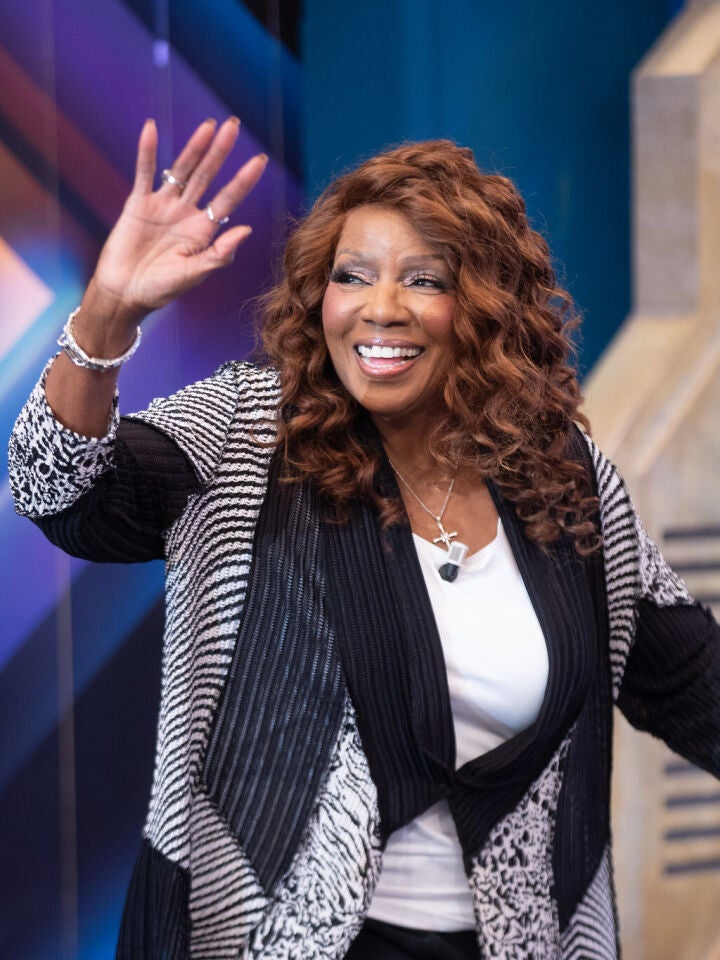
The controversy is amplified by recent changes at the Kennedy Center itself. Earlier in the year, President Trump took the highly unusual step of appointing himself chairman of the institution’s board after dismissing several existing members. He vowed to reshape its programming, signaling an end to performances he deemed politically inappropriate. This move was seen by many in the arts world as a hostile takeover of a traditionally non-partisan cultural institution, turning it into another platform for his administration’s agenda. Navarro’s appeal, therefore, wasn’t just about Trump the man, but about what his leadership of the Kennedy Center now represents. For critics, an artist accepting an honor under these new circumstances could be seen as legitimizing this shift.
Caught in the center of this political tempest is Gloria Gaynor. Her initial response to the honor was one of pure, unadulterated joy. In a statement released before Navarro’s plea went public, Gaynor expressed her profound gratitude. “I am beyond blessed and honored to be a recipient of this prestigious award,” she said, reflecting on her life’s work of spreading “encouragement, hope, empowerment, inspiration, understanding, and unity.” Her words painted a picture of an artist focused solely on her legacy and the positive impact of her music. Since the controversy erupted, her camp has remained notably silent, adopting a strategy of quiet dignity that leaves the world guessing.
This silence is potent. Does it signal a desire to remain above the political fray, letting her life’s work speak for itself? Or is she and her team carefully deliberating a decision that now carries immense symbolic weight? Supporters of Gaynor argue that the honor transcends any single president and that refusing it would be a disservice to her own legacy and the institution itself. They believe an artist should be able to accept recognition for their contributions without it being interpreted as a political endorsement. Art, they contend, should be a unifying force, not another casualty of partisan warfare.
Meanwhile, the other honorees have navigated the situation with varying degrees of public engagement. Sylvester Stallone’s acceptance was largely expected, given his past support for President Trump. The rock band KISS and country legend George Strait have kept their focus on the honor itself, avoiding the political crossfire. Their decisions highlight the different paths artists can take in these situations, each balancing their personal beliefs with their public personas.
The dilemma facing Gloria Gaynor is a microcosm of a larger cultural conflict. It forces a conversation about whether art can truly be separated from politics, especially when political figures use cultural institutions to advance their own standing. As the date of the formal gala approaches, every eye will be on Gaynor. Her attendance, or her absence, will be interpreted as a powerful statement. Will she walk into the White House to receive the medallion from President Trump, affirming the honor above all else? Or will she heed Navarro’s call, making a stand that would align her with the communities that have long seen her as their champion? Whatever her choice, the situation has already added a complex, modern chapter to the story of a song that has, for nearly five decades, defined what it means to survive.