In an era defined by deep-seated political and cultural fissures, it’s no surprise that the battle for America’s soul has found its way onto the stages and airwaves of the music world. The long-simmering tensions between two of rock’s prominent figures, Aaron Lewis and Bruce Springsteen, have erupted once again, exposing a philosophical chasm that mirrors the nation’s own divide. In a recent, searing interview, Lewis, the frontman of the rock band Staind, unleashed a torrent of criticism against Springsteen, challenging not just his politics but the very foundation of his celebrated legacy as the voice of the American working class.
Appearing on “The Tucker Carlson Show,” Lewis held nothing back, labeling Springsteen “a disgusting display of not appreciating what was handed to him.” The comments weren’t just a simple political disagreement; they were a fundamental assault on the character and authenticity of an artist who has spent five decades crafting an image as America’s blue-collar balladeer. Lewis argued that Springsteen’s immense fame and fortune have irrevocably disconnected him from the very people he claims to represent.
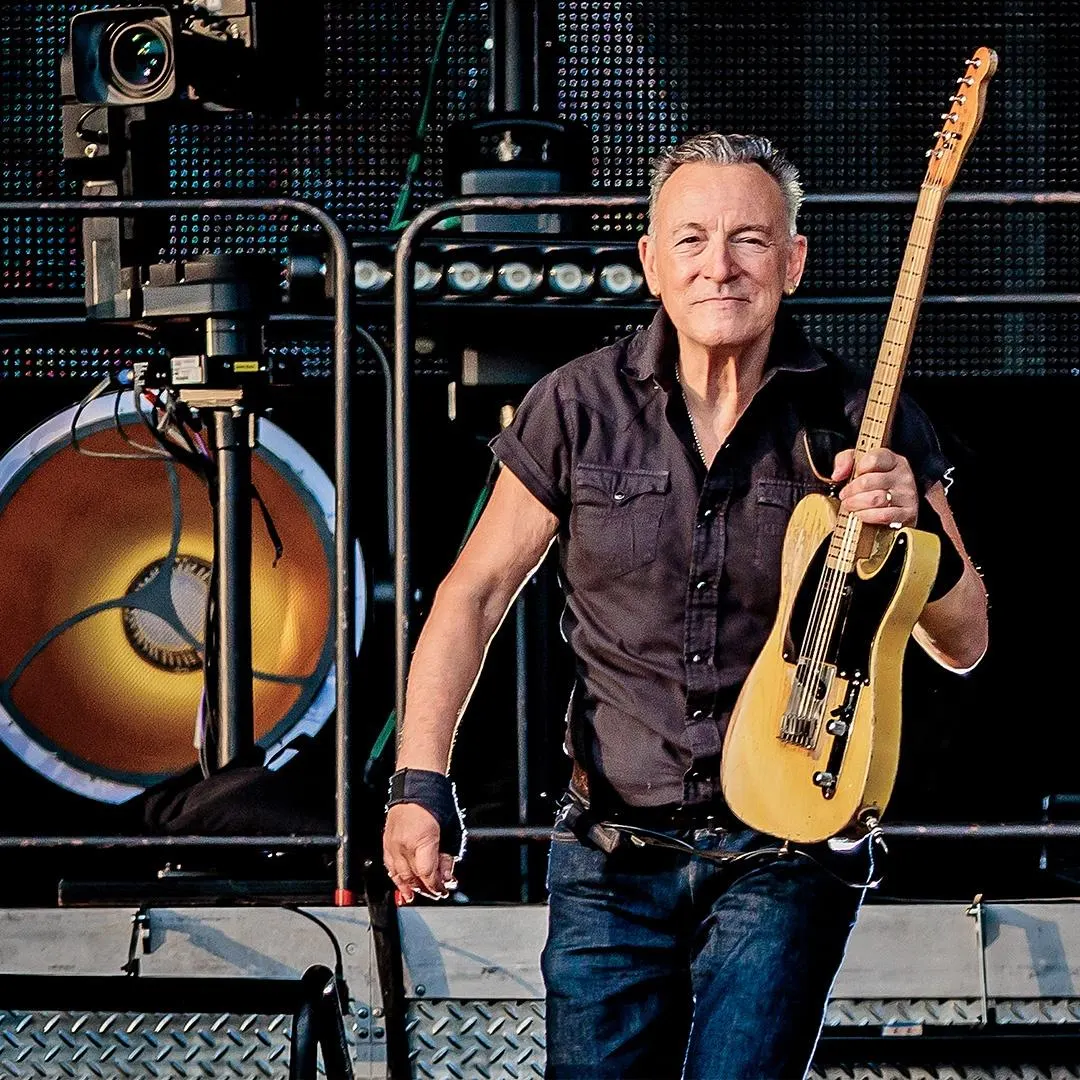
At the heart of Lewis’s condemnation is one of the most iconic and misunderstood songs in rock history: “Born In The USA.” For decades, the track has been waved like a flag at political rallies and sporting events, its thunderous chorus mistaken for a straightforward patriotic anthem. Lewis presents this as a deliberate deception. “The fact that he duped us all with one of the most anti-American songs ever and called it ‘Born In The USA’ as some sort of celebration of how great it is to be born in the USA,” Lewis lamented. “I’m angry at myself for not seeing it for so long and actually giving him, in my mind, the credit of being a representation of blue-collar America.”
This accusation strikes at the complex legacy of the song. Springsteen himself has never hidden its true meaning. In his 2016 memoir, “Born To Run,” he explicitly called it “a protest song.” The lyrics paint a grim portrait of a Vietnam veteran returning home to a country that has abandoned him, facing economic hardship and societal neglect. It’s a story of disillusionment, not celebration. The irony is that its upbeat, arena-rock sound allowed it to be co-opted by figures like Ronald Reagan in his 1984 presidential campaign, a move that Springsteen himself pushed back against. Lewis’s argument, however, reframes this history. He suggests the ambiguity wasn’t accidental but a calculated act to fool the public, a betrayal of the trust placed in him by millions of fans.

Lewis continued, diagnosing Springsteen with a condition he believes is common among the wealthy and successful elite. “I think that he has forgotten where he came from,” Lewis stated. “If you’re not careful, it will consume you. And it’s obvious that it creates a situation where you’ve lost sight of the reality of the country that you live in because you’ve lived such a cush… you have so much that it’s really easy to take a stance that is so anti everything that you were lucky enough to have.”
This is the classic “limousine liberal” critique, but Lewis ties it directly to what he sees as a form of guilt-driven virtue signaling. He posits that individuals like Springsteen, insulated by their wealth, adopt progressive stances to atone for their success. “It seems like most people who have lost touch with the true struggle of life, those are the people that vote for these fucking idiots,” Lewis charged, linking Springsteen’s political views to a detachment from everyday reality.
This isn’t the first time Lewis has taken a public shot at “The Boss.” In his controversial 2021 solo single, “Am I The Only One,” a song that took aim at flag burning and the removal of historical statues, he included a pointed lyric: “Am I the only one who quits singin’ along every time they play a Springsteen song.” When asked about the line, Lewis explained that he was provoked by Springsteen’s declaration that he would consider moving to Australia if Donald Trump were re-elected. “How American is that?” Lewis questioned. “You’re gonna bail on America just because you don’t like the guy that may have gotten into office?”
This clash represents a battle for the narrative of American identity. On one side stands Bruce Springsteen, a longtime and vocal supporter of the Democratic party. He has consistently used his platform to oppose Republican leadership, famously calling Donald Trump a “moron” and a “treasonous” president. He attributes the country’s turmoil to deindustrialization and vast wealth disparity, which he believes created an environment “ripe for a demagogue.” For Springsteen, patriotism involves critically examining the nation’s flaws to push it toward a more perfect union.
On the other side is Aaron Lewis, a staunch conservative who has become increasingly vocal in his political beliefs. He has led crowds in “Fuck Joe Biden” chants, was a fierce critic of President Barack Obama, and has openly expressed his support for Donald Trump. Lewis’s brand of patriotism is rooted in a defense of traditional American values and a deep suspicion of what he perceives as a corrupt political and media establishment. He told the Los Angeles Times that he avoids mainstream news, preferring alternative sources like Tucker Carlson and commentators on the platform Telegram. “I refuse to believe that a huge, gigantic corporation has our best interest in mind,” he said, encapsulating a worldview that sees established institutions as inherently untrustworthy.
The feud is more than a simple rivalry; it’s a microcosm of a divided America. Both artists appeal to a similar demographic—the working-class, the forgotten, the people who feel left behind. Yet, they offer starkly different diagnoses and solutions. Springsteen’s music has always found dignity in the struggle, chronicling the lives of those on the margins while calling for systemic change and collective responsibility. His characters are often trapped by circumstance, but their humanity endures.
Lewis, particularly in his solo country work, speaks to a different kind of frustration—a feeling of being silenced and dismissed by a progressive culture. His music channels an anger at a perceived erosion of American identity and a resentment toward coastal elites who, in his view, look down on the heartland. He sees the “chaos” as something manufactured by Democrats and “Communists” who “want us at each other’s throats.”
The debate over “Born In The USA” is the perfect symbol of their conflict. For Springsteen, the song was an act of loyalty—exposing a painful truth about how America treats its veterans. For Lewis, the song’s misinterpretation and Springsteen’s subsequent political stances represent a profound betrayal—a bait-and-switch that sold a critique of America under the guise of celebrating it.
Ultimately, the clash between Aaron Lewis and Bruce Springsteen is a fight over authenticity. Who truly speaks for the common person? Is it the artist who grew up in a working-class town and built a career telling its stories, even after achieving immense wealth? Or is it the artist who aligns himself with the contemporary political sentiments of that same demographic, giving voice to their current frustrations? There is no easy answer, as both men command fiercely loyal followings who see their own truths reflected in their music. What is clear is that in today’s fractured landscape, even rock and roll is no longer a neutral ground. It has become another battlefield in the ongoing culture war for the heart and soul of America.