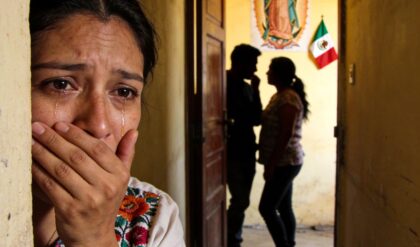
.My name is María Luisa, but on the hacienda, everyone just calls me María. They say I arrived on the first train of the morning, the kind that pulls in before dawn for people who don’t want to make a sound. I carried a cloth suitcase holding two changes of clothes, a small print of the Virgin of Guadalupe, and a resolve too large to fit in my chest.
My rules were simple: work honestly, send money to my mother, and never bow my head more than was necessary. The hacienda, El Paraíso, nestled in the highlands of Jalisco, looked as though it had been painted with a steady hand. Rows of agave plants marched toward the horizon, stables were built from dark, fragrant wood, and whitewashed walls were draped in bougainvillea that climbed the columns of the long corridor. It was beautiful on the outside. Inside, it was another story.
My days began before the first light, armed with a bucket, a broom, and a rag. I would sweep the long veranda while the sky was still a deep violet and the first rooster was just testing its voice. Then, I’d start the coffee and warm the bread for Doña Mercedes, the lady of the house and mother of the landowner, Don Ricardo Vega.
She liked her coffee with cinnamon and a splash of milk. I liked to watch her smile when the aroma reached her like a pleasant memory. “Thank you, my child,” she’d say, her delicate hands looking as thin as Bible paper. “It smells like the time of your late Don Eduardo. There was always coffee like this on the big table.”
I would gently arrange her shawl on her shoulders, open the curtains, and tell her sweet lies about the garden—that the bougainvillea were showing off again, or that the birds were being so scandalous they needed a scolding. She would offer a small, guilty laugh, as if she had forgotten how. From my first month, I understood that Doña Mercedes was kept upstairs in the north wing, more of an inconvenience than an honored elder.

Laura, Don Ricardo’s wife, had been taking over the house the way one slips on a new coat. First, it was the dining room. “These chairs are so old.” Then, the kitchen. “I don’t want greasy food.” Then came the accounts. “Leave it to me. Ricardo doesn’t have the time.” She learned the names of the staff only partially. When she spoke to me, her eyes were always fixed on the floor, never my face.
“María, the salon windows are dirty,” she’d say in that flat tone of someone dropping a coin, expecting you to hurry and pick it up.
“Yes, señora,” I would reply, swallowing the retort I wanted to make. I’m not a fool, Laura. She was in a hurry. Not the kind of hurry to get somewhere, but the kind to get someone out. And that someone was her mother-in-law.
I noticed it in the small things. She ordered a change in the medicine schedule without consulting the doctor. She had the wicker chair where Doña Mercedes took her morning sun removed from the balcony. She forbade the old woman from coming down to the dining room, claiming “the draft is bad for her.” I pretended not to see, but I started to count.
I count things: steps, silences, glances, keys. Sometimes counting is the only way to make the world add up. Don Ricardo was almost always away—in the city, at the Cattlemen’s Association, in Guadalajara meeting with suppliers. When he returned, he’d ask for a drink, sit in the grand living room, and talk about numbers.
Laura would serve him, smiling, circling him with a sweetness we never saw in her day-to-day. From the doorway, I watched him. A landowner, yes, a rich man, yes, but he carried the exhaustion of someone who was in charge everywhere but his own home.
The first clear alarm sounded on a windy morning. I went up with the breakfast tray and found Doña Mercedes pale, her hands cold, her eyes fixed on the door. “Last night,” she whispered. “Someone came in. They were searching my closet. I felt them open the wooden box… Eduardo’s box.”
My stomach tightened. I knew that box. It held old letters and a sealed envelope from the office of Licenciado Márquez, the family notary. I leaned down without a sound. The back of the closet was scratched, the box was out of place, and there was a strange, metallic smell, like a freshly filed key.
“Did you tell Don Ricardo?”
“No, child. He doesn’t listen to such things. He listens to everything Laura says.”
I placed the coffee in her hands and felt my own fingers tremble. I know that kind of fear. It’s not a fear of ghosts; it’s a fear of the living.
That same afternoon, while I was mopping the salon, I heard tight, hushed voices from the study. “She has to sign this week,” a man said. “Otherwise, the transfer of assets gets complicated.”
“Leave it to me,” Laura replied. “She refused to come down today. I’ll convince her tomorrow. Ricardo is out of town.”
My heart began to pound in my ears. I slipped off my shoes—a skill one learns—and crept down the hall. Through the crack in the door, I saw scattered papers, a seal, an old will spread open on the table, and next to it, a stack of new pages held with a paperclip. The man put something in his briefcase. Laura adjusted her hair in the mirror above the desk and said, almost to herself, “Stubborn old woman. Nobody asked if you wanted to live forever.”
I don’t know how long I stood there, my socks absorbing the cold from the floor tiles. I only know that when I finally moved, I had already made a decision.
I didn’t sleep that night. I waited for the house to quiet down, for the lights in the corridor to stretch into long shadows. On tiptoe, I went up to the north wing. Doña Mercedes was asleep on her side, her shawl covering half her face. I opened the closet, took the small wooden box, and slipped the sealed envelope under my apron. It wasn’t that I didn’t trust her—I trusted her more than I trusted myself. But I felt that the envelope needed to travel with me.
The next morning, Laura was in a good mood. One of her good moods that smelled like a scheme. She ordered fresh flowers for the dining room and asked me to polish the glass of the large table. She announced we would have a visitor in the afternoon. At noon, a man in a beige suit arrived carrying a briefcase. He greeted no one, the way men do when they see a house as a mere transaction. I brought him a glass of water. “Thank you, girl,” he said, placing his briefcase on the table without a shred of shame.
“Señora Laura, if your mother-in-law refuses, there are other legal avenues,” I overheard as I went for more glasses. “But a voluntary signature is always preferable.”
Signature. The word brushed against me like a butter knife. It doesn’t cut, but it leaves a mark.
At five, Don Ricardo called. I heard Laura tell him everything was under control, that his mother was in good spirits, that she hoped he could make it, but if not, “Don’t worry, my love, I’ll take care of it.” She hung up, smoothed her dress, and asked me to fetch the señora.
I went upstairs and knocked softly. “Doña, they’d like you to come down to the dining room.”
“For what?”
I didn’t know how to say it without saying it. “To talk about papers.” I saw her face drain of color, then she straightened with that ancient dignity that seemed to come from her very bones.
“I’ll go down,” she said, gripping the doorframe. “But you’re coming with me, María.”
She descended slowly, with me a step behind. In the dining room, Laura stood with her porcelain smile while the man from the city laid out documents. At the head of the table, a pen was waiting. I remained standing by the sideboard, a cloth in my hands as if I were still cleaning.
“Doña Mercedes,” Laura cooed, “let’s not make a drama of this. It’s for your own good. Ricardo is already in agreement.”
The old woman took a deep breath. The man in the suit began his speech—something about patrimonial updates, administrative transfers, and lifetime tenancy. Pretty words for a simple, ugly act: taking her home.
Just then, the corridor door flew open. Don Ricardo entered, his coat slung over his shoulder, his face tired, his hair dusty from the road. “What’s happening here?” he asked.
Laura took two sweet, honeyed steps toward him. “Darling, just in time. We’re just making life easier for your mother.”
I saw the look in Doña Mercedes’s eyes. It wasn’t a plea; it was a warning. She barely touched my wrist. It was enough. The envelope under my apron felt like it was burning. I was about to speak when the man with the briefcase turned a page and slid the pen toward the head of the table. Laura placed a hand on the back of Doña Mercedes’s chair and leaned in, as if to force her into the seat. “Now, let’s just sign…”
I don’t know when I dropped the cleaning cloth. I felt something snap inside my chest, like a rope pulled too tight for too long.
“Don’t touch her.”
The voice came out high and clear, as if it weren’t my own. The room went silent. The pen stopped rolling. Don Ricardo blinked, bewildered. Laura’s eyes, a shattered version of her smile, bore into me. “What did you say, girl?”
I took a step forward. My hands were trembling, but my voice came out firm. “I said, don’t touch her. Because this isn’t making her life easier. This is taking her life away.”
Don Ricardo looked at his wife, then at his mother, then at me. The man with the briefcase cleared his throat nervously. “Señor Vega, perhaps we could resume this in private.”
I reached under my apron. I felt the warm paper of the envelope. “Before you continue,” I said, “Doña Mercedes wants you to see this.”
And that’s when Laura lunged at me, fast and vicious, to rip the envelope from my hand.
When Laura snatched the envelope, the jerk felt like a slap. The fabric of my apron tore, and the document fell to the floor. Doña Mercedes shot up from her chair, moved more by instinct than strength, and the sound of the chair scraping against the tile echoed through the dining room. “Give it back, Laura!” she cried, with a power we hadn’t heard in her voice for years.
But Laura already had the envelope. She looked at it with that twisted smile she wore when she thought she had won. “This is what you were hiding, old woman? A love letter?” she laughed. “It’s meaningless.”
She was about to tear it. I swear by the Virgin she was. But Don Ricardo moved first.
“Enough, Laura.” His voice cracked like thunder. She froze. He snatched the envelope from her. He looked at the notary’s seal, at the name, and without a word, asked for a knife. I passed him my small kitchen knife, the one I use to peel apples.
Don Ricardo opened it slowly. Inside was a folded document and a handwritten letter. I wasn’t breathing. No one was. Doña Mercedes leaned on my arm, her clear, moist eyes unblinking.
“Read it, son,” she whispered.
Don Ricardo read it first in silence. Then, his voice broke as he read it aloud. “‘I declare, in full consciousness and without any pressure, that the hacienda El Paraíso will not be sold or transferred. It remains under my lifetime guardianship and, upon my death, will pass to my son, Ricardo Vega, on the condition that he respects my wish to dedicate a portion to charitable works and to allow the employee María Luisa López to live on this property for as long as she desires.’”
Signed and sealed by the notary, Márquez. The silence turned to stone.
Laura took a step back. “That’s old, Ricardo. That will isn’t valid. I have the updated version.”
“Updated by whom?” he asked without looking at her.
She swallowed. “By me. I mean, with your authorization.”
And there, I understood everything. Don Ricardo slowly raised his eyes, his face filled with a fury that didn’t need to shout. “You forged my signature, Laura.”
She turned white. “No, it was a misunderstanding. You said that…” But her voice failed her.
Doña Mercedes took a deep breath, like someone getting air again after years of holding it. She squeezed my hand and whispered, “Thank you, child. If it weren’t for you, they would have buried me alive in my own house.”
The next few minutes were a whirlwind. The man in the suit tried to leave, but Don Ricardo blocked his path. “Did you know about this, sir?”
“I was only following legal instructions.”
“Legal?” Don Ricardo stepped so close the man recoiled. “Forging the signature of an eighty-year-old woman is not legal.”
The lawyer gathered his papers, mumbled something about misunderstandings, and vanished through a side door. Laura remained standing, her breath short. She tried to change her tone. “Darling, you don’t understand. I only wanted to secure our future.”
“At my mother’s expense?” he shouted. It was the first time I had ever seen her afraid. The woman who always moved as if the ground belonged to her backed away until she hit the wall.
“I swear, Ricardo, I…”
He didn’t let her finish. “You will pack your things. Tonight.”
That night, no one slept. The hacienda smelled of rain and frayed nerves. I went to the kitchen to warm some milk when I heard footsteps in the corridor. It was Don Ricardo. He held his mother’s letter, folded in his hand. “María, come. I need to talk to you.”
We sat at the service table, the one where no one with a compound surname ever sits.
“How long have you known?” he asked.
“Since the señora told me they wanted her to sign something. I only protected the envelope.”
He looked down. “You protected more than that. You protected what I should have been protecting.”
I didn’t know what to say. I felt pity for him, but also pride. “Sir, sometimes you don’t need to share blood to be family.”
He looked at me with an expression I couldn’t read. It was sadness, gratitude, something more. “Thank you, María. Tomorrow, I’m taking her to the doctor. And I want you to stay.”
“Stay?”
“Yes. My mother trusts you. I do too.”
I nodded. I couldn’t help but smile, though my eyes were filled with tears.
Around midnight, as I was closing the hallway windows, I heard a noise. It was Laura, with a suitcase and her phone in her hand. “Where do you think you’re going, señora?” I asked.
She gave me an empty look. “You won, peasant. But this isn’t over.”
“I didn’t win anything, señora. I just stopped someone from losing everything.”
“You think Ricardo will be grateful?” She laughed without humor. “You’re just a servant.”
“And you, señora, are a woman who had everything and didn’t know how to keep any of it.”
Laura stood motionless for a second. Then she looked down and left without another word. The slam of the gate echoed like a dirty farewell.
When the sun came up, Doña Mercedes was sitting on her balcony, wrapped in a blanket. The air smelled of wet earth and sweet bread.
“María,” she said when I brought her coffee. “Sometimes the world falls on top of you, but there are always hands to lift it back up. Yours did.” I didn’t know how to respond. I just adjusted her shawl and stood beside her, watching the first rays of light fall on the agave fields.
At the gate, Don Ricardo was observing the silent landscape, his face weary. When he saw me, he said, “My mother wants to redo the will. This time with real witnesses.”
I nodded. “And what will it say, sir?”
He offered a faint smile. “That El Paraíso will remain hers as long as she lives. And that when our lives are over, it will belong to whoever cares for it with their heart.”
His words made my hands tremble. On the outside, everything seemed calm, but a fear remained inside me. In these big houses, secrets don’t leave; they just learn to hide better. That afternoon, I found an envelope in the kitchen with no return address. Inside was a note in a woman’s handwriting. This isn’t over. —L. I tucked it into my apron without saying a word. I had learned that danger doesn’t always shout. Sometimes, it whispers.
The peace lasted as long as a sigh when someone already hates you. The first few days after Laura’s departure were strange. Too much silence, too much light pouring through the windows, too much space for the mind to invent shadows.
Still, I carried on with my routine: rising before dawn, sweeping the corridor, warming the cinnamon coffee for Doña Mercedes, checking that her medicines were where they should be, and ensuring the curtains in the north wing opened to a sun free of threats. But the heart, that stubborn animal, refused to believe in the calm.
One afternoon, while hanging sheets in the courtyard, I saw a delicate footprint in the dust by the side gate. It wasn’t from a horse or a foreman’s boot; it was a thin heel, hurried, digging deeper into the earth at the toe. I bent down, ran my finger over it, and felt the same chill that had run down my spine that night. I kept silent. I’d learned that fear, when shared without proof, becomes gossip. And I didn’t want to frighten my Doña Mercedes. Her gaze was brighter now, her voice firmer, and a low laugh was slowly returning to her. I wasn’t going to snatch it away with suspicions.
That evening, Don Ricardo sat with me at the service table. He seemed less tired, more present. We talked about the new will, which Licenciado Márquez would draft the next day with real witnesses. I didn’t mention the footprint. Instead, I asked his permission to change the lock on the side gate. He nodded without asking why. I was grateful for that. Sometimes, trust is not asking for an explanation.
Later that night, as I extinguished the last lamp in the corridor, I heard a short click, like metal on metal. I froze, the lamp’s wick trimmer trembling in my hand. A second click. The sound came from the study door. I pressed my ear against it. Nothing. I pushed with my knuckles. Locked. I carefully inserted my key and opened it slowly. It smelled of dust and recently moved paper. The window was ajar, and the cold air carried the murmur of the agave fields. On the desk, Don Eduardo’s old pen was not in its place. I found it on the floor under the chair. As I picked it up, I saw a fine strand of blonde hair caught on the leg of the seat. I wrapped it around my finger, tucked it into my apron, and locked the door again. It wasn’t proof for the police, but it was a truth for me.
The next morning, the lawyer arrived with his black briefcase and an almost ceremonial respect. Doña Mercedes received him, seated at the head of the great table. Don Ricardo stood by her side the entire time, undistracted. I remained standing like a useful shadow, fetching water, placing documents, and discreetly dabbing the sweat from the señora’s brow.
Every clause was read aloud. Donations to the San Vicente orphanage were included, along with the condition that I could live at the hacienda “with dignity and security” for as long as I wished. When the señora signed, she winked at me like a girl pulling off a just prank. I almost cried.
When the lawyer left, the air in the dining room felt lighter. Doña Mercedes asked for sweet bread and made me sit beside her. “Sit, child!” she said. “The place of one who cares is not always at the door.” I obeyed, but only a little. The body doesn’t get used to belonging so quickly.
We were in the middle of this when Lola, one of the cooks, entered, pale. They had seen a red handkerchief snagged on the fence of the side gate. I went to see it myself. It was silk, with an initial embroidered in one corner: L.V. I unhooked it like pulling a thorn from a finger. No one said the name. There was no need. This isn’t over, the note had said. And it was true.
That afternoon, we reinforced locks, checked windows, and gave discreet orders to the nearby workers not to let strangers pass. I did something else. I moved the newly signed will. I put it inside a cookie tin with blue flowers and hid it on the second shelf of the pantry, behind the jars of cinnamon and cloves. There is no safer place than an ordinary one. Valuable things, when disguised with simplicity, cease to shine for the greedy.
Night fell. The wind brought the smell of a storm, the kind that promises mud on your boots and a song from the rooftops. I had just finished checking the windows when I heard Doña Mercedes call me from upstairs. I found her with her shawl half-on and a slight tremor in her fingers. “I don’t like this wind,” she said. “People come in with it.”
I took her hand, and we breathed together. I told her a story from when I was a child on my parents’ ranch, how my mother would blow away fears by blowing three times toward the east. We blew. I don’t know if it scared away any shadows, but it made us laugh. I tucked her in, left a lamp on, and promised to watch the hall until morning.
Around two, the sky split open with a thunderclap that rattled the glass. I jumped up from the small bench where I’d been dozing and scanned the corridor. All calm. I went down for water. As I passed the study, I saw a sliver of light under the door. I didn’t remember leaving it like that. I bent down. Silence. I turned the knob. Locked. I used my key. Inside, the window to the garden was open. A slight breeze moved the papers. On the edge of the frame was a fresh nail mark, scratching the paint. I swallowed, walked to the window, and secured it. When I turned, something crunched under my foot. A pearl earring, the kind Laura used to wear even for breakfast. I picked it up. The metal was warm. I don’t know why, but I put it in my mouth. It tasted of expensive perfume.
I didn’t scream. I didn’t run to wake anyone. I did what I know how to do. I closed, secured, and saved. And like a hen gathering her chicks, I went straight to Doña Mercedes’s room. She was finally sleeping deeply. I sat guard by her door, the earring in one pocket and the strand of hair in the other. Sleep finally claimed me just as the first rooster crowed.
At dawn, I decided I’d had enough of silence. I found Don Ricardo in the stable. I showed him the handkerchief, the earring, the hair, the mark on the window. “I didn’t want to worry you,” I said. “But someone is getting in at night, and it’s not an ordinary thief.”
His face changed instantly. It wasn’t just anger; it was shame, an accumulated debt. “I’m putting a guard in the garden and changing all the locks,” he said. “And I’ll speak with the municipal commander.”
“Do what you must, sir,” I replied. “I will do my part. I won’t leave your mother alone for a minute.”
That afternoon, Laura sent a message. Not to Don Ricardo’s phone, not to the house phone, but to mine. I don’t know how she got the number. It was short. See you tonight, 9 p.m. Agave garden. Alone.
I reread it three times. I didn’t reply. I put the phone in my apron and continued my routine as if the world wasn’t about to split apart again. I asked Lola to stay with Doña Mercedes during rosary. I told her I was going to do a round in the garden, because the rain loosens the soil and the drains need checking. I wasn’t lying. The soil loosens, but so do people when they think no one is watching.
When the hall clock struck nine with a hollow chime, I went out to the agave garden. The night smelled of living plants and wet metal. I walked between the blue rows with my lantern covered by a cloth so the light wouldn’t give me away. I heard her before I saw her. The soft click of heels, the gasp of someone who has been running but wants to appear composed.
“I knew you’d come,” Laura said, emerging from the agaves in a light trench coat, her hair pulled back. “Curious servants never know their place.”
I didn’t answer. Keeping my mouth shut had saved my life more than once when I was a girl.
“I’ve come to warn you,” she continued. “This hacienda is not your home. You are not family. Your name will not end up on any paper, no matter what the old woman promises. When I return—because I will return—you will leave through the same door you entered, and no one will remember your face.”
I took a step closer. I felt the damp stones under my shoes. “I’m not interested in being on paper, señora,” I said. “I’m interested in you never touching Doña Mercedes again. Not a finger, not a word.”
Laura laughed softly. “And how do you plan to stop me? By shouting ‘Don’t touch her!’ again? There will be no witnesses this time. This time, no one will believe you.” She raised her hand. For a second, I thought she was going to slap me. Instead, she showed me a small, old key, the kind that doesn’t open modern doors. She dangled it before my eyes, glinting in the faint light.
“There are things in this house you don’t know about,” she whispered. “Things that can turn the sainted old woman into a sinner. What will your boss say when he learns what his mother hid from him his entire life?”
My cheeks burned, not from the threat, but from the way she said sinner, as if the word were a whip.
“I don’t believe you,” I replied. “You lie for sport.”
“Then look for it,” she said, dropping the key into my palm. “South wing cellar. Dare to open it. And when you do, you’ll come looking for me, begging me to teach you how to close what you never should have touched.”
She turned with an elegance that always seemed borrowed and walked between the agaves, disappearing into the low mist. I was left with the key in my hand, my heart kicking against my ribs, and a single certainty: this was no ordinary trick. Laura wouldn’t have come to a dark garden alone just to scare me. She had something, or she believed she did.
I returned to the house with the lantern out and the key clenched in my fist. I passed by Doña Mercedes’s room. She was sleeping peacefully. I kissed her forehead, as daughters without surnames do. I went to the south wing corridor. No one had used that section for years. It smelled of old wood and saints stored in boxes. By the light of a match, I searched, inch by inch, until I found a small, square door behind a wardrobe, with an antique lock. The key fit as if it had been waiting for me.
I swallowed hard. I remembered Laura’s words, her laugh, my promise. “For you, Doña,” I whispered. “For you, I’ll open it.”
The key turned with a click that shot through my back. I pushed. The air that rushed out smelled of frozen time. And then, something moved down there. A rustle, a whisper, or the memory of a voice.
The air that hit me from the cellar door felt like a memory that wasn’t mine—cold, old, with the scent of damp wood, spent wax, and papers that had learned to keep quiet. I lit the lantern, covering half the glass with a cloth so the light wouldn’t summon anyone, and descended the steps carefully, counting them under my breath as if they were sins. One, two, three… twelve. The last one creaked.
To my right, a small room opened up with shelves and tin boxes. To my left, a narrow corridor disappeared toward another low door, its green paint faded. Doña Mercedes didn’t hide ghosts, I told myself. She hid something to protect someone. Laura’s voice echoed in my head, her venomous word clinging to my tongue: sinner. How easy it is to use that word when you never had to make the choice.
I entered the first room. There were unlit candles, a leather trunk with corners eaten by moisture, and on top, a hatbox lined with faded floral paper. I blew off the dust and opened it. Inside were photographs. A young Doña Mercedes, with a smile I’d never seen. Don Eduardo, standing firm as a tree, his hand on the back of a black horse. A boy, Ricardo, with scraped knees and a joy I didn’t recognize either. Beneath the photos were envelopes tied with a blue ribbon and a small, black-covered notebook held shut with an elastic band.
The thought of reading it right there crossed my mind, but a sense of urgency pulsed in my chest. I returned to the corridor. The green door had a simple latch, the kind that opens for anyone patient enough to wait. Laura’s key turned easily. I pushed. The lantern threw tall shadows on the walls, revealing a deeper room with a wooden wardrobe at the far end and a table on sawhorses in the center, covered by a thick cloth. The cloth wasn’t luxurious; it was the kind used to wrap things that shouldn’t draw attention. I swallowed and pulled it away.
What I saw tied a knot in my throat. Medical files and payment stubs from a private clinic in Guadalajara, dated over twenty years ago. Beside them, a small case with clean syringes, sealed vials, cotton balls, and a graph-paper notebook where someone—with a fine, feminine hand—had recorded times, doses, and reactions. My fingers trembled as I read the name at the top of the pages: Ricardo Vega, pediatric patient. The first date, a distant winter. The diagnosis: an experimental treatment. Parental authorization. Recommendation: constant rest and observation. Severe risks.
There was no sin here. There was fear of the good kind, the kind that makes you make decisions others can’t understand. I opened the payment stubs: payments to doctors, a laboratory, a night nurse. All signed by Doña Mercedes. In the notebook, between lines of schedules and temperature notes, an entry was scribbled in the margin: If Eduardo finds out, he will never forgive me. But if Ricardo gets worse, I will never forgive myself.
I felt a pressure on the back of my neck. That sentence wasn’t Laura’s trick; it was a mother’s truth. Then the lantern flickered, and a cold draft gave me courage. I closed the notebook, took a deep breath, and opened it again to a folded notice. I recognized the paper from the notary Márquez. It wasn’t a will. It was a private agreement, signed by Doña Mercedes without her husband, authorizing the temporary sale of a small parcel of land—the one with the worst irrigation—to finance Ricardo’s treatment. The agreement stipulated that once the debt was paid, the land would return to the hacienda’s estate. Dated more than two decades ago. Below it, a final receipt: Debt settled. The blue ink was faded but firm.
I leaned against the table. I understood the “sin” Laura wanted to use. Hiding an economic decision from a husband to save a son. For someone who never had to make that choice, it sounds like a crime. For someone who watched her child burn with fever, it sounds like life.
I don’t know how long I spent reading. I heard a floorboard creak above me—the house, alive, reminding me I wasn’t alone. I carefully put back what I’d opened. I was about to leave when I noticed a loose board to the right of the wardrobe. I pushed it. Behind it was a hollow space. Inside, a small metal box that weighed almost nothing. I opened it. A worn rosary, a letter without an envelope, and a silver chain with a tiny, knotted charm. The letter looked at me like an eye.
I read it right there, my back against the wardrobe. Ricardo, if you ever read this, I want you to know that I made decisions your father would not have approved of. I did it in secret because he was a man of hard codes, and I was a woman of long nights. You deserved to have many more mornings. If you have any judgment to spare, place it on me. If you find any forgiveness, let it be for him, who never quite knew how to love with fear. Your mother, Mercedes.
My eyes burned, but I didn’t cry. I put the rosary in my pocket. I left the chain where it was. The letter, I tucked close to my chest, under my apron, like a shield against a volley of words. I snuffed out the lantern for a second to listen. Nothing. I lit it again and climbed the stairs carefully, the way one ascends from a confession. I closed the door, turned the key, and pushed the wardrobe back into place. In the hallway, I met my own trembling and let it pass through my body, like a fever you don’t want to discuss.
I went up to Doña Mercedes’s room. She was sleeping lightly, the lamp still on. I sat on the edge of her bed and watched her for a long moment. I thought about how a secret like this doesn’t destroy you; it weighs on you. And when it’s heavy enough, it bends your back. That’s what I had seen in her all these years. Not weakness. Weight.
At dawn, I went to the kitchen and prepared coffee and bread. Don Ricardo came in, his hair disheveled, as if he hadn’t slept either. He was holding his father’s crucifix. He sat without a word. I served him. When we were alone, I placed the notebook, two receipts, and the letter on the table. I didn’t give him everything at once; I gave him what he could chew.
“What is this?” he asked, not touching anything.
“The reason the señora sold a piece of land years ago. The reason you’re alive.”
He looked up, his eyes wounded and wary. He opened the notebook, read, ran his hand over the dates as if feeling the edge of a well. He took the receipts, compared them, opened the letter, and went completely still.
“My mother,” he finally said, his voice cracking. “He would have hated her for this.”
“Your mother chose to love with fear,” I replied softly. “And sometimes, that’s the only love that saves.”
I didn’t try to touch his arm. I stood nearby, close but not crowding him. He covered his face with his hands. He didn’t cry, but a strange shudder of relief passed through him—the kind men have when they finally understand their mother’s pain wasn’t a whim.
Just then, Lola appeared at the kitchen door, pale. “Doña María. The municipal commander is here. He says they found something on the old road. He wants you and the patrón to come up.”
We looked at each other, not breathing. We went up to the foyer. The commander was waiting, hat in hand. “Señor Vega,” he said. “We saw lights near the agave garden last night. We left a patrol car. At dawn, we found footprints leading back to the side gate. And this.” He pulled a phone with a battered red case from an evidence bag. It was wet. Laura had forgotten it or dropped it in her hurry.
My stomach turned. Don Ricardo thanked him grimly. The commander looked at us with the professional curiosity of a man who smells secrets but won’t pry unless necessary. “If you’re going to file a complaint for trespassing, it’s best to do it today, before night falls again.”
We nodded. When he left, Don Ricardo looked at me with a mix of sadness and determination. “I don’t want my mother to hear about your visit to the south wing from someone else,” he said.
“She won’t,” I replied. “I will tell her. And I will tell her right.”
I went up to Doña Mercedes’s room with the coffee pot and the letter. I didn’t start with papers; I started by taking her hand in mine. “Doña,” I said. “Last night, I went down to the cellar. I found your strength.”
She looked at me without surprise. I hadn’t surprised her. I had recognized her. “And were you frightened by what you saw?” she asked.
“I’m more frightened of what people who don’t understand could do with it.”
She took a deep breath, like someone setting down a heavy load. “Eduardo would have condemned me,” she whispered. “But my son… my son played again when he was eight years old. That absolved me.”
I showed her the letter. She read it calmly, as if reading a memorized prayer. When she finished, she took my face between her fingers. “Thank you for going down there for me,” she said. “It’s not the first time.”
I could barely nod. I wanted to tell her it wasn’t a sin, that it was love with fingernails, but all that came out was, “Yes, Doña.”
We stayed like that, the world held still for a minute. And then we heard the crash. Not thunder, but a door slamming in the south wing. The sound of running footsteps. A scream from Lola. Then, the shattering of glass and the desperate barking of the dogs.
I was on my feet like a spring. Doña Mercedes tried to rise. I held her back. “Stay here,” I said. “I’ll go.”
I ran into the hall, my heart in my throat. Don Ricardo was coming the other way, armed only with his voice. “Stay with my mother!” he yelled. “I’ll go down!”
“No, sir,” I replied, my hand already on the key still warm in my apron, where the secret was no longer sleeping. “She’s coming for me.”
I ran toward the cellar stairs. A shadow moved quickly—a familiar figure, a light trench coat, hair pulled back. In her hand, something glinted. It wasn’t a key. It was a glass bottle. And her voice, that voice rose clearly from the throat of the house. “Either you open what’s left, or I burn it all down.”
The bottle Laura held on the stairs gleamed like a liquid threat. The lantern swayed behind her, casting shadows that climbed the walls, making me see more than was there. I ran to the top of the steps and met her gaze. It was no longer the look of an ambitious woman; it was that of a cornered animal.
“Don’t come any closer,” she said, her voice trembling. “This is gasoline.”
“Put the bottle down, señora,” I pleaded, keeping my voice as calm as I could muster. “Don’t do something crazy.”
“Crazy?” she laughed, her eyes wild. “Crazy was giving my life to a man who never loved me. Crazy was caring for an old woman who hated me just for not having her last name. You people took everything from me.”
Behind me, I heard Don Ricardo’s heavy footsteps. He was barefoot, shirtless, as if the noise had ripped him from his sleep. He held his father’s crucifix in one hand. “Laura, that’s enough!” he shouted. “No one took anything from you.”
She turned to him. “You took from me. You erased me. And now you expect me to leave with empty hands.” The smell of gasoline mingled with the old dust of the cellar. I advanced slowly, my eyes fixed on the bottle.
“It doesn’t have to end like this,” I said. “No one is chasing you anymore.”
“No one?” she repeated. “That letter, that will, this house… they all chase me. Even the dead.” Then, without warning, she threw the bottle to the ground. The liquid spread in a dark pool between the steps. A second later, she pulled a lighter from her pocket.
My heart exploded. I lunged at her, and the impact sent us tumbling down the last few stairs. I smelled metal, fear, and her ever-present perfume. The lighter flew from her hand and clattered against the wall. It didn’t light.
We lay there, breathing hard, both of us trembling. “Let me go,” she whispered.
“No,” I replied. “No more fire, señora. There are enough ashes here already.”
Don Ricardo ran down and pulled her away from me. There were no insults, no shoves, just the dense silence that follows when things almost end badly. Laura began to cry. Not screams or hysterics, just weary tears. “I just wanted you to see me,” she said to Ricardo.
He closed his eyes. “And you forced me to see you like this,” he murmured.
The commander arrived minutes later with two officers. They took Laura away without resistance. She passed by me, her face a blank mask. As she crossed through the gate, she looked back once. Not with hate, but with something sadder: the certainty that she no longer belonged anywhere.
The sun was slow to rise, as if it were afraid to illuminate what had happened. Doña Mercedes hadn’t slept. I found her on the balcony, wrapped in her blanket, watching the horizon.
“Is it over?” she asked.
“Yes, Doña. It’s over.”
“Nothing is ever truly over, child,” she whispered. “But at least today, we can breathe.” I served her coffee, and she took my hand with that delicacy that always disarmed me. “I don’t know if God will forgive my decisions,” she said. “But I’m glad someone like you was here to see that not all of it was in vain.”
“God has already forgiven you, Doña. And if He hasn’t, He will today.” She smiled, and the sun finally dared to enter.
The hacienda’s air changed. Don Ricardo stayed. He sold the less fertile lands, opened a small school for the workers’ children, and placed a bronze plaque at the entrance: Hacienda El Paraíso: Land of a Caring Heart.
I continued to clean hallways, sweep leaves, and prepare coffee, but I was no longer the same servant. People started to say, “María, the one who saved the hacienda.” And though I don’t like to boast, there was something in those words that made me feel my life finally had a fixed place in someone else’s history.
One afternoon, while arranging portraits in the study, Don Ricardo came in. He looked at the old photo of his parents, the black horse, the smiling boy. “My mother says she’s going to write a book of her memories,” he commented. “She has a lot to tell.”
“You do too,” I smiled.
“I just sweep the stories to make them look clean.”
He laughed softly. “No, María. You save them.”
When the first autumn rain fell, Doña Mercedes went out to the garden, leaning on my arm. The water drummed against the agaves. The sky smelled of living earth. She lifted her face and let the drops wet her gray hair.
“Do you know what I thought when I heard you shout that night?” she asked.
“Which shout?”
“‘Don’t touch her,’” she said with a tired smile. “I thought it was the voice of God, telling me there was still something left to fight for.”
I didn’t know what to say. I just hugged her. I felt her calm heartbeat, as if, after so long, peace finally had room to fit inside her.
Now, when I walk the long corridors of the hacienda and the wind makes the old doors creak, I’m not afraid. I know some stories are cleaned with a cloth, and others with truth. This was one of the latter. Because I wasn’t just an employee. I was a witness, a voice, and a shield. And if anyone asks what I learned, I’ll only say this: the hands that clean a house can also save a soul.
The days after that night felt different, as if the earth itself had decided to breathe more slowly. The hacienda would wake cloaked in mist, and the air smelled of fresh coffee, sweet bread, and old wood finally at rest after so many screams and sorrows. The workers began to sing again at their tasks. The dogs slept peacefully in the corridor, and for the first time in years, the sound of the village church bells reached the agave fields with perfect clarity. El Paraíso was finally living up to its name.
I still woke before dawn. A habit like that doesn’t leave you. The body learns to rise when the darkness hasn’t quite surrendered. I’d light the stove, prepare the cinnamon coffee, and warm the tortillas. Then I’d open the windows of the north wing so the sun, timid at first, could come in and kiss the walls. There was no more fear in those walls, only memory.
Every corner of the house held an echo of what we had been: the trembling voice of Doña Mercedes, the contained rage of Laura, the firm steps of Don Ricardo, and my own sighs, the ones I’d left trapped in the hallways every time I had to be strong without wanting to be.
Doña Mercedes recovered faster than anyone expected. She sometimes joked that Death had passed her by, intimidated by her character. She walked slowly, leaning on her walnut cane, but with her head held high, like someone who still had orders to give. Every afternoon, she’d ask me to accompany her to the old rosebush she had planted with her husband more than half a century ago.
“Look, child,” she would say, stroking the petals. “These flowers are as stubborn as we are. You cut their branches, and soon enough, they bloom again.” I would smile, understanding she wasn’t talking about the roses, but about herself.
Don Ricardo had changed, too. He was no longer the man who fled his problems by traveling to Guadalajara every week. Now, I would see him walking among the workers, reviewing accounts, listening. He had learned to look without arrogance, to thank without grand words. One morning, he surprised me by rolling up his sleeves and helping the workers plant agave. “Money is worth little if you don’t get your hands dirty,” he said with a smile. And in his eyes, I saw something new: peace.
One afternoon, he called me to the study. I entered with my hands still damp from washing, my apron on. On the table was a cream-colored envelope, sealed. “María,” he said, “this document is for you.”
I thought it was a thank-you, a letter, something small. But when I opened it, my eyes couldn’t comprehend. It was the deed to the small house in the east wing, the same one where I had lived since I arrived.
“No, sir, this can’t be,” I stammered. “That house belongs to the hacienda.”
“It belongs to the one who cares for it,” he replied calmly. “My mother insisted before she died that it be put in writing. She said El Paraíso wouldn’t be complete if it didn’t have a heart like yours beating inside it.”
I couldn’t stop the tears. They escaped without permission. “I didn’t do anything but my job.”
“You did it when no one else had the courage,” he said. “And that is worth more than all the land combined.”
I stood for a while, staring at the paper. The printed name didn’t seem like mine. María Luisa López, homeowner. No one had ever called me a homeowner. It was a word that had always belonged to others—to those who gave orders, to those who didn’t sweep. I felt something inside me fall into place, as if life were finally giving me a permanent spot.
Winter brought soft winds and a clear sky. Doña Mercedes turned eighty-five. That morning, the house filled with flowers and laughter. The workers came with their families, children ran through the courtyard, and the smell of mole and fresh-baked bread filled the air. She insisted on sitting at the head of the table in a new shawl her son had given her, wearing a silver brooch that had belonged to her mother. She was beautiful, fragile yet luminous.
During the meal, she called me over with a gesture. “María, bring me the small chest from the sideboard.” I went to get it. Inside was a silver rosary—the same one I’d found years ago in the cellar, when we still believed secrets could destroy us. “You keep it,” she said. “It protected me when I was afraid. Now it will protect you.” I tried to refuse, but her gaze left no room for argument.
“Promise you’ll pray for me,” I asked.
“Only if you promise you’ll keep on living.” We both laughed. It was a clean laugh, the kind that heals the soul.
That was the last time I saw her so full of life. A few weeks passed, the routine returned, but one morning before dawn, Lola knocked urgently at my door. “Doña María, come quick. The señora isn’t waking up.”
I ran without putting on my shoes. Doña Mercedes was lying back, the blanket over her shoulders, the rosary in her hands. She was smiling, like someone having a pleasant dream. On the nightstand was a folded letter with my name on it.
Dear María, If you are reading this, I have gone to the place where silences have no weight. Thank you for caring for me when everyone else was busy looking the other way. Thank you for speaking when no one else dared. Don’t feel alone. Good souls never say goodbye; they just change rooms. With love, Mercedes.
I knelt beside the bed, took her hand, and cried without a sound, the way one cries for a mother. Outside, the dawn was tinged with pink, and a warm wind entered through the window, moving the curtains. It was her, saying goodbye.
The burial was simple, without luxury or speeches. The workers carried her to the garden, under the rosebush she loved so much. Don Ricardo bid her farewell with a short prayer, his voice firm but breaking at the end. As the last shovelful of earth fell, the sun broke through the clouds and bathed everything in golden light. No one spoke. It wasn’t necessary. The entire countryside seemed to be praying.
Months passed, and the hacienda changed. Don Ricardo converted the old guest house into a home for children from the San Vicente orphanage. He named it Casa Mercedes Vega, and at the entrance, he placed a plaque that read: Because no one deserves to be forgotten.
The children filled the corridors with laughter where once there had been only silence. Every afternoon, I’d watch them run through the agave fields, play with the dogs, and invent stories. Sometimes, a curious child would approach me and ask, “Who are you?” And I would smile and say, “Just the one who cleans so that paradise continues to look like paradise.” But inside, I knew I was more than that. I was the guardian of a promise, the witness to a miracle.
I lived in my little house in the east wing, its walls painted white and its patio full of flowerpots. Every morning, I would bring coffee to Doña Mercedes’s rosebush. I’d speak to her softly, as if she were still alive. “Doña, it smells like rain today. Your flowers opened early, and your son is smiling. I think he’s finally found his place.” The wind always answered, moving the branches as if to say, Yes, child. Yes.
Time passed without hurry. One April afternoon, Don Ricardo called me to the study. He had aged a little, but his gaze was still firm. He handed me a sealed envelope. “The notary, Márquez, left this. My mother saved it for this moment.”
Inside was a document and a note in her handwriting. Ricardo, if the weight of this hacienda ever becomes too much for you, entrust it to someone who will care for it with love, not with fear. El paraíso belongs only to clean hearts.
He looked at me in silence. “I think I know who she was referring to,” he said.
“Sir, don’t say that.”
“Yes, María. It’s time for you to decide what becomes of this land. I need to live my own life, away from here, free of shadows. But you… you know how to keep my mother’s spirit alive.”
I didn’t know what to say. The paper trembled in my hands. “I only know how to clean and care,” I said.
“And that is exactly what El Paraíso needs.”
I walked out to the patio, my vision blurred. The children were playing among the agaves; the sky was open, blue and wide. I stood for a long time, watching the horizon, understanding that sometimes life puts you to work sweeping a palace so you can learn to govern it from the ground up.
Several years have passed since then. I’m still here, my hair whiter and my hands more wrinkled. Every morning when I open the windows, the sun enters just as it did on that first day I arrived with my cloth suitcase and a heart full of fear. Now I walk the corridors and greet the portraits. “Good morning, Doña Mercedes. Good morning, Don Ricardo.” Sometimes I think I hear their voices in the walls, soft and grateful.
El Paraíso still stands. The bougainvillea covers the columns, the children laugh, and the smell of fresh bread mixes with the country wind. And I am still here, broom in hand and soul at peace, because I finally understood something that took me a lifetime to learn. The hands that clean a house can also sustain its history. You don’t need a surname to leave a mark. You just need a heart.
News
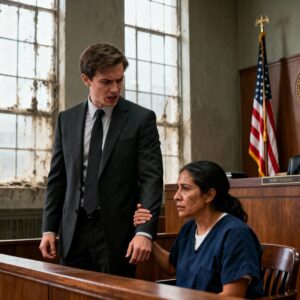
The gavel fell, sealing the one-armed veteran’s fate. But from the back of the courtroom, a single, mournful howl became the first shot in a new war—one fought by a dog who remembered everything they buried.
Courtroom 3 of the Hamilton District Court was a vessel of held breath. The morning light, strained through tall, dusty windows, seemed to congeal in the air, thick and heavy as the silence itself. On the polished wooden benches, people…
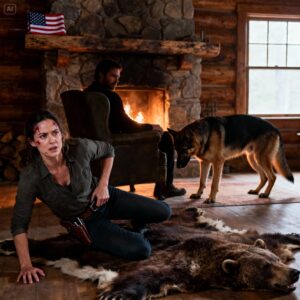
He went to an Alaskan cabin to silence the echoes of war. But in the heart of a blizzard, his dog sensed a secret the storm was sent to bury—a secret that would force him into one last fight.
The wilderness beyond Anchorage doesn’t ask for permission; it simply takes. It swallows roads, erases landmarks, and devours the faint, tinny signal of a cell phone until the only voice left is the wind. It was in this vast, unforgiving…

He told the quiet woman she didn’t belong on his elite sniper range. But when her backpack split open, a single photo fell out that made every decorated Marine in the room snap to a salute in shame.
The crack of a rifle shot was the only sound that made sense anymore. It split the dry California air over Marine Corps Base Camp Pendleton, a clean, percussive thunder that echoed off the brown hills and settled in your…
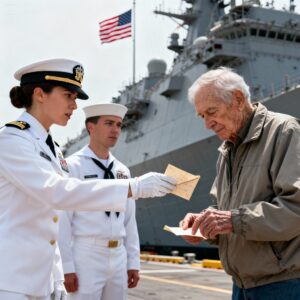
As the young officer moved to detain the 89-year-old man, she was blind to the truth. The very name of the warship she guarded was a whisper of the 70-year-old secret hidden on his faded patch.
The voice sliced through the humid air of the naval pier, a sharp tool meant to carve out immediate compliance. “Sir, I’m going to have to ask you to step away from the gangway. This area is for authorized personnel…

They chose a desolate mountain to be her grave, thinking a thousand-foot drop was the perfect, silent crime. But as she fell into the void, they made a fatal miscalculation about the kind of woman they just betrayed.
The mountain didn’t make a sound when it happened. There was no grand echo to mark the moment, no sympathetic rumble from the ancient stone. There was only the sharp, scattering kick of gravel, a sudden, violent silence where a…

In a circle of 282 elite soldiers, two men decided to humiliate the quiet medic during a demonstration. They intended to break her spirit. Instead, in seven brutal seconds, they discovered a truth that broke them completely.
The wind that came off the Atlantic that morning had teeth. It wasn’t a breeze; it was a hard, scouring force that snapped across the open-air corridors of Naval Special Warfare Command Unit 7, carrying the briny scent of the…
End of content
No more pages to load