Frontier life was a crucible, and kindness was often the first comfort burned away. On a Sunday afternoon, the entire town crowded into a leaning church to witness a wedding. The bride, a large and weary woman shaped by the hard road west, found herself the target of whispers, her dignity systematically stripped away by muffled laughter. The preacher faltered. The groom stared at nothing. But then, cutting through the corrosive murmur, a child’s voice rose, steady and clear. Three words, artless and unplanned, shamed the mockers and would honor the bride for the rest of her days. The little girl said, “She is pretty, daddy.”
The churchyard occupied a rise at the town’s edge, its small frame building clad in weathered boards with a plain white cross nailed above the door. The steeple listed slightly, a permanent bow to the relentless prairie wind, and the bell, cast in Ohio years before, produced a hollow clang when the rope was pulled. It was Sunday afternoon, and the town had gathered in its finest, which for some meant a brushed wool coat and for others, only a freshly tied kerchief. The air was a mix of dust, the sweat of horses, and the faint sweetness of lilacs blooming along the parsonage fence.
Inside, the pews groaned as neighbors shifted, craning their necks for a better view of the bride. Whispers rustled through the congregation like wind through dry grass. Some offered polite, thin smiles; others smirked without any attempt at concealment. The woman walking down the aisle was broad of shoulder and heavy of frame. Her gown, a borrowed muslin dress, had been let out with conspicuous seams and was pinned tightly at the waist. In her calloused hands, she clutched a small cluster of wildflowers gathered that morning from the riverbank.
Near the open doors, a group of ranch hands leaned against the hitching rail, their hats tipped back as they chewed on straws of grass. Their voices, though low, carried sharp and clear. “Reckon the groom will need a freight wagon just for her,” one commented, drawing a round of chuckles. “Hope the preacher’s floorboards hold,” another added, neatly spitting a stream of tobacco juice into the dust.
The sound of their laughter mingled with the restless shifting inside. The preacher, an old man with thinning hair, cleared his throat twice, his gaze flickering toward the groom as if seeking permission to proceed. The groom stood tall, his vest buttoned, his expression unreadable. He had agreed to this union, but a war between pride and doubt was raging within him. He’d heard the jokes, and though he didn’t join in, he could feel the crushing weight of all those eyes upon him.

The bride moved slowly, her shoulders held straight. She did not flinch, though the murmurs reached her. She had heard laughter like this before—at the boarding house, in the washroom, at the market—whenever men assumed a big woman’s ears were deaf to their cruelty. She kept her gaze fixed on the front of the church.
And then the voice came that shattered the tension. A small girl, the groom’s own daughter, sat on the front pew in a faded calico dress, her legs swinging high above the floorboards. She looked first at her father, then at the approaching bride, and then she spoke, her voice simple and resonant. Her chin lifted with a certainty that made heads turn. “She is pretty, daddy.”
The words landed like a stone dropped into a still pond. The giggles died. A cough was choked back in a man’s throat. Women exchanged startled glances. The preacher’s hand froze on the cover of his Bible. The groom shifted his stance, his jaw tightening. His little girl’s words carried more substance than all the whispers combined. For the first time that afternoon, a softness entered his eyes.
The bride paused mid-stride. For a fleeting moment, her lips parted as if she might stumble, but then she drew a deep, steadying breath and continued her walk. A flush rose in her cheeks, not of shame, but of something far more resilient. Dignity.
The preacher cleared his throat again, this time with conviction. “Let us begin,” he said.
The service was as simple as frontier weddings tended to be: a borrowed book, a short prayer, and the words “man and wife” spoken over the sound of sparrows chattering in the eaves. Outside, children darted around corral posts, their laughter blissfully free of malice. After the vows, the guests followed the couple into the yard, where tin plates were set out on long plank tables. The bride’s friends had brewed black coffee in battered kettles, a brew so thick you could float a horseshoe in it. A fiddler struck up reels and waltzes, his bow squeaking intermittently but keeping spirits high. The air filled with the hearty aroma of sliced cold ham, biscuits, and beans that had simmered for hours in a Dutch oven. Someone cut a square of plain but sweet molasses cake and passed it down the line.
Yet beneath the small-town cheer, the echo of the daughter’s words lingered. Men who had laughed earlier now observed the bride with quieter, more contemplative eyes. Some nodded to themselves, as if in reconsideration. A few women whispered their approval, their own sharp tongues seemingly shamed by the child’s innocence. The groom’s father stood at the edge of the crowd, his arms folded, his face a mask. But even he could not ignore the murmur that rippled through the guests: She is pretty, daddy.
In that moment, the bride was no longer just the butt of a cruel joke. She was a woman who had held her head high. She was the woman a child had, without hesitation, called beautiful. As the fiddler launched into “Turkey in the Straw,” the bride and groom took the first steps of a dance. She moved with care, but her smile was unwavering now. Her eyes were fixed not on the whispering crowd, but on the small girl clapping her hands in time with the music.
On the plains of the Old West, where hardship was measured in blizzards, droughts, and punishing cattle drives, appearances rarely carried a family through the winter. What endured was grit, steadiness, and the strength to rise above ridicule. In that windswept churchyard, on that ordinary Sunday, a little girl had spoken a truth the grown-ups had forgotten. She is pretty, daddy. And for the first time, the town began to see her that way.
The town was little more than a scattering of buildings clinging to the cattle trail. Twice a week, freight wagons creaked through, their iron-rimmed wheels carving deep ruts into the main street. Dust billowed in clouds each time a herd passed, settling on clapboard walls and coating every open window. At the north end stood the one-room schoolhouse, its bell hanging crooked, rung each morning by whichever child arrived first. Across from it was the livery, its roof patched with mismatched shingles, the smell of manure and leather rising with the sun.
At the heart of it all was the mercantile. It was more than a store; it was the financial and social ledger for the entire settlement. Men bought flour, beans, and coffee on credit, their debts scratched in ink across long pages that chronicled the rhythm of a town surviving hand-to-mouth. A family’s standing could be gauged by how long the line of credit ran beneath their name and whether the storekeeper muttered when he dipped his pen. This was a place where people believed they knew each other’s worth by tally marks and outward appearances. A lean cowhand who rode long drives was lauded as strong, while a heavy-bodied woman was judged as idle. Few paused to consider the difference between fashion and survival. Hard winters proved that muscle and fortitude kept families alive, but the whispers in town followed another measure entirely.
The saloon’s kerosene lamps burned late into the night, smoke curling above poker tables while fiddle tunes strained to rise above the laughter. Cowhands bragged about how many calves they could brand, how many miles they could ride without breaking a sweat. Their frames, wiry from months of salt pork and beans, became the model against which others were judged. The rail-thin look was prized, even when it stemmed from hunger or exhausting days in the saddle. Against that ideal, anyone larger was an easy target.
Women carried the gossip like laundry passed from one clothesline to the next. On Sunday mornings, matrons in pressed calico whispered on the church steps before the service. They measured reputations as they measured fabric—by the yard and with a sharp eye. “Too broad,” one would say, meaning not just the body but the prospects. “A burden on her man,” another would sigh. Their words stuck like burrs to a skirt, following the bride wherever she went.
Yet not all voices joined the chorus of sneers. The town’s midwife, gray-haired and brisk, had little patience for such vanity. She had delivered babies in cabins where snow blew through the cracks, where mothers bled and fathers prayed. She knew which women had the strength to endure and which faltered when the work grew heavy. To her, broad hips and thick arms meant more children lived to see spring. “A body built for bearing and for feeding,” she muttered on more than one occasion when others mocked. But hers was a practical voice in a town that preferred gossip to truth.
Even the preacher, who had hesitated at the wedding, measured his flock less by scripture than by how their reputations held. A generous donation, a polished Sunday hat, a smile from the right family—these things could smooth the way for a sermon. He read faces like lines of text and knew when laughter in the pews would outlast the prayer.
On Saturday evenings, the whole town spilled into socials at the cleared-out schoolhouse. Fiddle bows were rosined, and pies lined up on planks balanced across barrels. Young men sparred in jest while older women judged who had baked what, and children darted between knees, chasing one another with sticky hands. Sodas fizzed in bottles—root beer, birch, and the prized sarsaparilla for those who could afford it. Even in these gatherings, the lines of respect and ridicule were sharply drawn. Compliments were handed out as sparingly as sugar. And the bride, now newly married, found herself at the center of every whispered jest. She cooked well; her biscuits were soft, her coffee dark and strong. Yet no one spoke of that. What they noticed was the size of her hands, the way her sleeves stretched at the seams, the weight of her footsteps on the schoolhouse floor. Each chuckle carried the same message: We know what you are worth.
It was the way of the frontier town: quick to judge, slow to repent. In their minds, a man’s value lay in how many cattle he branded, how far he could ride without water. A woman’s value was measured by how she looked beside him on Sunday morning. They thought they had the measure of the new bride. But their eyes had been trained by shallow talk, not by the truth of survival. For in that hard country, what kept families alive through blizzards was not a narrow waist, but a steady hand at the stove and the strength to haul water when the pump froze. What carried a community through drought was not laughter at socials, but women who could stretch a bag of beans into a week of meals and still have bread left for their neighbors. The town, for all its gossip and bravado, did not yet see that. It thought it knew the bride, and it thought it knew her worth. But time and hardship would prove every whisper wrong.
Before she ever walked down the aisle of that frontier church, the bride had traveled a long and bitter road. Her story began far from the prairie, on a failing farm back east where the soil yielded more stones than wheat. Each year the debts mounted, and each year the neighbors whispered that perhaps the land had finally beaten them. When the last crop failed and the mortgage came due, the family sold what little they had—an old cow, a wagon missing a wheel, a few iron tools—and boarded a train heading west, chasing the promise that hard land could still be turned into opportunity.
The journey was neither swift nor comfortable. Passenger cars rattled day and night, filled with families carrying more hope than coin. At each junction, freight wagons charged by the pound, forcing families to weigh their belongings as carefully as a banker measures gold. A feather bed might be left behind to make room for a sack of flour. Cast-iron skillets, though heavy, were prized far more than china plates. The bride’s mother carried a crock of sourdough starter wrapped in a damp cloth, for bread meant survival, and a good starter was handed down like a family heirloom.
Food on the journey was plain and often scarce. Salt pork lasted the longest, though it grew slick with grease in the summer heat. Beans were boiled in tin pots until they were soft, eaten for breakfast and dinner. Children gnawed on hardtack biscuits, so tough they had to be dipped in coffee before they could be chewed. The young woman who would one day become the bride learned early to make do with what was available: potatoes sprouting green eyes, onions shriveled to half their size, bacon rinds fried crisp to flavor an entire pot of beans.
By the time her family stepped from the last wagon into the dust of a cattle town, her frame was not a mark of weakness but a testament to endurance. The long journey demanded strong arms to lift barrels, steady hands to stir kettles, and broad hips to haul sacks of flour from the wagon to the storeroom. She took work wherever she could find it, starting in a boarding house kitchen. She cooked breakfast for cowhands before sunrise—griddle cakes fried on a Dutch oven lid, coffee poured from blackened pots, eggs scrambled in lard. By noon, she was on her knees scrubbing floors, and by night, she was boiling laundry in iron tubs, stirring the steaming clothes with a paddle carved from pine. Lye soap stung her hands raw, but she worked without complaint.
Her strength came not from idleness but from labor. Every scar on her knuckles, every knot of muscle in her arms, was earned over years of bending over washboards and carrying buckets. Her body grew thick on starch and bread because starch and bread were what poor families could afford. Cornmeal mush in the mornings, biscuits at noon, and beans with bread at night—each meal built not a slim figure, but a body equipped for survival. Winters back east had been lean. More than once, she had gone to bed hungry, giving her portion to her younger brothers. In those times, she learned that a body that could store strength was a body that might live through famine. She did not see her size as shameful; to her, it was armor against hunger, proof that she had weathered storms that had broken thinner neighbors.
Freight rates taught her that every pound mattered. She walked beside the wagons instead of riding so the family’s supplies could stay on board. She tightened her belt during the final stretch of the journey so a sack of beans would last another week. The lines of her frame told a story not of laziness, but of choices made for others.
In the town where she would eventually marry, few bothered to ask about her history. They saw only a woman who filled her dress more than fashion decreed. But those who truly knew the road west understood. They had weighed trunks against loaves of bread, had carried water buckets two at a time, had eaten the same beans until the taste was like iron on the tongue. They knew that survival was written into the body, whether it was slim or stout. On the prairie, no one mocked a horse for being broad in the chest if it pulled a plow straight, nor a cow for being heavy if it yielded more milk through the winter. Yet somehow, when it came to women, the measure was twisted.
The bride bore that judgment silently, because she knew what the weight of her life had cost. She brought with her not only scars and muscle, but also skills sharpened by necessity. She could bake bread without measuring cups, kneading by feel until the dough breathed beneath her hands. She could tell by the smell of beans when they needed salt, by the color of bacon fat when it was hot enough to fry. She knew how to keep a sourdough starter alive through a bitter cold, feeding it with flour pinched from the smallest of rations. She knew how to stretch food so that every mouth at the table was fed, even if portions grew thin.
This was the woman who now stood in a frontier town, mocked for her body, yet carrying the quiet dignity of survival. Her road west had been longer than most. It had shaped her into more than a bride; it had made her the backbone of a family that might otherwise have starved. In the Old West, strength took many forms. Some wore it in a pistol at their hip; others carried it in a branding iron. The bride’s strength was quieter, but no less real. It was written in the miles of dust she had walked, in the kettles she had lifted, in the meals she had made from scraps. Her body was not a mark of shame. It was a living testament to endurance.
The groom’s family home sat on a rise overlooking the open range. It was a house of square timbers, expanded in pieces as the herd grew, with a front porch wide enough for rocking chairs but weathered by sun and wind. His mother had been buried on the hill beyond the windmill years ago, leaving the old man, a widower with iron-gray hair, to measure the world in cattle counts and reputation. For him, appearances mattered as much as acreage. A son’s bride was not simply a wife; she was a symbol, carried into town socials and Sunday services. A slim, well-dressed bride was proof that the family stood among the respected ranchers. A broad-bodied woman in a borrowed dress was, to his mind, an embarrassment that would weigh on every handshake and every deal struck in the mercantile’s ledger.
He had built his ranch on numbers: how many heifers calved each spring, how many water rights he could claim along the creek bed, how many barrels of water the windmill pump could pull in a dry month. His ledgers recorded not just cattle but the flow of credit—feed purchased in March, fence wire in June, payment delayed until the fall roundup. Every mark on the page reflected his standing. He knew that ranching was as much about appearances as it was about grass and beef. So when his son married a woman mocked by the townsfolk, he bristled. In his mind, the neighbors would count it against him. At church socials, they would note not only the weight of his daughter-in-law but the weight of his name slipping down a notch. He valued reputation as carefully as he valued grazing land, and he feared this match would cost him in both.
Around the settlement, the whispers persisted. Among the women who prided themselves on narrow waists and lace collars ordered from catalogs, the resentment grew sharp. They carried themselves as the town’s ideal—thin and proud, admired for their appearances more than for their skills. To see a bride who defied that image still take the arm of a rancher’s son stirred something close to envy. Their compliments at socials grew tighter, their laughter sharper when her back was turned.
The men of the range weighed matters differently. A few cowhands muttered that a wife’s worth was in how she kept a house, not in how she filled a dress. But even they were not immune to mockery. Laughing at her expense was easier than admitting their own lives rode the edge of hunger and hardship. Behind all the gossip lay the quiet battles of ranching itself. Brands were arguments burned into hide. One man’s calf straying across a fence could become another’s property if not clearly marked. Barbed wire, new and sharp, cut across the open range, sparking old feuds where grazing had once flowed freely. A single windmill pump pulling water from a shallow aquifer could mean the difference between a herd thriving or dying in a drought year. Families measured each other not just by their pews in church but by whose cattle looked fat at market and whose ledger carried the longest line of credit at the mercantile.
In such a world, reputation clung like dust to boots. The old man understood that better than anyone. He wanted every handshake in town to be solid, every nod of respect to be unbroken. He feared that when neighbors looked at his son’s bride, they would smirk instead of nod.
Yet the son stood firm. He had seen beyond the gossip, beyond appearances. He knew the bride’s hands were steady, her work ethic certain. He had watched her make biscuits that could feed a crew and mend harness that kept horses running. He had felt the quiet dignity in her refusal to bow to shame. To him, she was not a mark against the ranch, but a strength added to it.
Still, the weight of his father’s disapproval hung over the household. Suppers at the long pine table grew quieter, the only sounds the ticking of the wall clock and the hiss of the kerosene lamp. The old man carved his meat with short, sharp strokes, while the bride passed potatoes with a steady hand, never asking for praise. The daughter’s chatter filled the silence, her small voice keeping the house from breaking under the tension.
In town, the match continued to spark conversation. At the mercantile, where accounts were settled in neat rows of ink, the storekeeper raised an eyebrow as the young couple bought flour and beans. In the saloon, men traded quips about how the new bride would need her own wagon to carry home supplies. At church, some women offered tight smiles, while others withheld greetings altogether.
But the ranch itself told a different story. Cattle bore the family’s brand, clean and unchallenged. The windmill pump clattered steadily, drawing water even in the driest weeks. The fences stretched tight, the barbed wire humming in the wind. And at the heart of it all, the bride worked—feeding ranch hands at dawn, mending shirts by lantern light, boiling coffee as black as midnight in tin pots.
Slowly, a few began to notice. A cowboy who had sneered one evening found himself grateful the next morning when she handed him a hot biscuit before he rode out. A neighbor’s wife who had whispered mockery now sent her child across the pasture for advice on her sourdough starter. Even the storekeeper at the mercantile softened when her accounts were paid on time, her ledger lines as balanced and neat as fence posts.
The town that thought it knew her worth was beginning, however reluctantly, to see the truth. Strength was not always slim. Dignity did not come in only one shape. And though the groom’s father still frowned, the ranch itself bore witness: a household held steady, a ranch running firm, and a bride who had not bent beneath the weight of gossip.
The words spoken in the church did not fade with the final hymn. They clung to the dusty air of the settlement, passed from mouth to mouth like a tune everyone found themselves humming: She is pretty, daddy. What had begun as a child’s innocent defense became a phrase that unsettled the entire town.
The little girl herself, no more than seven, her dress hem always dusty from running in the yard, seemed unaware of the power she had given her words. She simply repeated them whenever someone dared to sneer at her new stepmother. When a ranch hand muttered something outside the livery, she tugged on her father’s sleeve and said again, “She is pretty, daddy.” When a matron whispered by the town pump, she said it once more, her voice carrying like a bell in the morning air. Her small act of defiance spoke louder than any sermon.
At socials, when her stepmother’s veil slipped sideways, the girl would smooth it with her tiny fingers as though straightening a crown. If she had two peppermints in her pocket, she always pressed one into the bride’s hand. And when prairie flowers bloomed—purple asters, yellow sunbursts, and small white daisies—she gathered them into a clumsy posy and laid them on her stepmother’s lap with a smile.
Such gestures unnerved the gossipers. It is one thing for grown women to whisper among themselves; it is another when a child with no guile in her heart answers mockery with unwavering loyalty. Some softened, lowering their voices. Others hardened, calling the girl spoiled or her father weak, but none could fully ignore her.
In the schoolyard, the words traveled quickly. Children scrawled sums with slate pencils, their McGuffey’s Readers open on their desks, but they carried stories home faster than they learned their lessons. “The cowboy’s girl said her stepmom is pretty,” one child told her mother. Soon, neighbors were repeating the phrase across fence rails, the words growing heavier each time they were spoken.
At home, the girl learned her Bible verses as all children did, reciting lines after supper, her small voice echoing in the lamplight. Yet she seemed to be living her own verse, one about honoring those who were mocked, about standing firm when others bent to cruelty. Where the preacher measured worth by tithes, the girl measured it by kindness.
The bride herself said little. She carried on with her duties—kneading bread, hanging laundry, mending shirts by lantern light. But when the girl pressed flowers into her hand, her eyes grew damp, and she would bend to kiss the child’s hair. In those moments, the house that had once felt strained with disapproval grew warmer, bound by the loyalty of one small voice.
Even in town, changes were stirring. At the mercantile, when women whispered near the bolts of cloth, the storekeeper overheard the child’s phrase and later told his wife, “Out of the mouths of babes,” he muttered, scratching at his ledger. The words gave him pause, and the next time the bride came to settle her accounts, he greeted her with more courtesy than before.
Of course, not all shifted so quickly. Some matrons still lifted their brows, still clucked their tongues as if appearances outweighed deeds. But their whispers no longer carried the same sharpness. The child’s words had pricked their pride, and gossip traveled less freely once innocence had spoken against it.
It was in the schoolyard, perhaps, where the change showed most clearly. Children who had once echoed their parents’ laughter grew quiet when the girl repeated her phrase. Some even began to mimic her loyalty, standing near the bride at socials, offering small favors—carrying a basket, handing her a slate pencil she had dropped. The strength of one voice had rippled into many.
The groom himself watched with quiet pride. His daughter’s defense steadied him in a way sermons and social approval never could. Each time she said it, each time she stood tall beside the woman others mocked, he felt his own resolve deepen.
And so, in a town where gossip often traveled faster than freight wagons, one child’s words became a refrain: She is pretty, daddy. They rang against the walls of the schoolhouse, drifted across the churchyard, and echoed in kitchens lit by kerosene lamps. Some took the words as a rebuke, others as a reminder, but none could dismiss them. The Old West was a place where strength was measured in cattle branded and acres fenced. But here, in this town, strength was now being measured by the courage of a child who chose loyalty over laughter. And though the bride’s step was still heavy and her frame broad, she now walked with the knowledge that one voice, steady and true, had begun to turn the eyes of the town.
The storm rolled in the way plains storms do: without ceremony and all at once. The sky, open as a turquoise bowl at midday, narrowed to a lid of iron by dusk. The heat pressed down on the grass, and the cattle grew restless, tails twitching, heads lifted to sniff a wind that had not yet arrived. Riders traded looks they didn’t need to explain. Far off, lightning stitched a white seam along the horizon.
The herd was bunched in the swale beyond the house, several hundred head breathing in a slow, uneasy rhythm. The foreman sent two men to ride circles at a walk, humming the low, steady trail songs that kept cattle settled—soft tunes about homes no one had seen in years. He posted night guards in pairs, set the first watch, and told the point riders to keep it easy. “No cutting, no crowding. Let ‘em hear your voice.”
Then the wind arrived—hard, cool, and sudden, driving a smell of rain that woke every animal in the herd. Calves bawled. A few steers rose, clattering their horns, and the foreman barked the old command: “Mount and move! Keep ‘em tucked in!”
The bride was already in the cookshack, her sleeves rolled up. A kerosene lamp threw a warm circle of light over the batter table. She had the Arbuckle’s coffee cracked from the packet, the sugar cone clipped, and a tin of lard ready. She could read the air the way she read a dough’s rise. This would be a storm to rattle cow and man alike, a night that would ask more than it gave. “Hot cups first,” she told the girl, who had begged to help. “Then biscuits. Gentle hands, no fuss.”
The first thunderclap arrived like a wagon tipping over. Lightning struck close enough to illuminate the herd in stark white, their eyes shining, their backs like dark waves. A ripple went through the cattle. One wrong move, one sharp sound, and they would surge. The riders did what riders do. Point men out front, talking low; swing riders on the flanks; drags at the rear, swallowing dust and prayer. The foreman loped past the gate and tipped his hat toward the cookshack. The bride raised a hand to show she’d seen. Then she set the coffee to boil, hard and fast.
When two men pounded in with a split rein hanging loose like a dead snake, she had the awl and thong ready. “Hold it steady,” she said, her voice even, without a hint of panic. She punched neat holes, ran a wet rawhide lace through them, and pulled until the leather sang tight. “Good as new,” she said, and shoved a hot cup into each rider’s hand before they turned back out into the maelstrom.
The rain came sideways. The front ranks of the herd heaved, their hooves churning the mud, horns nudging, shoulders rubbing—the sound of an army waking in the dark. One steer bolted, then another. “Easy, boys,” called a point rider, his voice stretched long and calm. “Soo-ee now… hush, hush.” He began a lullaby he had learned as a child and carried into manhood because the cattle seemed to like it.
The bride worked by feel. Biscuit dough came together under her palms: flour, salt, baking powder, lard cut in with two knives, then milk, just until the mass held. She did not measure; she never had to. “Dough will tell you,” she’d say, and it did. It sighed under her touch, patted out to the right thickness, and asked for a dusting of flour to keep from sticking. She cut rounds with a tin dipped in flour and slid them into a Dutch oven already humming with heat.
Lightning laced the sky again, closer and brighter. The herd surged forward five paces and then stopped as the swing riders pressed in, their knees to their saddlecloths, their hands light on the reins. “Ho now,” a rider sang. “Ho, ho now.” Another took the far side and matched his tone. They kept the cattle from finding a straight line to run, preventing that first streak of panic from turning into a river of death. The foreman called for another pair to mount. The cookshack lamp flashed in the wet night, a lighthouse in a sea of hide.
Men came and went in a blur of mud and hurried talk. The bride salted slabs of beef and threw them into a skillet that spat and hissed. She turned the meat with a fork she had fashioned from a broken handle and a piece of wire. She counted the biscuits out loud, a habit born of rationing. “Two dozen and six… three dozen even.” She had a bowl of cool grease for the lamps, a stack of cups, and a bucket to catch the rain that spilled through the eaves when the wind shifted. When the girl’s hands trembled from a thunderclap that rattled the pans, the bride steadied them around a coffee pot. “Pour slow,” she said. “Riders need it hot, not burned.”
Another torn rein, another mended cinch strap, another sleeve button sewn on with three fast stitches. She moved through the small troubles like a woman stepping on stones across a river. Each small fix kept a man mounted, kept a flank tight, kept a steer from breaking loose and taking the herd with it. Her calm laid the rails for the night to run on.
By midnight, the storm had the bit between its teeth. Rain sheeted across the yard. The windmill spun so hard its tail groaned, yet the pump clattered steadily, drawing the water the men would need at dawn. In the near pasture, the herd rolled, surged, checked, and rolled again—an ocean of muscle waiting for the one wave that wouldn’t break. The point riders took turns easing forward, circling and singing. Swing riders heeled in whenever a shoulder pushed too far. The drags coughed and swore, their eyes stung by water and grit, still keeping the tail from stringing out where coyotes liked to test their luck.
Men dismounted by the cookshack in ones and twos, water streaming from their hat brims, their faces drawn with a worry they didn’t speak. Bunkhouse etiquette dictated that a man never spread wet blankets in another’s shelter, so they stood instead, shoulder to post, steam lifting from their wool coats. The bride pressed cups into their hands, then biscuits, then a slab of beef on a tin plate. “Eat,” she said. “Then go sing to your money.” One man laughed once, then sobered. It was true. Those cattle were money on four legs, and a stampede could turn months of work into scattered beef and broken men.
The girl carried out a bucket of biscuits wrapped in a towel, her hair pasted to her forehead by the rain. “Take these to the point,” the bride told a rider about to swing up. “Four each. No arguing.” He nodded and tucked the bundle against his slicker, the warm smell lifting like a promise into the wet dark.
The worst of the lightning passed to the east, but the trailing thunder kept the herd jumpy. The foreman, his voice ragged, asked for fresh mounts for the swing riders. The bride handed him a cup and set a second on the rail by habit—one for the man, one for the hour. He drank both and looked just once into the lamplit shed. There was steadiness there: hands busy, eyes level, a child focused because a woman had taught her how to be.
Toward the small hours, the herd began to breathe like a single creature that had remembered sleep. Calves tucked in again against their dams. The point men’s songs thinned to hums. The night guards settled into long, circling arcs at a walk, their slickers flapping. The wind eased enough that the lamp no longer guttered with every gust. The bride lifted the last biscuits from the oven and tapped the pan twice with the back of a spoon—the signal the crew now knew meant hot bread again. She salted the final tray of meat, turned the flame down to a whisper, and covered the pot to keep it warm for the drag riders, who always ate last. She set aside three biscuits for the girl and one for the old man, because respect was bred into her, even when thanks were rare.
When the foreman finally slid off his horse and stood square in the doorway, the clock near the lamp showed a time no one should have to see from the wrong side of sleep. He took a cup, then the heel of a biscuit, and chewed like a man whose jaw had forgotten the motion. “They’ll hold,” he said, not to her exactly, but to the night that had asked too much. “They’ll be quiet now.”
“Then the men can be too,” she answered, wiping the table with the edge of a flour sack. He watched her count what remained: six biscuits for the last pair of riders, two cups of coffee still strong enough to make a man blink, enough grease left to fry one more pan if dawn demanded it. In the quiet between the thunder’s fade and the first thin song of meadowlarks, he understood what he hadn’t been able to put into words. Food was a second line of riders, and her kitchen was another kind of point.
By dawn, the storm had limped off, leaving puddles as bright as tin plates in the wheel ruts. The herd grazed in clumps, heads down, the threat of flight forgotten. Riders slumped in their saddles, sore but grinning with the relief that comes after a catastrophe fails to arrive. Bedrolls stayed rolled. Men took their coffee standing and called out thanks over their shoulders—a courtesy they wouldn’t have bothered with yesterday. The girl leaned against her stepmother and yawned, a peppermint tucked in her cheek as a small reward. The bride brushed wet hair from the child’s temple and looked out at the herd that hadn’t run and the men who hadn’t broken.
That evening, when the story crossed the saloon, the mercantile, and the church steps, it would be told simply: “A bad storm. A near-run herd. A long night.” The details would wash out, the way rain erases boot tracks. But the facts would remain for those who had needed them: the point and swing riders who’d found courage in hot cups and steady hands; the foreman who had held the circle because someone had kept his men fed; the town that measured worth in looks and had been saved instead by competence. And if anyone smirked, the little girl would lift her chin as she always did and say the line that now held more meaning than the day she’d first said it: “She is pretty, daddy.” This time, every rider within earshot would nod. Not because of a dress or a veil, but because a whole night had proven what beauty looks like when the West turns mean.
The storm had passed, the herd was safe, and the town soon turned its attention to lighter matters. A church social was planned, a common event in settlements where amusements were scarce. These gatherings served as concerts, feasts, and courtships all rolled into one. On Saturday evening, lanterns flickered in the church windows as families arrived in wagons rattling with benches and baskets. Long boards set across barrels held pies and cakes, each dish tagged with a strip of paper naming its maker. A quilting frame stood in one corner, stretched tight with a patchwork top that several women would work on through the night. Men carried stoneware jugs of cider to the back, while children darted about with sticky fingers, waiting for the first slice of pie.
Fiddle tunes filled the air—“Arkansas Traveler,” “Soldier’s Joy”—played by a pair of brothers whose bowstrings were thin from constant use. Couples danced in the cleared space between the pews, the floor lit by tallow candles that sputtered in the draft. Etiquette demanded that men carry plates for the women they were courting, stacking them with biscuits, slices of cake, or spoonfuls of beans as tokens of attention. It was called a “lady’s plate,” and each offering was a measure of interest as well as appetite.
The bride entered quietly, her step measured, her dress plain. She carried with her a pie she had baked that morning: apple spice, with cinnamon brought in on the last freight wagon. She set it carefully on the table among the others and wrote her name on a small scrap of paper to mark it. The pie looked no finer than any other, but it had been made with the same steadiness she brought to every task.
It was then that a cruel hand decided to play a joke. Someone slipped her label off and replaced it with one scrawled in mockery: “Enough for two.” When the crowd pressed close to choose their slices, the snickers began. Men nudged each other. Women pursed their lips in half-hidden smiles, and the cruel words on the paper seemed to glow brighter than the pie itself.
The bride saw it. For a heartbeat, her chest rose sharply, her face caught between shock and shame. The laughter could have undone her, could have brought tears to her eyes and sent her fleeing from the room. That was what the prankster had expected—that she would be broken in front of everyone. But she did not cry. Instead, she stepped forward, took the knife in her hand, and began to cut. She sliced neat, generous wedges, the crust crumbling golden, the filling warm and fragrant. Without a word, she lifted the first piece and offered it to the very man who had laughed the loudest. Startled, he hesitated, then took the plate. The second slice went to a matron who had whispered the joke into her neighbor’s ear. The third went to a group of children who crowded forward, their eyes wide, their mouths watering.
“Plenty for all,” she said softly, her voice steady as she moved down the line. One by one, the plates filled. The pie vanished faster than any other on the table, the sweetness of apples and spice silencing the laughter. By the time the last crumbs were gone, the mockery of the label no longer clung to the dish. Instead, the memory was of a woman who had turned shame into generosity.
The women at the quilting frame glanced up from their needles, catching one another’s eyes. They understood what it meant to carry a burden quietly, and their nods carried more weight than words. The fiddlers struck up a brighter tune, and the dancing resumed with renewed spirit.
Later, when the cider had been poured into tin cups and the last of the children had dozed off against their mothers’ skirts, the story of the pie passed around the room. Some retold it with laughter still in their voices, but others spoke with a new respect. Even those who had mocked her admitted grudgingly that the bride had carried herself with a dignity no one could deny.
At the end of the evening, when the lanterns burned low and the pie boards were wiped clean, she gathered her empty tin and walked home beside her husband and stepdaughter. The girl carried the joke label crumpled in her fist, ready to throw it into the stove when they reached the house. Yet the phrase the child spoke that night was not about the cruelty, but about the grace that had followed it. She clutched her father’s hand and whispered once more, “She is pretty, daddy.” And this time, even the father-in-law, who had long weighed reputation more heavily than kindness, felt the truth of the words settle in his chest.
The high summer came on hot and close, the air hanging thick over the settlement. Children played barefoot in the dust, their laughter carrying across the yards. But before the month was out, their voices grew quieter. What began as a single child complaining of a stomachache spread swiftly through the town. Mothers whispered the phrase they all feared: “summer complaint.” It was a polite name for the diarrhea and fever that came with spoiled food, unclean wells, and a heat that could turn milk sour in a single day.
One child fell sick, then another. Faces grew flushed, small bodies curled on straw mattresses, lips parched though buckets of water were drawn. Families blamed the privy dug too near a well, or milk carried too long in the sun, or the flies buzzing around an open kitchen door. Whatever the cause, the fevers rose. By the third day, more than a dozen households were keeping sickbeds.
The midwife, gray and sharp-eyed, moved from cabin to cabin, her skirts brushing the dust, her hands raw from constant washing. She knew the signs well. She also knew how quickly the complaint could carry off a child. “Boil the water,” she told each family. “Strip the linens and boil them, too. Keep the hands that use the well and the hands that tend the sick separate.” Few listened closely. Until the bride did.
She heard the midwife’s words and acted. Fires were stoked in her own yard, and iron kettles were set to a rolling boil. She tore old rags into strips for cloths and dropped them into the steaming water. With lye soap, she scrubbed her hands until the skin burned, then made the girl do the same. “Better raw than foul,” she said firmly, ignoring the sting. When neighbors faltered, she carried buckets to them herself, showing them how to pour boiling water over well chains and dippers, how to scald every cup before it touched a child’s lips. She taught mothers to lay warm onion poultices on a chest, to wipe fevered brows with clean cloths dipped in cool water, and to air out bedding by turning the straw ticks in the sun.
Some scoffed at first, remembering their own laughter at her expense. But when their own children worsened, when the fever burned hotter and small mouths could no longer drink, they listened. She did not hold their mockery against them. She stepped into their cabins without hesitation, lifting sick children, wiping their lips, and washing soiled linens. Her stepdaughter came with her, Bible in hand. While the bride boiled cloths or poured broth, the girl sat beside the beds, reading aloud from the Psalms. Her small voice steadied the mothers’ hearts as much as any medicine. “The Lord is my shepherd; I shall not want,” she read, again and again, until the words sank deep into rooms heavy with fear.
In one house, the matron who had once switched the pie labels now lay pale beside her fevered son. The bride pressed a cool cloth to his forehead, then scrubbed the privy bucket with boiling water. She salted a thin broth and coaxed it, spoon by spoon, between his lips. The woman, weak and ashamed, whispered through cracked lips, “Why are you helping me?”
The bride did not pause in her work. “Because a child is worth more than words,” she answered.
The week dragged on, each day marked by more fires, more boiling water, more prayers whispered by bedsides. The midwife, exhausted, finally admitted that the bride’s methods were sound. “She works like a nurse,” she told the preacher one evening, “and with more sense than most who claim the title.”
Slowly, the tide turned. Children who had lain still began to stir again. Eyes opened, lips sought water, and fevers eased. Not all were saved—every town in the West carried small graves on its hill—but most were. And those who rose again owed a great deal to the broad-backed woman who had refused to let pride or past insults keep her from serving.
By the time the illness had passed, the town itself had changed. Neighbors who had once smirked now nodded respectfully when she walked by. Women who had mocked her frame now sent their daughters to ask her how to scrub linens or mix broth. Men who had jeered at her pie now tipped their hats when she passed the mercantile. The memory of their cruelty lingered, but the memory of her service lingered stronger.
At home, when the last sick child was tucked safely in bed and the fires had cooled to ash, she sat wearily on the porch. The girl curled against her side, still holding the worn Bible. Her father-in-law, watching from the steps, said nothing, but the look in his eyes carried more weight than words.
The town had barely caught its breath from the fever week when new trouble struck. A stagecoach was held up on the road just east of the settlement, not half a mile past the Cottonwood Grove where the trail bent. The coach had been carrying the mail pouch, a Wells Fargo lockbox full of cash, and two passengers bound for the north. By the time the sheriff rode out, the driver was still shaking and the lockbox was gone.
Rumors bloomed faster than a prairie fire. By sunset, some were claiming the culprits were outsiders. Before the night was over, fingers were pointing toward the bride’s kin—a cousin who had drifted west after leaving an immigrant quarter back east. He worked odd jobs around town, never fully trusted, his accent as thick as dark molasses. For a community that judged by looks and by last names, suspicion came easily. The sheriff, a square man with a battered badge and more worry lines than hair, listened to the talk at the saloon. He tapped his cigar on the edge of the spittoon and said, “Could be.” That was enough to fan the gossip into near certainty. By morning, half the town was whispering that the bride’s family carried crime in their blood.
The bride heard it when she stepped into the mercantile, her arms full of laundry soap and beans. Women who had once begged her help now muttered in corners. Men shook their heads. She did not argue; words meant little when a rumor ran that fast. But her stepdaughter clutched her hand and whispered, “It isn’t fair.”
“Fair comes later,” the bride answered quietly. “Right comes first.”
That evening, when the sheriff rode up to the ranch to ask questions, the bride stood steady. “My cousin was home splitting wood when that coach was robbed,” she said. “I can prove it.”
“Proof is for the courts,” the sheriff replied, his tone heavy with doubt.
She did not argue further. Instead, after he left, she and the girl walked the road where the coach had been stopped. The dirt still bore the marks: deep ruts from the wheels and hoofprints pressed sharp into the clay. She bent low, her skirts brushing the dust, and traced the edge of one mark with her finger. “See here,” she told the girl. “Heel irons.” Two of the riders had worn boots with metal plates hammered onto the heels, the kind cowhands favored for riding long on rocky trails. The girl nodded, squinting at the prints. The bride found a clod of clay, still damp though no rain had fallen for days. She pocketed it carefully. “Fresh turned. From the river cut,” she murmured. “Not from our cousin’s yard.”
The next morning, she carried her wash basket to the mercantile as though on ordinary business. But as she paid her account, she watched the storekeeper write in his ledger. The ink flowed neatly along the columns: credits for beans, flour, and lamp oil. She leaned over casually and noticed two entries scratched hastily in pencil, not ink. The names belonged to two ranch hands with long-standing reputations—men who swaggered at socials and spoke loudest in the saloon. Their accounts showed sudden payments. Cash, not credit, enough to cover debts that were long overdue. Her eyes narrowed, but she said nothing. She simply carried her basket home and began to think. Cash from nowhere, boot tracks with heel irons, clay from the river cut. It wove together into a picture far clearer than rumor.
That evening, she walked to the sheriff’s office, the girl beside her. The room smelled of tobacco and paper, the barred window letting in only a sliver of moonlight. The sheriff leaned back, looking weary, as she laid the clod of clay on his desk. “Boot tracks from the robbery,” she said. “Fresh clay that doesn’t belong near the grove. And your ledger at the store shows two men suddenly rich who were poor yesterday.”
The sheriff frowned. “Ledgers ain’t law.”
“Neither are rumors about my kin,” she answered evenly.
The girl stepped forward then, holding out her slate. On it, she had copied the sums from the mercantile, her small hand neat from her McGuffey’s lessons. The sheriff studied it, his cigar growing cold between his fingers. At last, he sighed. “Two ranch hands, you say. I’ll ride at dawn.”
He did. And when he returned, the Wells Fargo lockbox rode before him, its lid pried open, and the two men, once admired as steady cowhands, rode behind him in irons. Their boots bore heel plates that matched the prints. Their debts, once cleared, now marked them as guilty.
By sundown, the rumor about the bride’s cousin had withered. The town could not erase its quick judgment, but it could not deny the truth. The immigrant cousin was cleared, and the true thieves were men born and bred in the settlement—men the neighbors had trusted because of their slim waists and easy grins.
That night, the bride sat by the lamp, mending shirts as always. The girl leaned against her shoulder, whispering, “You made them see.”
She shook her head. “The truth made them see. I only showed them where to look.”
The sheriff, passing by on his way home, tipped his hat through the open window. It was a sign of more respect than he had ever shown her before. In a town that thought it knew worth by appearance, the day’s lesson had cut deep. Ledgers and tracks told truer stories than gossip, and the broad-backed woman who had once been their joke had proven she could read both better than most.
Winter came early that year, first with a sharp wind that cut through every seam, then with snow that drifted deeper than a horse’s hocks. Folks said the sky could turn on you faster than a card game in the saloon, and they were right. One afternoon the horizon was clear, and by sundown a wall of white was rolling down from the north like an army.
The ranch hands were still riding the south pasture when the first flakes struck their slickers. The herd stirred uneasily, heads lifting, tails twitching. A storm in the high country could scatter cattle for miles if they weren’t held tight. The foreman shouted for the boys to keep them bunched, but already the air was thick with snow driving sideways in a blinding sheet.
Back at the ranch house, the bride moved quickly. She had lived on the prairie long enough to know that blizzards were killers, not only of stock but of people caught between the house and the barn. She pulled a heavy rope from the wall pegs and ran a line from the porch post straight to the barn door, knotting it fast. She stretched another line to the privy, then to the woodpile, so no one would lose their way when the world turned white.
“Lanterns,” she told the girl. They shielded each with tin reflectors, trimming the wicks low so the flames would not blow out in the draft. She set one on the porch, one inside the barn, and one in the lean-to where the kindling was stacked. Each light glowed like a lighthouse in a sea of snow.
Word came on the wind, shouted through scarves, that a boy was missing. He had been sent from town to fetch a parcel from the stage stop and had not returned. Some said he was caught between a ridge and the creek; others feared he had lost the road altogether. In a storm like this, an hour could mean a life.
The sheriff arrived, his beard rhymed with ice, and asked how they meant to search. The men muttered plans, but the bride cut through them. “Rope lines first,” she said. “No one steps past the yard without a guide rope tied to the porch. We’ll send pairs, not singles. Build a windbreak of hay near the barn in case he’s brought in half-frozen. Heat bricks in the stove now. Wrap them in cloth to lay against him when he’s found.”
The sheriff looked at her, startled that a woman was giving orders. But the men, remembering her calm during the fever week and the stampede storm, nodded. One tied the search rope around his waist without a word. The girl clutched her Bible but did not stay silent. “She is pretty, daddy,” she said once more, the words carrying through the snow-thick night. The phrase had become more than a defense; it was a banner. Neighbors heard it and followed the bride’s directions without shame.
Two men set out toward the creek, roped together, their lantern light swinging in the gale. Another pair trudged toward the ridge. Inside, the bride stoked the stove high, laying buffalo robes on the floor, heating bricks in the coals, and setting kettles to boil for broth. She showed the girl how to keep the water warm without letting it scald, how to pile kindling by size, how to check the lantern wicks so the light never failed.
The wind howled against the shutters, rattling them like dice in a gambler’s cup. Snow piled against the door until only the lanterns’ glow proved the barn still stood. Men stumbled back in from the storm, their faces raw, their scarves stiff with ice, but each brought back a report: tracks here, a dropped mitten there. The bride sorted their words as she might sort ledger lines: steady, exact.
At last, one pair staggered to the door with the boy slung between them. He was pale, his lips blue, his hands stiff. They had found him curled against a drift, half-buried, clutching the parcel as if that alone might save him.
“Here,” the bride called, clearing a space by the stove. They laid him on the robes while she pressed hot bricks wrapped in towels against his chest and feet. She stripped off his wet mittens, rubbed his hands with rough cloth, and spooned broth against his lips. Slowly, color crept back into his face. The boy groaned, then coughed. The room breathed again.
The men, hardened by the trail and the storm, looked at her with new eyes. They had seen courage on cattle drives, but what they saw here was another kind of strength—the kind that planned with rope lines before panic set in, the kind that saved a boy with hot bricks and steady hands.
By dawn, the storm had eased. The world outside was blanketed in white, so thick the fences had vanished beneath it. The herd still huddled near the south windbreak, alive and intact. The boy, bundled in buffalo robes, slept safely by the stove. Neighbors gathered at the ranch to share their relief and strong coffee. They spoke of the storm, of the search, of the rescue. But always, the story circled back to the woman who had turned chaos into order. And when the girl, sleepy but proud, whispered yet again, “She is pretty, daddy,” this time the sheriff himself tipped his hat in agreement.
On the prairie, storms carve the truth clearer than gossip. And in this whiteout, the truth had been made plain. Beauty was not in the curve of a waist or the cut of a dress, but in rope lines stretched against the dark, in hay piled high for shelter, and in the hot bricks that saved a boy’s life.
The winter loosened its grip at last. Snowmelt ran in rivulets down the wagon ruts, and the prairie grass began to show green at its tips. The storms had passed, the fever had burned out, and the stagecoach robbery was a story already turning into legend. What remained was a town that had learned, however unwillingly, from its own shame.
The sheriff came first, riding up the ranch lane with his hat in his hand. His words were plain, without ceremony or excuses. “I owe your cousin, and I owe you. I let talk get ahead of the truth.” He looked the bride in the eye, something he had not done before, and tipped his hat lower than duty required. In a place where pride seldom bent, that was apology enough.
Next came the preacher, stepping onto the porch with his Bible under one arm. He had measured reputation more than scripture in the months past, but the fever week had shown him who had kept the children alive. “The Lord sends strength in many forms,” he told her, his voice gentler than on the day he had hesitated at their vows. “This town knows it now. I thank you.”
Even the mercantile, the keeper of ledgers and the silent judge of families, shifted its stance. Where once the storekeeper had muttered at long credit lines, he now extended fair terms to the young couple without a scowl. He had watched her accounts balance, had seen her debts paid on time, and had heard the riders praise her steadiness after the storm. The ink in his ledger told him what gossip never could: that this household was sound and worth trusting.
The greatest shift came from within her own walls. The groom’s father, who had long frowned at the match, stood on the church steps one Sunday as the neighbors gathered after the service. The congregation lingered, as they often did, waiting for news, gossip, or a word to carry home. The old man cleared his throat, his voice rough from years of shouting across pastures. “I was wrong,” he said, the words carrying in the open air. “This woman is a strength to my house, and I count myself fortunate to call her family.” It was not flowery or soft, but it was enough. Neighbors shifted uneasily, then nodded. A few offered handshakes. Others brought casseroles the next day, as if to cover the silence of their long neglect. Respect had been claimed, in a moment no less formal than a wedding, on the church steps, in front of witnesses, as plain as daylight.
From then on, the town’s rhythm carried a different note. When a barn needed raising, families gathered in the old tradition. Men lifted timbers, women spread tables with food, and children ran errands with buckets of water. She was at the center of it all, steadying beams with rope, serving coffee strong and black, showing the younger women how to stretch a batch of biscuits so every worker ate. During the spring herd share, when neighbors combined their cattle to drive them to better pasture, she helped tally the brands with chalk on a slate. At the county seat, where brand recordings were filed, each mark drawn carefully into the clerk’s book, her husband’s name was listed, but neighbors spoke of the bride, as if her steadiness had stamped a mark deeper than any hot iron could.
At school board meetings, where notes were taken on scraps of paper and decisions were made about readers, chalk, and the stove, her voice was heard through the girl. The daughter would sit straight, repeating her mother’s plain advice: more slates for lessons, cleaner buckets for water, windows opened for fresh air. Men who had once laughed now nodded at the child’s words, knowing where they came from.
And through it all, the phrase that had begun as a child’s defense echoed in unexpected places. A farmer joked too harshly at his wife’s expense, and his daughter piped up, “She is pretty, daddy,” turning the laughter to silence. A boy at school mocked a classmate’s patched dress, and another child repeated the line, shaming him into quiet. The words had outgrown the wedding day. They had become a saying of the town itself, a reminder that worth was measured differently now.
By summer, it was hard to remember the sneers that had once followed her. People asked her advice on sourdough, on storm lines, on how to keep a fever from spreading. They did not call her “the obese bride” any longer. They called her Mrs., with respect.
The Old West was a place that forced towns to grow up fast. Droughts, blizzards, and stampedes allowed no room for pettiness. This town had learned that lesson the hard way, through illness, robbery, and storm. And in each trial, it was not the loudest voices or the sharpest suits that had carried them through, but the woman who had once been their joke. Now, when her stepdaughter spoke the words, “She is pretty, daddy,” no one laughed. The phrase had ripened into something larger—a banner of loyalty, a truth the whole town had come to accept. And the town, at last, had grown up enough to deserve it.
The prairie has a long memory. Winds may erase wagon ruts and rains may flatten fence posts, but the stories spoken on porches and in schoolhouses carry farther than any cattle trail. Years slipped by, and the little girl who had once whispered words that silenced a churchyard grew into a woman with students of her own. She stood at the front of the one-room schoolhouse, chalk in hand, her dress plain but neat, her hair tied back against the dust. Children fidgeted on the benches, slate boards balanced across their knees, McGuffey’s Readers stacked at their feet. Some were the sons of ranchers, others the daughters of homesteaders; a few were orphans placed in the care of neighbors. All of them listened when she told stories, for her voice carried the weight of remembered truth.
And sometimes, when a cruel laugh rose too quickly in the room—at a boy with patched trousers or a girl with crooked teeth—she would stop the lesson and speak of her childhood. She told them of a wedding day when whispers cut as sharp as knives, of a woman who walked steadily though she was mocked, and of three words spoken by a child too small to reach the floor with her shoes: She is pretty, daddy. The children would giggle at first, not understanding why the phrase mattered. But the teacher would explain how it had changed the way a whole town measured worth. And slowly, the classroom would fall quiet, the meaning sinking into young hearts.
The bride herself grew older, her hair silvered, her hands lined from years of kneading dough and wringing out laundry. But her gifts endured: order in the home, food set hot on the table, calm in the face of hardship. These things outlasted fashion. Dresses yellowed, ledger books filled up and closed, and neighbors moved on or passed away, but her steadiness became the standard the community leaned on. When storms came, people remembered her rope line from the porch to the barn. When sickness spread, they boiled water because she once had. When gossip flared, they checked themselves, recalling the shame of mocking a woman who had later saved their children. Her example had become part of the settlement’s foundation, as firm as the courthouse ledgers or the brands filed at the county seat.
At church socials, women now measured pies not by how slim the baker’s waist might be, but by how sweet the crust tasted. At barn-raising bees, men spoke openly of the biscuits that had kept them upright in the storm all those years back. At school board meetings, the teacher’s notes recorded her mother’s lessons: fresh air in the classrooms, clean water for every child, and kindness as a part of the curriculum.
In the Old West, survival never bowed to appearance. The land rewarded competence: hands that could mend, minds that could plan, and bodies that could endure. A narrow figure could not stop a blizzard. A handsome face could not keep a fever from spreading. But a steady woman with a clear head could, and did. That truth became part of the town’s character, woven in as tight as the barbed wire on a fence line.
The teacher told her students one more thing. “Beauty,” she said, “was not in her dress or her size. It was in the way she fed the hungry, steadied the frightened, and turned shame into kindness.” And the children, wide-eyed, carried that lesson home to their families.
By then, the bride was gone, buried beside her husband on the hill overlooking the pasture. Buffalo grass waved around the stones, and cattle grazed in the distance. Neighbors remembered her not as the bride they had once mocked, but as the woman who had kept their community steady through stampede, sickness, and storm. And still, long after, the phrase endured. Mothers whispered it when their daughters doubted themselves. Fathers repeated it when gossip cut too deep. “She is pretty, daddy,” they would say. And in those words was the story of a town that had grown wiser than its own cruelty.
In the Old West, survival respected competence over appearance. A woman’s worth was not measured by the fit of a borrowed dress, but by whether she could keep a herd from scattering, a child from fever, or a town from shame. Her story reminds us that true beauty was always found in endurance, generosity, and calm.
Now, I invite you, the listener, to think back on your own family. Did your parents or grandparents carry sayings that shaped your character? Words you still repeat in hard times? Share them in the comments below. And if this story moved you, stay with us for more fact-checked frontier stories—tales of courage, survival, and human dignity in the Old West. Subscribe so you won’t miss the next one.
News

The gavel fell, sealing the one-armed veteran’s fate. But from the back of the courtroom, a single, mournful howl became the first shot in a new war—one fought by a dog who remembered everything they buried.
Courtroom 3 of the Hamilton District Court was a vessel of held breath. The morning light, strained through tall, dusty windows, seemed to congeal in the air, thick and heavy as the silence itself. On the polished wooden benches, people…
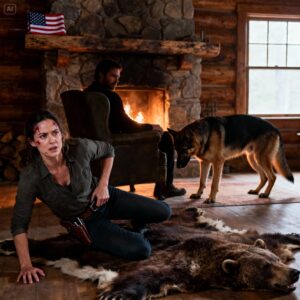
He went to an Alaskan cabin to silence the echoes of war. But in the heart of a blizzard, his dog sensed a secret the storm was sent to bury—a secret that would force him into one last fight.
The wilderness beyond Anchorage doesn’t ask for permission; it simply takes. It swallows roads, erases landmarks, and devours the faint, tinny signal of a cell phone until the only voice left is the wind. It was in this vast, unforgiving…

He told the quiet woman she didn’t belong on his elite sniper range. But when her backpack split open, a single photo fell out that made every decorated Marine in the room snap to a salute in shame.
The crack of a rifle shot was the only sound that made sense anymore. It split the dry California air over Marine Corps Base Camp Pendleton, a clean, percussive thunder that echoed off the brown hills and settled in your…
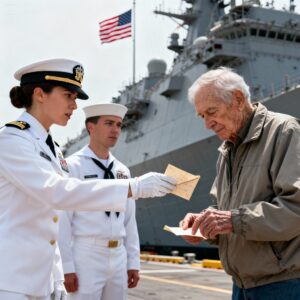
As the young officer moved to detain the 89-year-old man, she was blind to the truth. The very name of the warship she guarded was a whisper of the 70-year-old secret hidden on his faded patch.
The voice sliced through the humid air of the naval pier, a sharp tool meant to carve out immediate compliance. “Sir, I’m going to have to ask you to step away from the gangway. This area is for authorized personnel…

They chose a desolate mountain to be her grave, thinking a thousand-foot drop was the perfect, silent crime. But as she fell into the void, they made a fatal miscalculation about the kind of woman they just betrayed.
The mountain didn’t make a sound when it happened. There was no grand echo to mark the moment, no sympathetic rumble from the ancient stone. There was only the sharp, scattering kick of gravel, a sudden, violent silence where a…

In a circle of 282 elite soldiers, two men decided to humiliate the quiet medic during a demonstration. They intended to break her spirit. Instead, in seven brutal seconds, they discovered a truth that broke them completely.
The wind that came off the Atlantic that morning had teeth. It wasn’t a breeze; it was a hard, scouring force that snapped across the open-air corridors of Naval Special Warfare Command Unit 7, carrying the briny scent of the…
End of content
No more pages to load