Pritzker Campaign’s 2018 Solicitation of Jeffrey Epstein Revealed in Document Release
CHICAGO, IL — The release of more than 20,000 pages of documents from the House Oversight Committee related to the late financier Jeffrey Epstein has brought forth a surprising and politically charged revelation: in 2018, Epstein was solicited for a financial contribution to the gubernatorial campaign of now-Illinois Governor JB Pritzker.
The solicitation occurred a full decade after Epstein’s serious 2008 felony conviction in Florida, a widely-publicized case that cemented his status as a figure of national infamy. The documents show that an email was sent to Epstein on behalf of the Pritzker campaign, inviting him to a Chicago donor event and describing the candidate as a “rising star” in the Democratic party.
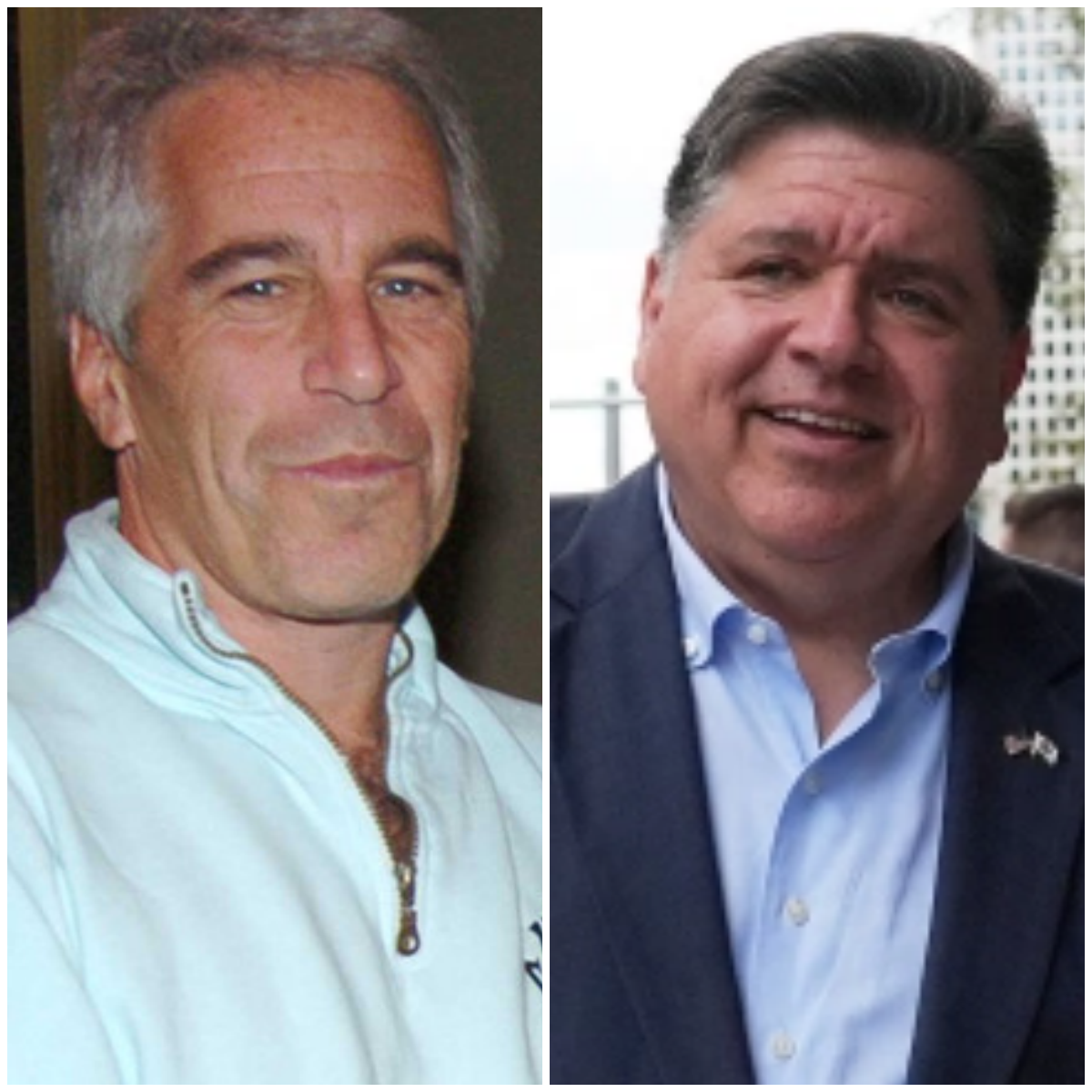
The email was reportedly dispatched by Democrat-aligned fundraising operatives associated with ActBlue, a prominent online fundraising platform utilized by Democratic candidates and progressive organizations. The discovery has ignited a firestorm of questions regarding the judgment and internal vetting processes of political campaigns and their affiliated fundraising apparatuses.
In response to the news, Governor Pritzker’s office moved quickly to distance the governor from Epstein, stating that Pritzker had never met the disgraced financier. A spokesperson for the governor’s office described the communication as a “standard bulk solicitation” that was sent to a vast list of thousands of potential donors. According to Federal Election Commission (FEC) records, Jeffrey Epstein did not ultimately make a donation to the Pritzker campaign.
Despite the lack of a financial transaction, the fact that a solicitation was made at all has become the focal point of the controversy. Critics and political observers are questioning why a figure with Epstein’s well-documented criminal history remained on a fundraising list for a major Democratic candidate as late as 2018. The incident has drawn attention to the often-opaque world of political data management and the sourcing of donor contact information.
The timing of the revelation is also notable. Just days before the documents were unsealed, Governor Pritzker commented to the Associated Press, predicting that the contents of the Epstein files would be “devastating for Trump.” Instead, the documents have ensnared a number of high-profile Democratic figures, including House Minority Leader Hakeem Jeffries, whose name also appears in the records, though the context of these mentions is varied and not necessarily indicative of wrongdoing.
This development has also renewed scrutiny on the longstanding connections between Epstein and the broader Pritzker family. Thomas Pritzker, the executive chairman of the Hyatt Hotels Corporation and the governor’s cousin, appears multiple times in Epstein’s personal contact books and private meeting notes, which have been released over the years. The nature and extent of their association have long been a subject of public interest, and this latest news has brought those past connections back into the spotlight.
The central issue for the Pritzker campaign is one of due diligence. Political campaigns, especially those at the gubernatorial level, often rely on third-party organizations and extensive databases to conduct their fundraising outreach. The use of “bulk” email lists is a standard and efficient practice for reaching a wide audience of potential supporters. However, the inclusion of an individual with Epstein’s notorious criminal record on such a list raises significant ethical questions about how these lists are compiled, maintained, and curated. It prompts a broader discussion about whether political organizations bear a responsibility to purge individuals with serious criminal convictions from their outreach efforts, regardless of their potential wealth.
While the governor’s office maintains that it was an impersonal, automated communication, the incident highlights a vulnerability in modern digital campaigning. As campaigns increasingly lean on data analytics and mass communication, the potential for such embarrassing and ethically questionable oversights grows, leaving campaigns accountable for contacts made in their name, even if indirectly. The controversy serves as a stark reminder of the long shadow cast by Jeffrey Epstein and the complex web of powerful individuals he associated with, underscoring how his legacy continues to impact a wide spectrum of American political and social life.
News

The gavel fell, sealing the one-armed veteran’s fate. But from the back of the courtroom, a single, mournful howl became the first shot in a new war—one fought by a dog who remembered everything they buried.
Courtroom 3 of the Hamilton District Court was a vessel of held breath. The morning light, strained through tall, dusty windows, seemed to congeal in the air, thick and heavy as the silence itself. On the polished wooden benches, people…

He went to an Alaskan cabin to silence the echoes of war. But in the heart of a blizzard, his dog sensed a secret the storm was sent to bury—a secret that would force him into one last fight.
The wilderness beyond Anchorage doesn’t ask for permission; it simply takes. It swallows roads, erases landmarks, and devours the faint, tinny signal of a cell phone until the only voice left is the wind. It was in this vast, unforgiving…

He told the quiet woman she didn’t belong on his elite sniper range. But when her backpack split open, a single photo fell out that made every decorated Marine in the room snap to a salute in shame.
The crack of a rifle shot was the only sound that made sense anymore. It split the dry California air over Marine Corps Base Camp Pendleton, a clean, percussive thunder that echoed off the brown hills and settled in your…

As the young officer moved to detain the 89-year-old man, she was blind to the truth. The very name of the warship she guarded was a whisper of the 70-year-old secret hidden on his faded patch.
The voice sliced through the humid air of the naval pier, a sharp tool meant to carve out immediate compliance. “Sir, I’m going to have to ask you to step away from the gangway. This area is for authorized personnel…

They chose a desolate mountain to be her grave, thinking a thousand-foot drop was the perfect, silent crime. But as she fell into the void, they made a fatal miscalculation about the kind of woman they just betrayed.
The mountain didn’t make a sound when it happened. There was no grand echo to mark the moment, no sympathetic rumble from the ancient stone. There was only the sharp, scattering kick of gravel, a sudden, violent silence where a…

In a circle of 282 elite soldiers, two men decided to humiliate the quiet medic during a demonstration. They intended to break her spirit. Instead, in seven brutal seconds, they discovered a truth that broke them completely.
The wind that came off the Atlantic that morning had teeth. It wasn’t a breeze; it was a hard, scouring force that snapped across the open-air corridors of Naval Special Warfare Command Unit 7, carrying the briny scent of the…
End of content
No more pages to load